Netflix Must Be Stopped

For years, Big Tech’s growing dominance over Hollywood has meant lower-quality movies and TV shows. Now, with Netflix and Paramount Skydance fighting over Warner Bros. Discovery, audiences are left with little say in the matter.
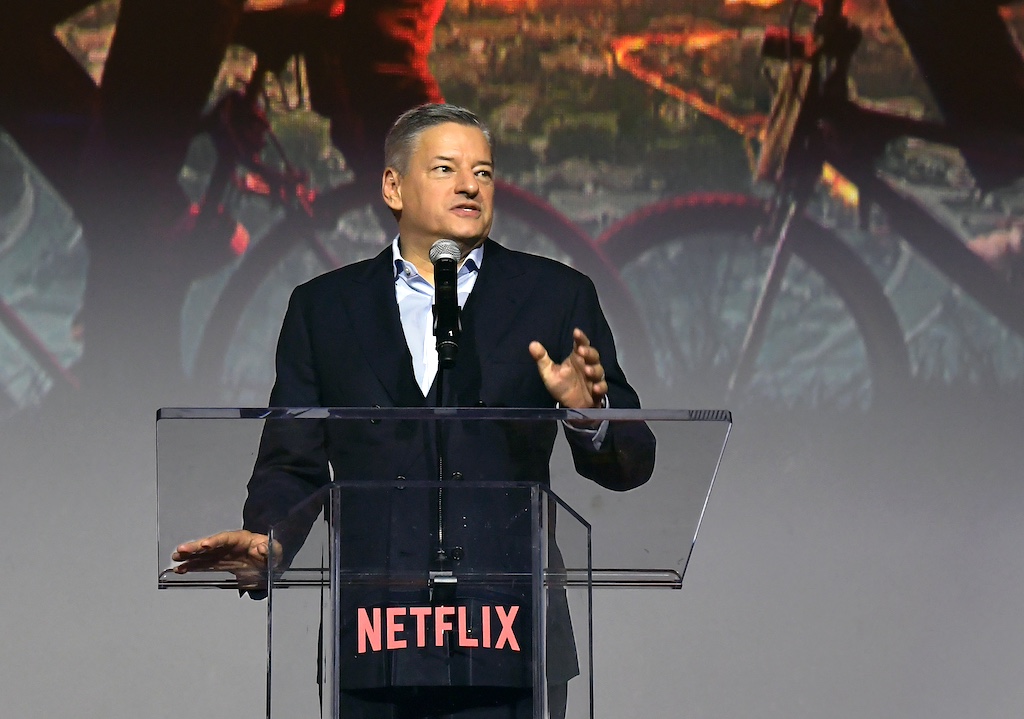
Netflix turned “new media” into the future of film that hewed to the same strategy that dismantled music production and print media. (Charley Gallay / Getty Images for Netflix)

Last Friday afternoon, Netflix announced they had delivered the winning bid for the 102-year-old studio, Warner Bros. Discovery (WBD). Comcast and Paramount Skydance were both in the mix, with the latter now attempting a hostile takeover. Both Paramount, a legacy studio founded in 1912, and Netflix, the world’s largest streamer, have reason to believe that their competitor would pose regulatory hurdles in acquiring WBD.

If Paramount Skydance prevails, two legacy studios would merge into one. If Netflix prevails, the world’s largest streamer would take over not only a legacy studio but one of its only streaming competitors, HBO Max. Both companies have been upfront about what victory would mean. Paramount Skydance CEO David Ellison has promised to release more than thirty films theatrically if they win while Netflix has made it clear that any exclusive theatrical windows for Warner Bros. Discovery films would be radically shortened to be “more consumer-friendly” before appearing on their streamer.

It’s that fundamental conflict between streaming content and traditional studios geared toward theatrical releases that now embodies the struggle over the future of the film industry. It’s a fight that now includes not only workers in the industry but audiences who face the possible extinction of the theatrical experience.

According to Netflix’s CEO, Ted Sarandos, however, “We’re saving Hollywood.” In his view, it’s the stubborn, nostalgic creatives stuck in the past who “grew up thinking, ‘I want to make movies on a gigantic screen and have strangers watch them play in the theater for two months and people cry and sold-out shows’ . . . It’s an outdated concept.”

The American studio system has certainly gone through many era-defining transformations dictated primarily by both emerging technology and federal regulation. The inclusion of sound and color, smaller cameras, more sensitive film stock, and digital cameras were all initially met with some trepidation but largely accepted over time. On the regulatory side, the infamous Hays Code from 1934 to 1968 was a way for studios to self-govern the content of their films under moral scrutiny without inviting direct federal regulation, while the Paramount Decrees, a landmark 1948 Supreme Court case, busted the studios’ anticompetitive control over the distribution of their films.

The latter signaled the end of the Golden Age of Hollywood, and the dissolution of the former was the harbinger of the so-called New Hollywood movement. But New Hollywood soon gave way to the blockbuster era, which ushered in a wave of conglomerates buying stakes in the studios whose intellectual property was now seen as having vast untapped profit potential. In fact, Warner Bros.-Seven Arts was purchased in 1969 by Kinney National Company, a parking lot and funeral home conglomerate that had recently purchased the comic book company that would later become one of Warner Bros. Discovery’s most valuable intellectual properties: DC Comics, home of Superman and Batman. Mergers and acquisitions began to create efficiencies within studios that had always been pitched in a careful balance of artistry and commerce but were now being primed for what was coming.

How Tech Came for Hollywood

At the height of the dot-com bubble, AOL acquired Time Warner in what is still known as one of the worst mergers in history. In the wake of the bubble’s burst, two companies — Netflix and Amazon — emerged now poised to capitalize on the inefficiencies of brick-and-mortar businesses. Both Amazon and Netflix exploited the ways in which consumers were no longer satisfied with traditional businesses that were limited by physical storefronts. Having reimagined retail, both Amazon and Netflix would soon find themselves entering the film industry. For Silicon Valley companies whose future plans involve media licensing and production, the 2007 Writers Guild of America (WGA) strike must have felt like quite an opportunity.

The heart of that ninety-nine-day work stoppage was primarily wages and issues like animation and residuals in DVD sales. Those old enough to remember the previous strike in 1988 knew that the real fight was whatever new home media was on the horizon. In the 1980s, it was VHS. This time it was the internet. The WGA managed to extract an important concession that made sure guild members were hired on these “new media” projects going forward while also retaining residuals under narrow circumstances. Video on demand and rentals were already a part of the media landscape, but no one then was able to foresee how streaming would become the primary way audiences watch films and television programs. If anyone had known this, the other guilds might have made sure that “new media” — whose contracts typically had lower starting wages and longer hours — was not just a labor loophole for Netflix to exploit in order to gain a larger share of the market against traditional studios.

When assessing the different futures promised by Netflix’s and Paramount’s bids, Ellison’s quick work turning CBS News into a right-wing mouthpiece might give a savvy media consumer more pause than a possible Sarandos victory. But what Netflix has done in the last decade demonstrates how, if they acquire Warner Bros. Discovery, the Hollywood studio model might finally be dismantled entirely. Under the auspices of concessions made by labor to invigorate a burgeoning new revenue stream, Netflix capitalized and turned “new media” into the future of film that hewed to the same strategy that dismantled music production and print media. Netflix, after all, operates as a tech company first. No one ought to wonder where exactly Netflix hopes to take WBD should their bid pass the scrutiny of a regulatory apparatus.

For Netflix, the best-case scenario is that the merger is allowed to take place, legal challenges are thrown out, and the ink is dried over the next one to two years. During that time, Warner Bros. Discovery, anticipating their acquisition, will be unable to make any big moves, slowing or even halting the development of shows or films outside of IP that it controls. No matter how confident Netflix is in their position, they must be mindful that if their bid is rejected they will be forced to pay a $5.8 billion “break-up fee,” which, while not catastrophic for their business, could also force them to be a bit more conservative with how they spend money on projects in the interim. Warner Bros. Discovery is in a much worse position, though, and it is not far-fetched to suggest that Netflix could be simply constraining one of their biggest competitors, HBO Max, even temporarily.

In order to pass the scrutiny of federal regulators and assuage the fears of the public, Netflix must speak out of both sides of its mouth. To those at the Department of Justice, the streaming giant must reiterate that while they do distribute and occasionally produce films, they are not a traditional studio. They are a streaming content company like YouTube or Twitch. A 102-year-old catalog of culturally significant intellectual property would simply give it an edge. This is especially true once you realize that Netflix’s original programming, according to Parrot Analytics, has seen its demand crater as supply has gone up since 2020. The opposite is true for its licensed content. With that in mind, it would seem that acquiring WBD is an existential necessity for its ability to meet new demand.

That isn’t to say that studios do not gain something from this arrangement. In a theatrical landscape that has only just begun to recover from the successive shocks of the COVID-19 shutdowns and labor stoppages in 2023, licensing content to Netflix is attractive as a way to generate income from their libraries. Film studios licensed films to television to weather economic downturns in the late 1940s as a way to take advantage of the way that TV had begun to supplant theatrical film’s dominance. It is in this way that Netflix could certainly see a benefit in purchasing a studio to cut out the middleman. If Netflix is hoping to present itself as a streaming company first, then their competition is not Warner Bros. Discovery but movie theaters themselves.

Hollywood is no stranger to acquisitions by outside conglomerates. After all, Coca-Cola purchased Columbia Pictures in 1982 (later sold to Sony in 1989), but the conflict of interest for Netflix is obvious once you interpret their actions instead of their press releases. Since emerging from the crucible of the dot-com bubble, they have kept their focus on eliminating their competition and exploiting Hollywood’s desire to readily accept new technology as a liberatory tool for telling stories to the masses.

Sarandos did his best to allay fears that Netflix underemphasizes theatrical exhibition by saying, “My pushback has been mostly in the fact of the long, exclusive windows, which we don’t really think are that consumer-friendly.” This tone is common for Netflix in all areas of its business. The data they collected from licensing content in the streamer’s early days influenced how it pivoted to original content and even the notes they gave to the filmmakers of that content.

Director Cary Fukunaga had this to say about his Netflix show, Maniac: “So they can look at something you’re writing and say, ‘We know based on our data that if you do this, we will lose this many viewers.’ So it’s a different kind of note-giving. It’s not like, ‘Let’s discuss this and maybe I’m gonna win.’ The algorithm’s argument is gonna win at the end of the day. So the question is: Do we want to make a creative decision at the risk of losing people.”

Even if filmmakers take these insights as genuine, it’s not impossible to imagine a black box of “impartial data” being a convenient cover for executive notes that any studio would have without having to support it with a qualitative argument. Similarly, Netflix’s hostility for theatrical distribution is evident based on how their company operates, but even if their position could be justified by box-office trends and data, the degree to which it is true is only possible because of aggressive moves they have made to produce those results.

Netflix’s desire for “consumer-friendliness” has been a hallmark of their approach since day one. Blockbuster’s late fees and relative dearth of choices made them vulnerable to the internet’s conveniences, which allowed people to shop for and watch movies without leaving home. After Blockbuster passed on acquiring Netflix for a measly $50 million in 2000, they became competitors, with Blockbuster filing for bankruptcy ten years later. Now Netflix is poised to do to Hollywood what they did to Blockbuster.

Netflix and Traditional Studios Have Very Different Goals

In the early 2010s, when studios were looking to cultivate new audiences by licensing their content to the streamer, Netflix collected massive amounts of viewing data. Unlike Nielsen ratings, Netflix’s data was far more detailed, able to track the smallest habits of its customers based on how long they watched something or even when they paused to go to the bathroom. Many studios eventually scaled back their licensing in order to create rival services, in part so that they could collect their own data because Netflix refused to share. Netflix then used what they collected to generate an approximation of the shows and films that performed well on their service, hoping to eventually rely less on licensed content from traditional studios. But after flooding the market with this content, they began to dilute their supply in order to retain subscribers with a constant churn of bingeable content rather than relying on curated weekly programming, which more traditional TV studios like HBO had to be mindful of.

It is these conflicting incentive structures that must be kept in mind. Sarandos and Warner Bros. Discovery simply do not have the same goals. After nearly a decade and a half of making original content, Netflix has successfully devalued the role of both film and television while slowly bleeding the entire business with convenience and casual viewing. While box-office returns still have not rebounded to what they were pre-pandemic, traditional studios have managed to reinvigorate the public’s desire for theatrical exhibition with hit, wholly original films like Oppenheimer, Sinners, and Weapons, which required reaching audiences who had become dependent on the instant gratification and ability to passively consume content while scrolling on their phones. Movie theaters today offer more than culture but a refuge from the winnowing of attention spans by tech companies whose bottom line is bolstered by keeping the public pliant and suggestible like the occupants of a casino.

Netflix’s future depends on creating a media landscape that will justify their claims about the public’s viewing habits in the same way that they were once able to appeal to home video-rental customers who didn’t want to drive to stores to return their DVDs. Netflix hopes the public will simply ignore how they have spent the last fifteen years hooking audiences on binge-watching and short theatrical windows as a way to justify what they could do with Warner Bros. Discovery.

If Netflix is successful, the effects might be subtle at first. As a studio, WBD already has theatrical commitments, and it could take years before those come to an end. After that, it’s up to Netflix to dictate which films are to be released theatrically — as well as how long and how wide. Until now the only thing keeping Netflix films in theaters has been the modest requirements for an Academy Award — limited releases in large markets for at least a week. But the public has long since learned to wait this out.

Netflix might allow Warner Bros. Discovery to release a limited amount of their films in theaters with brief theatrical windows, as they have indicated before. The effect would still cripple movie theaters, which are already operating on narrow margins and starved for new releases. If audiences know that they might be able to see a film within a month of release, Netflix’s box-office track record suggests that even more people might choose to stay home if they can already see it that way. Sarandos could then point to this as proof that audiences would rather see films on streaming.

In Hollywood, film scripts are shopped between prospective studios. Often different needs or studio cultures mean that a film of a specific genre or budget is right for one but not for another. If the script is good enough, studios will bid over it. Should one of the largest studios in Hollywood get absorbed by Netflix, it will immediately remove yet another major buyer for filmmakers. This means reducing the types of films produced by major studios. This will also drive down the price of these scripts since fewer studios would be buying, giving sellers even less leverage.

Netflix Already Destroys the Competition — and Movies Are All the Worse for It

One of the ways that Netflix was able to entice filmmakers to work with them in the first place was the freedom to make projects that no one else would fund due to either their budgets or subject matter. This is how Netflix landed critically acclaimed movies like Martin Scorsese’s The Irishman or Alfonso Cuarón’s Roma, which received only the smallest and briefest of theatrical releases in order to be eligible for Academy Awards. Since box-office results don’t factor into a film’s success for Netflix, this isn’t a problem. Spending exorbitant amounts of money on films that won’t ever turn a profit is acceptable if these investments can keep auteurs like Guillermo del Toro, David Fincher, or the Coen Brothers from making a film for a competitor. The only thing filmmakers had to give up in return was a wide theatrical release, exacerbating the problem for traditional studios.

These streamer-funded vanity projects have already been causing problems for independent films whose modest funding was always contingent on big-name acting talent being attached. If Netflix can offer an actor a large amount of money not to work on an independent film, then they can kill projects for other production companies as well.

During contract negotiations, the Hollywood guilds meet with a collection of the steamers and studios called the Alliance of Motion Picture and Television Producers (AMPTP). If Netflix owns Warner Bros. Discovery, then it speaks for two of the most important voices in that group. For workers in the film and TV industry, this presents a major problem when trying to exert leverage. When the largest streamer owns one of the most powerful studios in Hollywood, there are fewer ways to divide the studios during a work stoppage. A Netflix/WBD joint studio could simply sit on their back catalog and wait workers out since their production schedules no longer follow the traditional model of fall and spring releases.

A Netflix-Warner Future Is One of AI-Slop. But Audiences Are Already Revolting.

But with the rise of AI, this nightmare scenario starts to border on apocalyptic. If Netflix succeeds in acquiring Warner Bros. Discovery, the streamer’s state-of-the-art viewer data, honed over the last decade and a half, will finally have a deep roster of intellectual property to guide its decisions. Netflix was always limited in its relative lack of original IP. But where they were previously trying to reverse engineer popular films and television shows, with the addition of WBD’s library, they would be able use their troves of viewer data to locate synergies in their IP library to meet demand. It’s not unreasonable to wonder where they expect artists to be included if the data already knows what viewers want and they have the intellectual property to satisfy them. Eventually, this could all be achieved with generative AI models that they could build, unshackled by concerns over copyright infringement.

On February 28, 2008, message-board poster “GamemasterAnthony” posted:

It’s my birthday today, and I’m 33!

That means only one thing . . . BRING IT IN, GUYS!!!

*every character from every game, comic, cartoon, TV show, movie, and book reality come in with everything for a HUGE party*

Fortuitously, GamemasterAnthony posted this only weeks after the writer’s strike of 2007 had concluded. How happy he must have been that his movies, shows, and cartoons would return. Now at the age of fifty, he must be elated that one film company may be able to nearly grant his wish and bring all of his favorite characters in for one huge party.

Running a film studio is unique in that while it shares the same profit-making goal as any other major corporation, the products that are being produced are judged subjectively. No matter how much data you have, there’s no guarantee which story or character will take off with the public. Taste, like any other sort of discernment, must be practiced. Taste oftentimes requires wasting money in an objective sense, and the brutal efficiency that Silicon Valley has brought to our cultural institutions cannot continue in perpetuity.

Even though IP libraries are valuable assets for trading on nostalgia, the longer they are treated like mere financial instruments without attention paid to the execution, the less audiences are willing to go along. Once these Silicon Valley titans run Hollywood into the ground, they will have destroyed an industry that was, not long ago, a crown jewel of this country’s culture. A culture inundated with legacy sequels, reboots, and reimaginings — rife with “easter eggs” — has prepared audiences to be impressed by a machine whose sole purpose is distilling things they’ve already seen into digestible pellets.

This does not have to be the case. Warner Bros. Disvocery and HBO are home to some of the most important films and TV shows in history. Just two years after the WGA strike, the industry has managed to reinvigorate a love for the theatrical experience. IMAX and premium-ticket sales have emerged as a strategy for distinguishing films from streaming. Among film enthusiasts there has been a sudden resurgence in popularity for VistaVision, which is an exhibition format from the early 1950s, another era in which filmmakers were in a life-and-death battle against television screens.

Massively successful films like Avatar: The Way of Water, Dune, Oppenheimer, Top Gun: Maverick, Sinners, Weapons, and Barbie have all come out since 2020, proving that audiences want to see movies on the big screen even with declining theatrical windows. Sarandos’s appeal for even shorter theatrical windows on the grounds that they’re more “consumer-friendly” is a patronizing trick. Audiences, in fact, want to be surprised by the films they see.

If they can’t stream it for a few months, then they will accept that arrangement because the exhibition of a film is every bit as much a part of the process of creation as the production of it. The lesson to be learned about the public’s acceptance of streaming over theatrical experiences should not be that they prefer one over another — it’s that they will take whatever options are given to them. It’s time that those making decisions about the way valuable cinematic properties are presented to the public are executives who care for them again.

Reduced emphasis on theatrical filmmaking would further degrade the quality of movies and relegate the craft to something of a niche hobby once it can no longer support an industry of committed professionals. It was not long ago that even your average film or TV show was made with extreme care. Shows like The Sopranos, Mad Men, The Wire, and Deadwood were led by talented writers and showrunners given the latitude (and money) to surprise audiences with things they’d never seen before.

With the click of a button on a website, an entire procession of underpaid workers are forced into a flurry of activity under conditions that, if they were made known to the customer, the button might be pushed less frequently. Amazon’s and Netflix’s original business models were built on this ignorance. Warehouses and data centers enable superficially frictionless services to become load-bearing in our lives. Likewise, Hollywood operates as a magic trick where, if the filmmakers are doing their job well, audiences are not even aware of all the work that went into it until the credits roll.

But unless the infrastructure that keeps Hollywood functioning is protected from Silicon Valley’s design, then eventually there won’t be anyone left to keep the bright lights on.