The Workers Our Coronavirus Debate Is Leaving Out
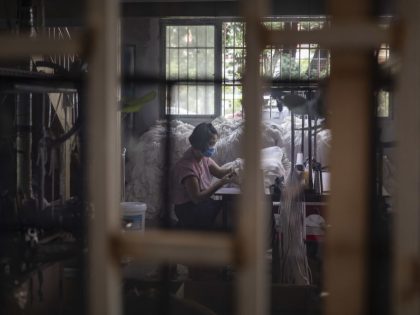
The media and the Democratic Party establishment’s singular focus on paid sick leave leaves out millions of contract and informal workers. We need to think much bigger — now.

The media and the Democratic Party establishment’s singular focus on paid sick leave leaves out millions of contract and informal workers. We need to think much bigger — now.

Australian workers are finally being addressed in the government’s rescue packages, but the measures go nowhere near far enough. National Secretary of the United Workers’ Union Tim Kennedy argues that the crisis offers an opportunity for genuine pushback and transformation.

Italian workers occupy an ever-lower place in the European division of labor.

The dysfunctions of modern capitalism have left us perilously exposed to a public health catastrophe. We must build on the solidarity engendered by this crisis to fight for a different world.

Amid the pandemic, Uber and Lyft drivers are more precarious than ever. Even as the companies dodge court rulings, the battle for drivers to be legally classified as employees is growing.

Jair Bolsonaro is now awaiting trial on charges of plotting a coup, depriving Brazil’s far-right bloc of its figurehead. Yet with a presidential election due next year, the Brazilian left hasn’t found a candidate who can match Lula’s popular appeal.

A decent welfare state should provide the basics of life so everyone can flourish. The United States’ patchwork of poorly funded safety net programs is doing the opposite — dropping people through a trapdoor as the pandemic ravages the economy.

Most surprising about Argentina’s election of far-right libertarian Javier Milei was his capture of a large part of the working-class vote. His ability to speak to the anxieties of the country’s growing precarious sector should be a wake-up call to the Left.
Driver-owned apps could end Uber's exploitative reign over the ride-share market.

Migrant workers have served as the foundation for Germany’s rapid economic growth in the postwar years, but the benefits of that growth have not been evenly distributed. Today, precarious workers are pushing back against Germany’s exclusionary economic system.

Platforms like Airbnb claim to be building online “communities” — even as their business undermines the real communities in cities. But the history of cooperatives shows that it really is possible to democratize the services we use — so long as it’s connected to a wider redistribution of power in society.

Despite the threat of automation and the weakness of organized labor, workers still hold the key to winning social change.

A new book on universal basic income argues for us to "give people money." Sounds good. But a lot of old questions about how to do it are still left unanswered.

In a 2020 campaign against Donald Trump, a bet on Elizabeth Warren is a risky wager on its own terms. But over the next twenty years, a turn toward progressive technocracy is not a bet at all — it’s an unconditional surrender to class dealignment.

Australia’s biggest supermarket chain has locked out its warehouse workers in New South Wales. The lockout is the first battle in a coming war over who will benefit from automation — solidarity with the Coles workers is vital.

In an interview with Jacobin, Jeremy Corbyn talks about the need to rebuild the trade unions, internationalism, and why socialists can’t afford to be on the defensive.

In Australia, automated decision-making technologies have extorted half a million welfare recipients. Despite government recriminations, the use of artificial intelligence to harass workers is only gaining ground.

Keir Starmer’s Labour government has had a dismal first year in power. In an interview, socialist leader Jeremy Corbyn explains why it’s time to create a new left-wing party that empowers working-class people.

COVID-19 has caused unprecedented disruption to the world economy, shining a harsh light on the frailties of global capitalism. But there won’t be a progressive paradigm shift coming out of the crisis without a dramatic upsurge of collective action.

There’s that song, the one about getting knocked down and then getting back up again, but their body of work is like an iceberg; the bulk of it is submerged below the surface, difficult to get a hold of.