Which Way to Socialism?
Is there a democratic road to socialism? And if so, what does it mean for socialists today?

Is there a democratic road to socialism? And if so, what does it mean for socialists today?

Richard Florida chats about Karl Kautsky, Karl Marx, and other urban creative types.

The forgotten Finnish Revolution has perhaps more lessons for us today than events in 1917 Russia.

For centuries, working-class people have been sent to die in wars for empire. The rich history of soldier revolt isn’t just about foreign policy — it’s about breaking the power of the mighty in society as a whole.

Rossana Rossanda died last month after decades of commitment to first the Italian Communist Party and then the dissident manifesto group. She insisted that a left party should be shaped by the demands of workers' everyday struggles.

In the years after Karl Marx's death, Friedrich Engels wrote that a rising socialist movement could now advance by means other than violent insurrection. This didn't mean an embrace of existing institutions — rather, it meant recovering the mass democracy experimented with during the French Revolution.

David Riazanov was a brilliant scholar who pioneered the study of Marxism while playing an active part in Russia’s revolutionary movement. But Ryazanov and the Marx-Engels Institute he founded both fell victim to Stalin’s purges in the 1930s.

The German Social Democrats built a world of cultural institutions that improved workers' immediate lives — while organizing for a socialist future.

Between world wars and a crippling civil war, the Russian Revolution fought to change history.

Brazil’s far-right president Jair Bolsonaro stokes his base’s fears by warning of the “communist threat” posed by “cultural Marxism.” But if you don’t make a living off exploiting workers, there’s no reason to be afraid of Karl Marx and his friends.

The Austrian Marxist Rudolf Hilferding (1877–1941) produced an important and influential analysis of capitalism, and he played an active role in Austrian and German politics before falling victim to Nazism. He still has a lot to teach us about the way modern capitalism works.

Ronald Suny has given us the best picture to date of Stalin’s path to the October Revolution. But the story of the future dictator’s early life doesn’t explain the rise of Stalinism. The key developments and choices that produced that system came after the Bolsheviks took power.

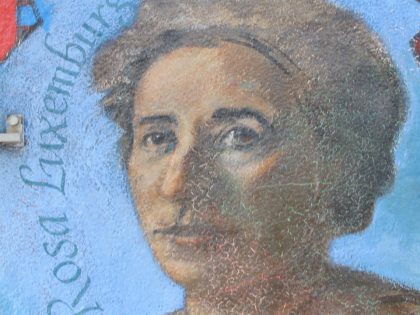
Rosa Luxemburg is an icon of the socialist movement who died a martyr’s death in 1919. But she was also a brilliant and highly original political thinker whose ideas about capitalism and how to oppose it are strikingly relevant to today’s world.

Georgii Plekhanov did more than anyone to popularize Marxist ideas in Russia from the late nineteenth century. While he fell out with the Bolsheviks and condemned the October revolution, Plekhanov had a huge influence over the development of Soviet Marxism.

Franz Mehring joined the fledging socialist movement in Bismarck’s Germany and became one of its most brilliant propagandists. From his historical writings to his biography of Karl Marx, Mehring left behind a vital body of work for Marxists to draw upon.

The diverse mosaic of European socialism engaged both reformists and revolutionaries, often driven by not just intellect but also profound religious conviction. Together, these elements shaped the democratic socialist tradition.
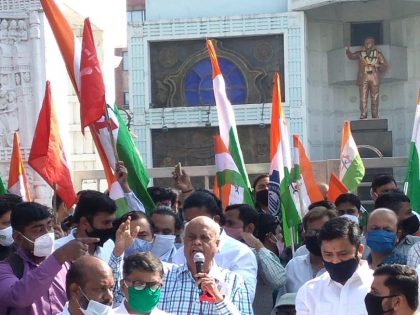
In a new memoir, Tariq Ali recounts his work and activism across the end of the Cold War era and the era of neoliberal globalization. He spoke to Jacobin about what it means to be an anti-imperialist in a changed world.

Ukrainian Marxist Roman Rosdolsky survived the Nazi concentration camps and went on to write one of the most important books about the making of Karl Marx’s Capital, paving the way for a revival of Marxist economic theory from the 1960s.

The rise of doomers, preppers, and antinatalists on the Left reveals something deeper than the hollow posture of rebellion: a collapse of belief in tomorrow. A Left that chants “No future” isn’t just demoralized — it’s unserious, misanthropic, and bound to lose.

How should we assess the legacy of Leon Trotsky?