Rosa’s Mail
The Letters of Rosa Luxemburg reveal a revolutionary who was deeply committed and defiantly humane.
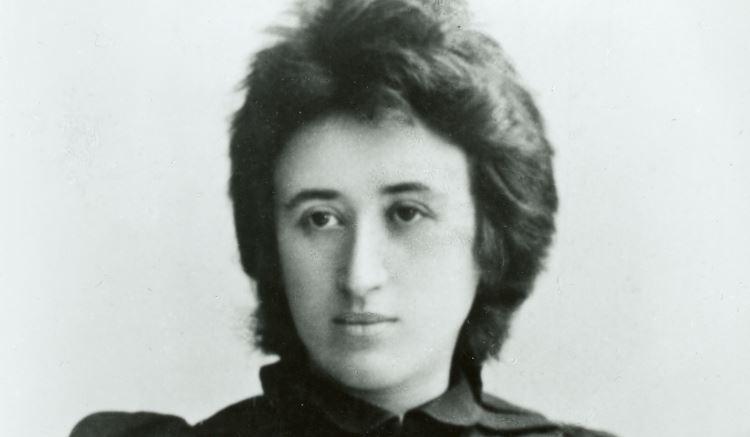
Reading The Letters of Rosa Luxemburg one sometimes feels like a voyeur. Tender love notes are mixed in with daily triumphs and tragedies, accounts of visits with friends, what was had for breakfast, nervous missives to one lover written while hiding from another, romantic longings, and multiple self-deprecating jokes about her small stature and ungainly looks. At five hundred and twelve pages, this collection, the most complete available in English, returns the personal struggles of Rosa — often omitted by earlier editors — to the life of Luxemburg. And somewhere in between hearing of an invigorating walk and watching her curate male affection to assure her writing’s publication, it becomes clear why Verso begins its fourteen-volume complete works of the Polish-born, German revolutionary on such an intimate note: here is a radical portrait for the internet generation. Let’s hope they pay close attention.
The last letter in the collection is dated January 11, 1919, Berlin — four days before the forty-seven-year-old Luxemburg’s assassination. Born in Poland in 1871 to a middle-class, Jewish family, Luxemburg left to study economics and earn a doctorate in political theory in Switzerland. The first letter in the collection — dated July 1891 — comes just as she is finishing her studies. Among activists, Luxemburg is most renowned for Reform or Revolution, a blistering riposte to the theory of evolutionary socialism advanced by Eduard Bernstein. For scholars of Marxist political economy, it is The Accumulation of Capital that is remembered, sometimes as simply a serious contribution to the emerging theory of imperialism, and sometimes as one of the two or three works of political economy deserving mention in the same breath as Marx himself. Luxemburg was instrumental in the rise of German Social Democrats, and, upon their betrayal at the outset of the Great War, founded, with Karl Liebknecht, the Spartacus League, which was to become the German Communist party. It was Liebknecht who, without her knowledge, ordered the ill-advised uprising against the Weimar republic that provided the pretext for their combined murder at the hands of the paramilitary freikorps under orders from the Social Democratic government. Beyond this, she was a powerful speaker, a natural theorist and editor, a peer, a friend, and occasional lover to many of the leaders of the international labor and socialist movements: including Leo Jogiches, Karl Kautsky, Liebknecht, and Clara Zetkin. For all this, though, it is perhaps her letters for which she is most beloved. Even after several years on the CIA payroll, a figure as compromised as Sidney Hook still had to admit that they were “among the small literary treasures of the century.”
The one hundred ninety letters included in Verso’s volume are drawn almost entirely from the German collection Herzlichst Ihre Rosa, first published in 1990 under the editorial guidance of Luxemburg scholars Annelies Laschitza and Georg Adler. The vast majority of these are addressed to Luxemburg’s long-term lover and political partner, Leo Jogiches and the same is true of the Verso edition. Two decades later, translator George Shriver has consulted some of the Polish and German-language originals to get a better handle on Luxemburg’s multi-lingual style. Shriver’s previous English translations are notable, including Roy Medvedev’s Let History Judge: The Origins and Consequences of Stalinism, and Mikhail Gorbachev’s Gorbachev: On My Country and the World. Luxemburg wrote in Polish, German, Russian, and French, often in combination, while sprinkling in English or Latin. Shriver occasionally leaves certain lines in their original form to illustrate the erudite timbre of the prose.