Palestinians Built Israel
Palestinians were not simply displaced and occupied by Israel — Palestinian workers’ superior skills and cheap labor has always been central to the building the physical environment of Israel.

Palestinians were not simply displaced and occupied by Israel — Palestinian workers’ superior skills and cheap labor has always been central to the building the physical environment of Israel.

In a wide-ranging interview, Yemen scholar Helen Lackner examines the Houthis’ politics, their support for Palestine, and the long history of a country torn by civil war.

In response to the war on Gaza, the 100,000-strong International Alliance of App-Based Transport Workers has called a boycott of Chevron-owned gas stations. It shows how precarious workers can use solidarity action to hit firms who profit from apartheid.

Palestinian leader Mustafa Barghouti talks to Jacobin about why the mass demonstrations of recent weeks are just the beginning of a renewed movement to free Palestine.

Israel has killed over 1,400 health care workers in Palestine. Yet the doctors and nurses in Britain who speak up in solidarity with their colleagues have repeatedly been disciplined and silenced.

When the State Library of Victoria fired four pro-Palestinian writers earlier this year, they refused to go quietly. Now they’re at the forefront of a fight against censorship designed to silence criticism of Israeli atrocities in Gaza.

Israeli Knesset member Aida Touma-Suleiman argues that in order for the growing recognition of the state of Palestine to be meaningful, it must be accompanied by sanctions for Israel’s permanent illegal occupation.

The Israeli Ministry of Defense recently made its visa requirements for Americans seeking to visit Palestine even stricter. This will make it harder for Palestinians to visit their families and for US citizens to work in the country.

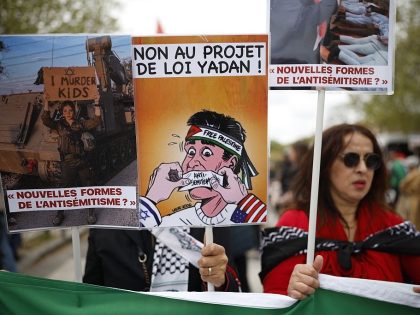
Legislation on protected identities is supposed to foster good intercommunal relations. When it’s used to protect Zionism, it means shielding a 19th-century nationalist ideology from criticism as if it were an innate characteristic of all Jews.

At ports in Melbourne, Sydney, and Fremantle, blockades have delayed Israeli-owned ships. In the face of crippling fines and the threat of jail, protesters are determined to disrupt Israel’s offensive in Gaza.

German right-wing tabloid Bild ran a smear campaign against civil servant Melanie Schweizer because of her solidarity with Palestine — and then she was fired. She told Jacobin what her case says about the reality of free speech in Germany.

New York Democrats: stop trying to make “socialists are antisemitic” happen. It’s not going to happen.

We could soon see another brutal Israeli war on Palestinians after this weekend’s shocking attacks on Ramadan worshippers by Israeli forces. Yet the Western solidarity that’s rightly been forthcoming for Ukraine is now nowhere to be seen.

In a Brooklyn state house race, pro-Palestine socialist Eon Huntley is challenging incumbent Stefani Zinerman. Zinerman is receiving funding from a pro-Israel PAC as well as rich donors like the Walmart heir — money that she is calling “reparations.”

Mohammed el-Kurd has become the face of Palestinian resistance to Israeli apartheid. His fearlessness and ability to speak truth to power has helped galvanize the global anti-Zionist movement.

Repression of Palestine activists on New York campuses like Brooklyn College is being done in the name of protecting Jewish students from antisemitism — even as polls show New Yorkers, including Jews, reject the idea that criticizing Israel is antisemitic.

Red Star Over Palestine, a history podcast from Jacobin Radio, looks at the different strands of the Palestinian left and the role of figures like Emile Habibi, Leila Khaled, and Ghassan Kanafani in Palestinian politics and culture.

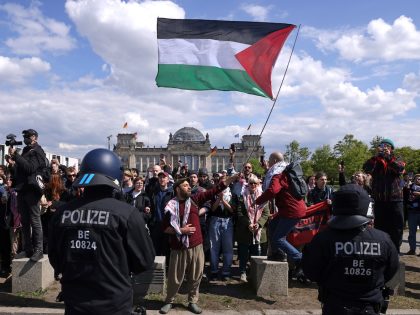
This month, Palestinians mark the Nakba, the wave of ethnic cleansing that began their decades of displacement. But in Germany, trumped-up antisemitism allegations are being used to suppress the commemorations — showing that speech isn’t free for all.

When my coworkers and I were disciplined for wearing pro-Palestine buttons to work, we realized that our supposedly progressive management wasn’t enough to protect our basic rights and freedoms on the job. We needed a union.