
Through Meta Glasses, Darkly
How do we solve a problem like the commodification of mass wearable surveillance? Social norms and market pressure are a start, but above all, we need a political response like regulation.
Page 1 of 1052Next
William G. Martin teaches at SUNY-Binghamton and is co-author of After Prisons? Freedom, Decarceration, and Justice Disinvestment (2016) and a founding member of Justice and Unity for the Southern Tier; he covers local justice matters at www.justtalk.blog
How do we solve a problem like the commodification of mass wearable surveillance? Social norms and market pressure are a start, but above all, we need a political response like regulation.

Sven Beckert’s Capitalism: A Global History ranges impressively over time and space, from medieval Yemen to modern-day Cambodia. But we need a clearer political economy of capitalism to make sense of the material that he provides us with.
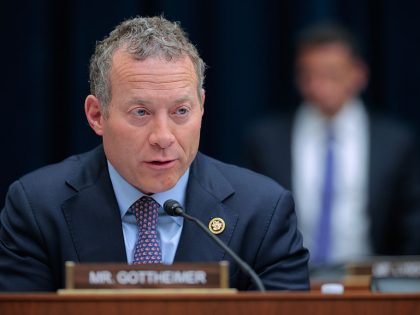
Right-leaning caucuses now hold a majority among Democrats in the House of Representatives. The dominance of centrist economic policy in the congressional party puts it increasingly out of step with Democratic voters.
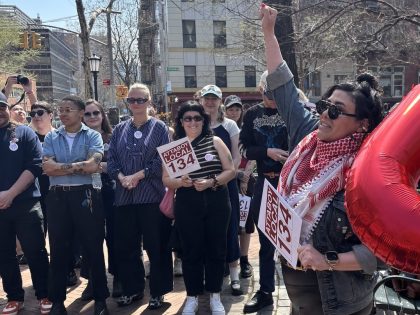
Staff at famed New York cocktail bar Attaboy are forming an independent union in a notoriously hard-to-organize industry.

Donald Trump says the SAVE Act is about stopping noncitizens from voting. But the real target is the millions of working-class citizens who don’t have an updated passport or paper birth certificate sitting in a drawer.

Struggles against oppression start with people critically reflecting on their experiences. What happens to such struggles when we outsource our thinking to AI and replace human interlocutors with sycophantic chatbots?

Panicked, Donald Trump has threatened to destroy Iran’s energy infrastructure by 8 p.m. today unless concessions are made. But Iran’s position is stronger than the president is willing to admit.

Transcription, Ben Lerner’s slim but layered new novel, is a penetrating meditation on fraudulence, fatherhood, and the fate of authentic experience in our digital age.

Donald Trump is proposing to increase the defense budget by nearly half to wage war on Iran. How does he want to pay for it? Cut nearly everything that might help average Americans, from food, housing, and education programs to health care and childcare.

In poll after poll, Americans across the political spectrum support a federal jobs guarantee. And yet it’s never mentioned in mainstream political discourse. New survey data makes the case even harder to ignore.

Public school teacher and socialist Robert LeVertis Bell is running to represent Louisville’s 43rd District in the Kentucky state house. Jacobin spoke to him about his campaign and the prospect of being the lone socialist in a red-state legislature.

In the 1970s and ’80s, rank-and-file workers often took great risks to attack a culture of corruption in the labor movement — including Mafia-controlled union locals.

Europe’s steel firms are increasingly unprofitable, and rising energy prices are making things even worse. Public ownership is vital to ensure conversion to green production while maintaining jobs.
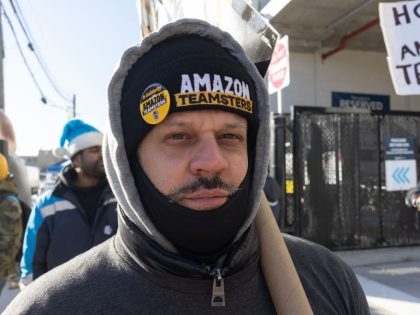
Amazon has long exploited subcontracting to avoid taking responsibility for its delivery drivers. A bill introduced by socialist New York City Councilor Tiffany Cabán would force the e-commerce giant to directly employ its drivers.

In the West Bank village of Umm al-Kheir, a football pitch is named after Awdah Hathaleen, a local man murdered last summer by an Israeli settler. Now Israel has issued an order to destroy the pitch, as part of its continual ethnic cleansing of the West Bank.

The rich are ride-hailing their way out of public transit, draining fare revenue from the system. It’s another instance of the accelerating economic segregation of the public sphere.
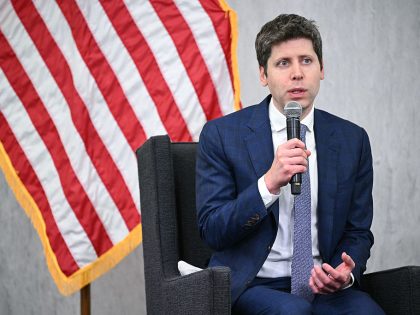
In an age of algorithmically generated “kill lists,” anxieties about AI integration into military decision-making are justifiably mounting. OpenAI’s recent hiring of over a dozen former defense bureaucrats does nothing to allay these concerns.

Local elections saw La France Insoumise make its first real gains in taking over city halls. Ahead of the 2027 presidential race, it still badly needs to expand its voter base to have a chance of winning a national election.

Los Angeles’s public Community Schools are a model to support fights to protect public education and experiment with co-governance.
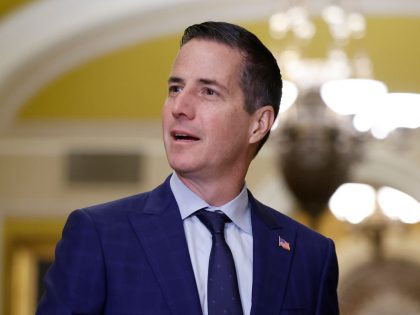
Republican Senator Bernie Moreno, a scion of Colombia’s right-wing political and business elite, is stoking a dangerous conflict between Donald Trump and Colombia’s government. His motivations derive from both veiled familial interests and broad class ones.