RIP Rob Reiner — a Mensch Who Made the Films We All Love

Rob Reiner and his wife were killed yesterday. While Donald Trump tweets out a disgraceful, mocking memorial, we’re celebrating a man who made a decade of great cinema as well as a liberal mensch who stood in stark contrast to the inhuman cruelty of MAGA.
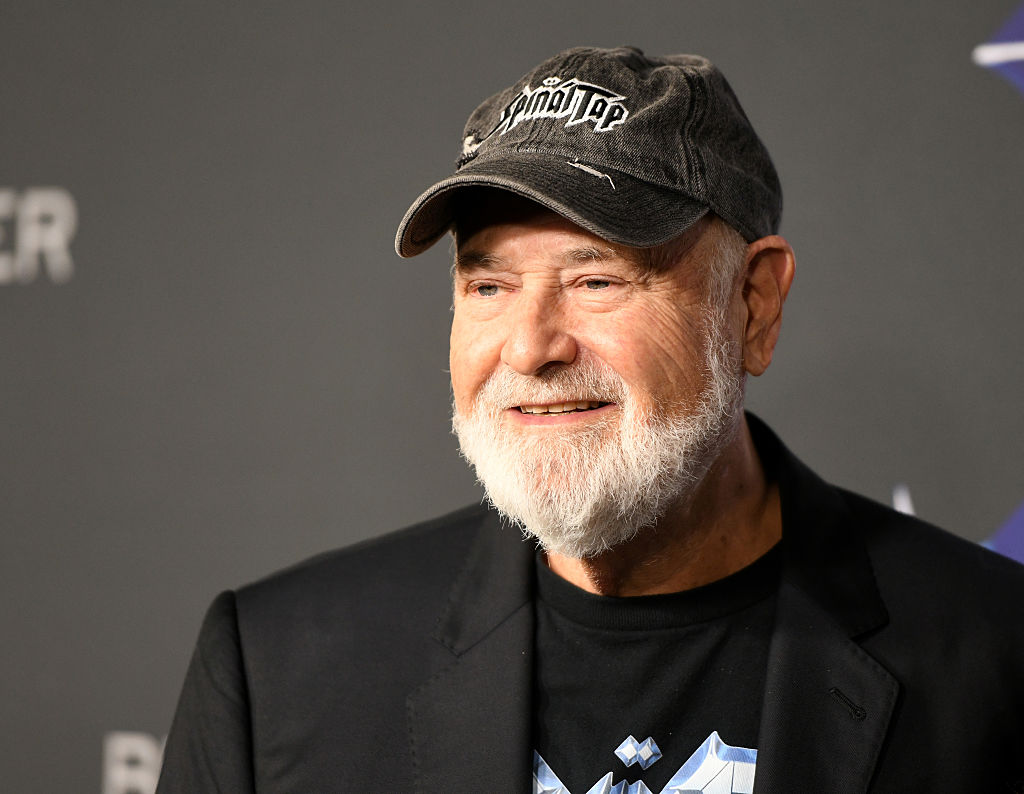
For cinephiles, Rob Reiner’s first seven movies as a director constitute his true legacy. (Alberto E. Rodriguez / FilmMagic via Getty Images)

The multitalented Rob Reiner is on everyone’s mind today after the appalling announcement that he and his wife, Michele Singer Reiner, were found dead yesterday in an apparent double homicide.

As favorite films flash through all our minds — This Is Spinal Tap (1984), Stand by Me (1986), The Princess Bride (1987), When Harry Met Sally (1989), Misery (1990) — it can’t help but remind us that as a director, Reiner came flying right out of the gate with a hot streak of ultra-popular moviemaking that’s rarely been seen since. All the films listed above plus The Sure Thing (1985) and A Few Good Men (1992) constituted Reiner’s first seven movies.

His first real flop was the eighth, the notorious North (1994) starring a young Elijah Wood and Bruce Willis. Though there were bright spots and successes with such projects as The American President (1995) and The Bucket List (2007), the mid-1990s began a striking downturn for Reiner with movies that largely failed to connect with audiences, including Ghosts of Mississippi (1996), The Story of Us (1999), Alex & Emma (2003), Rumor Has It (2005), The Magic of Belle Isle (2012), LBJ (2016), and Shock and Awe (2017). Critics frequently professed bafflement that director Reiner’s golden touch, especially with comedy, seemed to have deserted him.

In the 2020s, Reiner began to find some traction with documentaries. The first was Albert Brooks: Defending My Life (2023), a fond examination of the life and career of the supremely talented writer-director-actor who just so happened to be Reiner’s best friend since high school. This was followed by a somber examination of the rise of Christian nationalism in God & Country (2024). The latter reflected Reiner’s well-known standing as one of Hollywood’s most prominent left-liberal activists.

He was engaged at the national level as a founder of the national nonprofit the American Foundation for Equal Rights and, after Donald Trump’s first presidential victory when the topic of possible Russian interference in US elections was rife in liberal circles, the Committee to Investigate Russia. Reiner was a stalwart supporter of Democratic presidential candidates such as Al Gore, Howard Dean, Hillary Clinton, and Joe Biden. He also went deep into the weeds of California state politics, campaigning hard for various propositions in support of same-sex marriage, taxes on tobacco products, early childhood development measures such as state-run preschools, and various environmental causes. Such was his level of dedication that for a while his name was floated as a likely candidate for governor of California.

This, of course, made him a favorite target of the Republican right. But Reiner, above all else, embodied a fundamental liberal decency even in the heat of political disagreement. When Piers Morgan interviewed Reiner shortly after Charlie Kirk’s assassination, Reiner called the act “horror, absolute horror.” He not only condemned the murder but went on to praise Erika Kirk’s Christianity:

That should never happen to anybody, I don’t care what your political beliefs are. That’s not acceptable. That’s not a solution to solving problems. And I felt like what his wife said at the service, at the memorial they had, was exactly right, totally. I’m Jewish, but I believe in the teachings of Jesus. I believe in “do unto others.” And I believe in forgiveness. And what she said to me was beautiful. She forgave his assassin. And I think that is admirable.

This stands in sharp contrast to President Trump’s horrific and disturbingly narcissistic response to Reiner’s murder:

Rob Reiner, a tortured and struggling, but once very talented movie director and comedy star, has passed away, together with his wife, Michele, reportedly due to the anger he caused others through his massive, unyielding, and incurable affliction with a mind crippling disease known as TRUMP DERANGEMENT SYNDROME, sometimes referred to as TDS. He was known to have driven people CRAZY by his raging obsession of President Donald J. Trump, with his obvious paranoia reaching new heights as the Trump Administration surpassed all goals and expectations of greatness, and with the Golden Age of America upon us, perhaps like never before. May Rob and Michele rest in peace!

Anyway, enough of our national disgrace, back to Reiner — it’s also to be lamented that his acting talent was sparsely showcased in the last few years compared to his early days in show business, when it first brought him to public attention in the long-running hit show All in the Family (1971–79). Reiner played Michael “Meathead” Stivic, the long-haired leftist grad student engaged in obstreperous verbal battles with his bigoted, reactionary working-class father-in-law Archie Bunker (Carroll O’Connor). As the son of writer-actor-director Carl Reiner, a legend himself, Rob Reiner was able to go toe to toe not only with the old pro O’Connor but also Jean Stapleton, who played Archie’s wife. They all won Emmys.

Still, in a variety of guest spots, supporting roles, and cameo performances over the years, Reiner could always nail a character with practiced ease. For example, in The Wolf of Wall Street, Reiner plays the boisterous father of Leonardo DiCaprio’s corrupt entrepreneur, Jordan Belfort. “Mad” Max Belfort is infuriated when the phone rings just as he’s sitting down to watch “the fucking Equalizer.” You can hear Reiner’s voice ringing with righteous indignation: “Who the fuck has the goddamn gall to call this house on a Tuesday night?”

But of course, for cinephiles, it’s those first seven movies as a director that constitute Reiner’s true legacy. While This Is Spinal Tap still rates as one of the most hilarious American movies ever made, really all of his early films showcase Reiner’s ability to draw great, warm, vivid, memorably affecting career-best performances. The troubled preteen boys caught in a cruel test of character in Stand by Me, the romantically beguiling fairy-tale charmers of The Princess Bride, the scary obsessive fan and her favorite author held captive in Misery, Jack Nicholson and Tom Cruise going toe to toe in A Few Good Men — all demonstrate Reiner’s remarkable range and sure-handedness for a nearly ten-year period. Which is ten more years than most directors get.

So let’s all pay tribute to Rob Reiner’s rare gift for popular moviemaking, especially notable in a rocky era for American cinema, by watching those early classics in tribute. It’ll be a holiday gift to ourselves.

But let’s also remember Reiner’s fundamental human decency — a warmth that radiated out from not only his performances, his interviews, and his activism but also his films themselves.

That’s something the MAGA cohort can’t seem to understand as their poll numbers slip away: Rob Reiner made popular entertainment that brought out the best in us. Simply put, he made movies that made our lives better. Those currently snickering about his death, like President Trump and Laura Loomer, reveal only the worst in us.

Not too long from now, Americans will head back to the ballot box for a referendum on Trump II thus far. And I have a feeling that more than a few of them will remember this kind of casual, public cruelty when they cast their votes.