When the Leaning Tower Leaned Left
In the 1970s, the Italian Communist Party was again on the rise in Tuscany. Then it all toppled over.
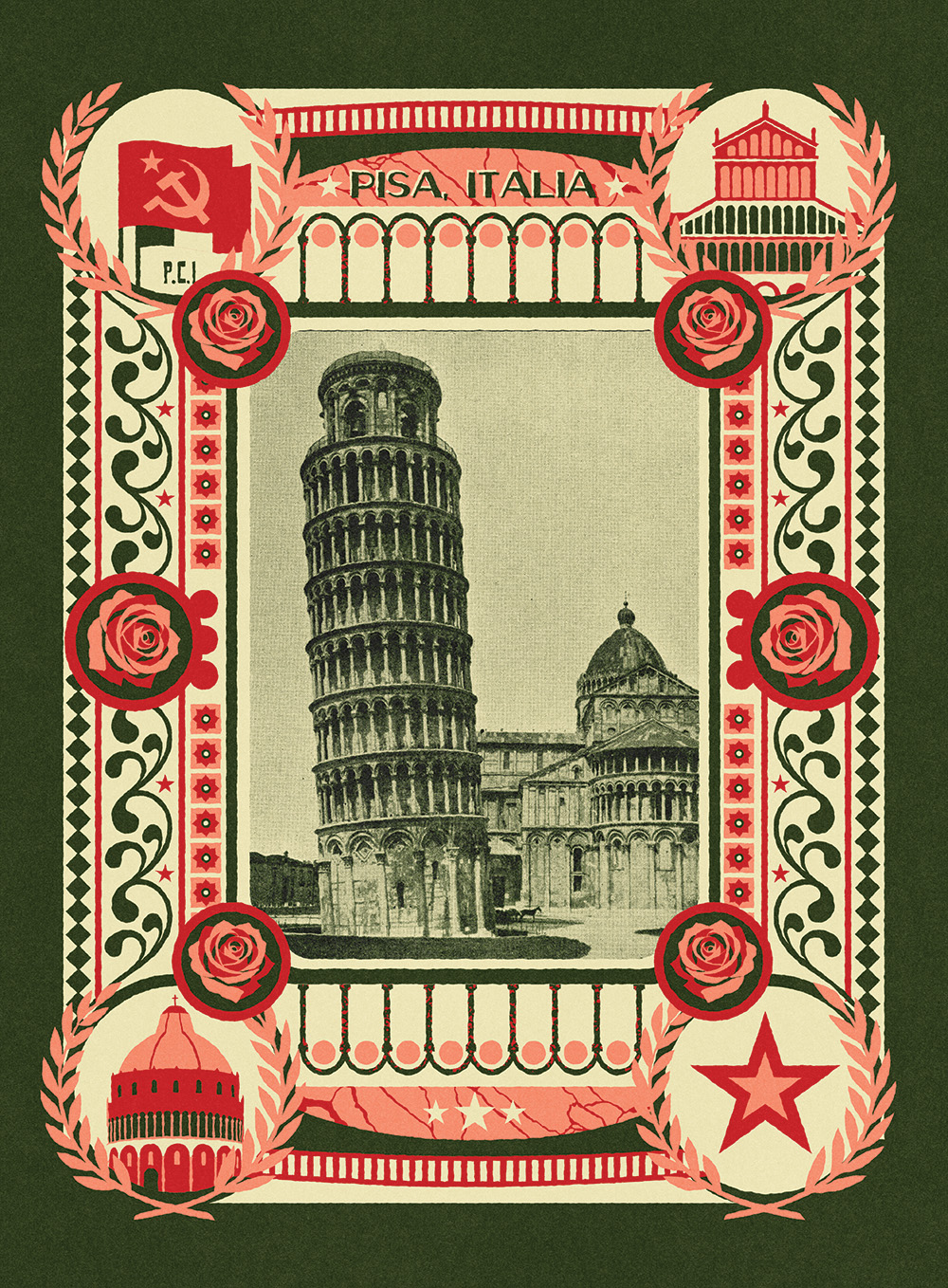
Illustration by Gabe Schneider
In September 11, 1975, exiled Chilean folk band Inti-Illimani set up a stage amid the fourteenth-century arches of Florence’s Piazza della Signoria and called for solidarity. It was two years to the day since Augusto Pinochet’s military coup had bloodily overthrown Chile’s socialist government, launching a massacre that terrified activists around the world. Forced out of their homeland, Inti-Illimani brought their call for defiance to Italy — a major center of Chile solidarity efforts as well as a country on the cusp of a left-wing breakthrough.
In that year’s June elections, the Italian Communist Party (PCI) had reached historic highs, topping eleven million votes and winning power in dozens of city halls and countless municipalities across the nation. In the Tuscan capital of Florence, the Communist ex-partisan Elio Gabbuggiani was now the mayor, and in September he welcomed Inti-Illimani to his city for the party’s Festa de l’Unità — a gala of song, cheap food, and left-wing icons from around the world. Through the darkest days of the Cold War, the Italian Communists were the secondmost popular party, but they were locked out of national government. Now their conquest of towns and cities spurred hopes of eventual triumph.
Ever since the country’s first regional elections were held in 1970 — delayed for more than two decades after the ratification of the postwar constitution — Tuscany had been one of three strongholds for the PCI around central-northern Italy. Gabbuggiani had already served at this regional level before becoming mayor. By the mid-1970s, many major city halls had also gone Communist. Along with Florence, there was the neighboring Pisa. Residents of the two Tuscan cities don’t always get along; graffiti in each town center declares the other’s home football club merda, or “shit,” and even their PCI branches competed to outbid each other as the best organizers. Yet during these pivotal years in Italian history, in the days of a still rising working-class movement, the two cities’ politics reflected many similar demands.