The City the Rich Built — and Broke
A new history traces how elite-driven development made New York richer on paper and poorer in practice.
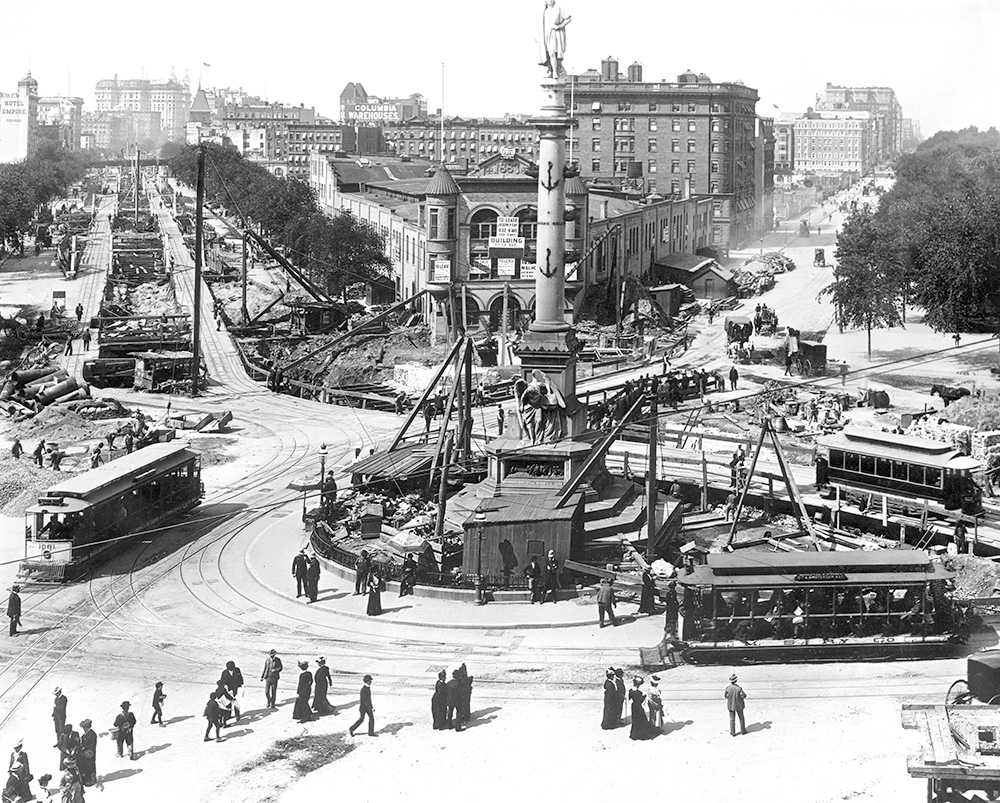
Part of landscape architect Frederick Law Olmsted’s grand vision for Central Park, Columbus Circle began its life in the 1870s as a pedestrian plaza. By the early 20th century, the circle was a common gathering space for political orators — especially those opposed to the politics of the left-dominated Union Square.(Bettmann / Contributor)
When Andrew Cuomo relaunched his New York City mayoral campaign after losing to Zohran Mamdani in the Democratic primary, his ambitions for the city’s future seemingly blossomed overnight. Stealing ideas from his opponent, Cuomo outlined a vision for a new New York centered around affordable housing, safer subways, expanded social services, and economic development for all the city’s residents.
Yet despite the new lingo, Cuomo remained the chosen candidate of the city’s wealthiest inhabitants. Bill Ackman, Michael Bloomberg, and Ronald Lauder all pledged their support to the former governor. At fundraisers in the Hamptons, Cuomo expressed his gratitude to the ultrarich for the tax revenue that funds important social services for the less fortunate — in effect crediting them with carrying New York on their backs. These remarks were clearly intended as an attack on Mamdani, whose plans to tax the city’s rich would, according to Cuomo, only harm working-class residents.
New Yorkers have certainly heard this all before. Daniel Wortel-London’s The Menace of Prosperity: New York City and the Struggle for Economic Development, 1865–1981 makes clear that Cuomo’s approach would not “build a new NYC” but rather recreate problems of its past. For over a century, Wortel-London argues, development strategies that cater to the city’s elite have produced fiscal crises rather than prosperity.