Aber Kawas’s Pro-Worker, Pro-Palestine Campaign
Aber Kawas is a Palestinian American community organizer and socialist running for New York assembly. We talked to her about her family history with ICE, the Palestine movement’s turn to electoral politics, and advancing an affordability agenda.
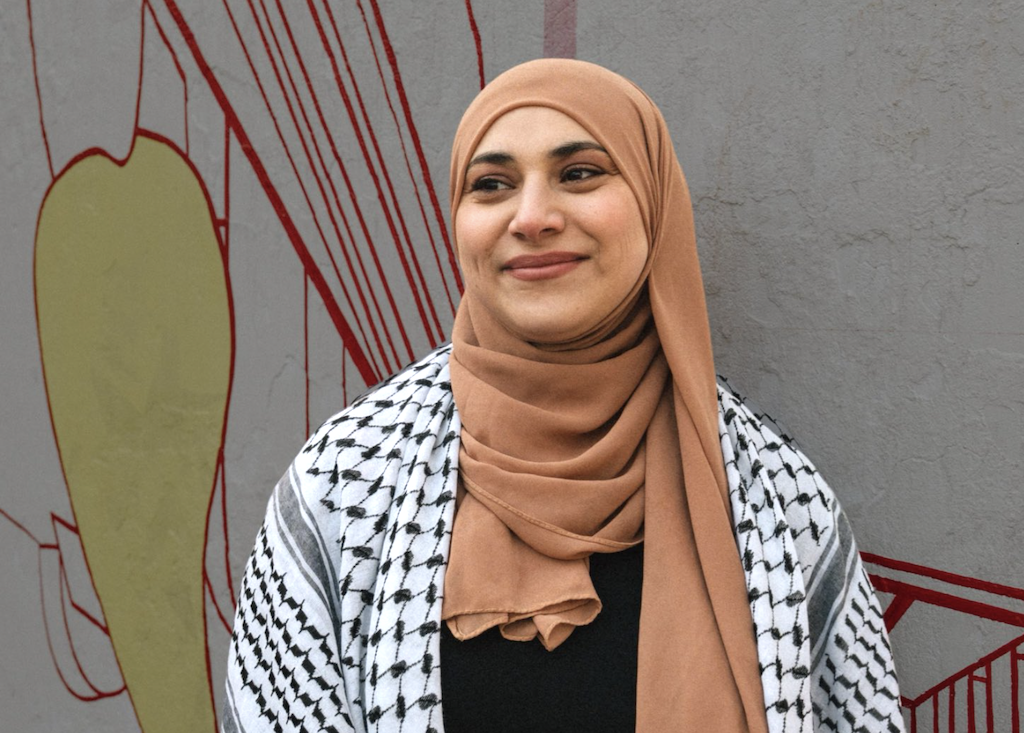
Aber Kawas is helping to develop the proposed state-level legislation Not on Our Dime. (@AberKawas / X)
- Interview by
- Peter Lucas
Just over a month after New York City Democratic Socialists of America (NYC-DSA) helped to elect Zohran Mamdani as New York City mayor, the chapter is also looking to expand its presence in the state legislature. Six New York state assembly members, including Mayor-elect Mamdani, and three state senators are part of the New York State Socialists in Office Committee, a group of elected officials endorsed by NYC-DSA and Mid-Hudson Valley DSA that coordinates on policy and political fights in the legislature. Within the past month, the chapter has endorsed a number of new candidates. Aber Kawas, a Palestinian organizer running for state assembly in District 34 in Queens, has received the endorsement of NYC-DSA’s Queens branch as well as its Electoral Working Group, the first two steps to being officially endorsed by the chapter.
Kawas, who launched her campaign last week, works as the associate director of partnerships at CUNY CLEAR, which provides legal representation and support for people affected by national security and counterterrorism policies and practices. It is a continuation of her organizing in Arab and Muslim communities in New York City, which she had done previously with the Arab American Association.
She spoke with Jacobin contributor Peter Lucas about her role in helping to develop the proposed state-level legislation Not on Our Dime, which would revoke the nonprofit status of New York–based organizations that fund illegal Israeli settlements; her focus on the affordability agenda and how it connects to broader left-wing appeals; and her response to the escalating Immigration and Customs Enforcement (ICE) raids in New York City.
Peter Lucas
Can you tell us a bit about your background? How did you become politicized?
Aber Kawas
I am the child of Palestinian refugees who immigrated to the United States from Jordan. I grew up in a beautiful working-class, immigrant community in South Brooklyn, with lots of beautiful Egyptian aunties. Like so many other Muslim American kids, I became politicized in the post-9/11 period. I was in fourth grade when it happened, and at that time, neither of my parents were documented.
I remember the conversations with my mom and dad about what we would do if one of them got picked up by immigration agents. It was a really stressful time as a child, and our neighborhood of Bay Ridge, which is one of the largest Arab neighborhoods in New York City, was especially vulnerable to mass deportations and illegal surveillance.
When I was in seventh grade, my dad was picked up by ICE; he was held in immigration detention for three years and eventually deported. It was very formative for me to go visit him every week in prisons in New York City and detention centers around New Jersey. Waiting to see a family member, you sit in the prison lobby for several hours and see the kind of people who are held in prisons and detention centers in the United States — poor people, people of color, immigrants — the most marginalized people in society.
Peter Lucas
That experience led you to start organizing?
Aber Kawas
At that time, my mother was struggling to take care of us and also deal with the situation. She went to many community organizations to seek help. In Bay Ridge, one such organization was the Arab American Association — at the time run by Linda Sarsour, who helped my family a great deal. I would attend their youth program after school, and from there, I got involved in activism.
I participated in actions for the Development, Relief, and Education for Alien Minors Act (DREAM) and later on to advocate for Deferred Action for Childhood Arrivals (DACA) [legislation designed to aid undocumented people who came to the United States as young people]. I would talk about my family’s experience of my dad being incarcerated and my brother being undocumented. I began organizing voter registration drives, town halls, and mutual aid initiatives.
Then, when I was in college, the Associated Press revealed reports that the New York Police Department (NYPD) was running an extensive surveillance program that infiltrated mosques and clubs on college campuses, like Muslim student associations. It was traumatizing for me and my friends at City College to know that they had informants who infiltrated friend groups to spy.
We were part of a youth movement at that time that was advocating against this, in collaboration with various groups that were also advocating against things like stop-and-frisk police searches of mostly black and brown people on the streets of New York City. That led me to predominantly organize within Arab and Muslim communities around similar issues like immigration justice and more police accountability. I went on to work for the Arab American Association, where we helped pass the Community Safety Act [legislation that established new protections against police profiling and increased transparency for the NYPD].
But I was quite disinterested in electoral politics for a long time because of my experiences as a Palestinian; time and again, elected officials would just nod and, if we were lucky, listen as we described the injustice. I remember visiting Sen. Kirsten Gillibrand’s office with members of Jewish Voice for Peace to talk about the No Way to Treat a Child campaign [which addressed Israel’s human rights violations against Palestinian kids] and seeing how dismissive she was. This made me quite suspicious of elected officials in general, and it felt like there was a barrier around elected officials that kept them distant from us, regardless of how much work we did.
Peter Lucas
How did your thoughts on electoral politics evolve?
Aber Kawas
That all changed for me in 2017 when I volunteered on Pastor Khader El-Yateem’s campaign. He was running in Bay Ridge to be the first Arab American representative on city council in a neighborhood with a large Arab population; more than that, it was compelling to me because he was running as a democratic socialist — not just running based on identity. He foregrounded economic justice and fighting for the working class. It was the first time I knocked doors for someone, and I felt really excited that I could trust this person who I was helping to get into office. He lost the race, but the campaign galvanized me.
Peter Lucas
You worked with now mayor-elect Zohran Mamdani on the Not on Our Dime campaign. How did that come about?
Aber Kawas
It started when Zohran and I met for coffee after volunteering on Pastor El-Yateem’s race. We had an amazing conversation about Zohran starting a Students for Justice in Palestine chapter at his university, and I shared about the Palestine work that I was doing in New York City. We thought about what it would be like if we could actually bring Palestine into electoral politics.
Years later, after Zohran got elected to the state assembly, I was a part of this collective of Palestine activists and organizers who were thinking of new ways to engage on the issue. The movement for Palestine often consists of large street mobilizations, but it did not feel successful in penetrating local office. We wanted to bring the issue of Palestine into local office. We heard from Palestinian clients of the Center for Constitutional Rights about the Israeli settler attacks on their homes. We realized that there were all of these organizations in New York State raising millions of dollars to fund the violent displacement of Palestinians from their homes, and they were getting tax deductions because they were considered charitable organizations.
We sought to create a mechanism to stop this pipeline of funding going from New York State to fund occupation in Palestine. This was also something that would act as a catalyst for people who care about the issue of Palestine and wanted a way to engage with it that was not just mobilizing into the street.
We knew that bringing a bill around this to Albany would confront the “progressive except for Palestine” dynamic that exists within the Democratic Party, where people are progressive on all issues, but when it comes to Palestine, they don’t say a word. When we first introduced Not on Our Dime, it was a group of fifteen people standing on the steps of the legislature in Albany at the press conference, with Zohran and NYC-DSA state senator Jabari Brisport. The next year, after the genocide had started, there were some three hundred people on the steps with us and “Free, Free Palestine!” ringing throughout Albany.
My time working with Zohran’s assembly office on this also helped me become less skeptical about electoral politics and motivated me to run. He and his staff would meet regularly with us to discuss strategy around how to pass the bill. It was really a beautiful process of genuine co-governance.
It demonstrated to me that elected officials can include their constituents in the decision-making process. Prior to that, it never felt like politicians were actually accountable. Even when the elected official comes from your neighborhood, is from the same ethnic background as you, or speaks the same language as you, they can claim that they care about this, but once they’re in office, they have all of these other external pressures forcing them to compromise.
I’ve seen that over and over: when you go to speak to anybody about Palestine, the common narrative that you hear is people have to compromise or avoid the issue altogether, because they’ll lose votes. Zohran’s election proved that it doesn’t cost you votes to be principled on issues like affordability, Palestinian human rights, and immigrant protections. A new wave of elected officials are demonstrating this; for example, I also was really interested to run with DSA specifically because of the Socialists in Office project.
Peter Lucas
What does the Socialists in Office committee mean to you?
Aber Kawas
I see DSA as a political movement pushing to create an alternative to the status quo of the Democratic Party, that offers a political home for those who want to organize to elect candidates who will fight for the interests of the working class, stand up for Palestine, and aren’t beholden to corporate money. That’s why I’m a member of DSA, and why I’m running as a DSA candidate.
When I was approached by DSA to run, I asked about the Socialists in Office project, which allows a cohort of elected officials to have a shared organization to exchange perspectives and work together on things like the state budget or whether to sign on to a bill. It allows room for discussion with one another and to actually move in alignment. I also appreciate that you’re not only speaking with other elected officials but also their staff, other members of DSA, different community-based organizations, and so on. It facilitates a system of collective decision-making.
Peter Lucas
You mentioned DSA’s growing bloc as providing an alternative to the Democratic establishment. Can you say more about what the DSA alternative represents to you?
Aber Kawas
For a long time, the Democratic Party said that they were fighting for the working person by using rhetoric that makes it seem like they’re centering workers, people of color, immigrants. But in reality, there are many people who are a part of the Democratic Party who take corporate money or who refuse to call what is happening in Palestine a genocide and are unwilling to vote against our tax dollars being used to send bombs to Israel.
Many people have lost hope in the Democratic Party and are looking or an alternative. Zohran’s election signifies to me that there are masses of people who will not just vote for a candidate but will also knock doors for them if they stand up for these principles of human dignity and fight for the working class. The Socialists in Office project and DSA is a part of that alternative.
Peter Lucas
A big part of DSA’s resurgence and Zohran’s win is the “affordability agenda.” You spoke about segments within the Democratic Party that may give lip service to concerns about identity but divorced from action that benefits the working class. Can you say more about that?
Aber Kawas
The video that went viral of Zohran on Fordham Road asking people why they voted for [Donald] Trump highlighted just how concerned people are about affordability. I come from a working-class Arab neighborhood, and in the past few years, I have seen many people who have been subjected to Islamophobic policies, from surveillance and deportations to everyday discrimination, now feel interested in right-wing talking points and candidates.
When we talk about the rise of Trump, he of course has the billionaires who want to exploit workers for profit, but there’s so many people [who voted for him] who we can find common ground with on affordability. All of us are frustrated with rising grocery costs, rent increases, and slow buses. All of us are looking into the future and finding it hard to envision having a restful life, buying a home, raising children, and not feel like it’s a huge burden on our lives.
We need to present a compelling and positive alternative to what they are hearing right now, which is one of exclusion: protect your job, don’t protect other people, protect your livelihood, not other people’s. I am running on the affordability agenda, which unites all different kinds of people around wanting to fight for dignity for all New Yorkers. People just want to afford to live a decent life. Millions of our tax dollars are being sent to bomb children and hospitals, while so many US residents can’t even afford groceries or rent. I think that there is a growing interest in socialism at this moment that we need to capitalize on.
Peter Lucas
The Right, including the New York Post, has come after you for comments you made in the past and have implied that those preclude you from building a broad, successful coalition. What have you made of that?
Aber Kawas
I expected the right-wing attacks, and as I was considering whether to run for office, many of my friends expressed concern for me because they knew that as a Palestinian, Muslim democratic socialist in the public eye, I would receive a lot of scorn from the Right. Indeed, these attacks happened before my campaign officially launched. To me, that signifies that my candidacy is a huge challenge to the status quo, to the existing political establishment.
There’s a lot of fearmongering to discourage people like me, who come from a working-class, immigrant background, who advocate for police accountability and fair pay for workers, from running. But campaigns like mine are not an aberration. It is part of a wave of people who want to bring the fight for human dignity to public office, and that’s challenging the status quo and the political establishment that wants to hold on to power.
Peter Lucas
There have been multiple ICE raids in the city and throughout the country under Donald Trump. What is your plan to protect New Yorkers from ICE?
Aber Kawas
We’ve seen an increase in ICE raids across the country, and two weeks ago a six-year-old kindergartner in Astoria was separated from his father while in ICE detention. This is horrifying for communities all across the city, and especially in my district, which has a large number of undocumented people and workers.
As a state legislator, I will work with communities to disrupt and prevent ICE from abducting and disappearing our neighbors. I will fight for legislation like the New York for All Act and the Access to Representation Act, which would allow universal legal representation, including for someone who is undocumented or at risk of deportation. We’ve also seen New Yorkers use their own bodies to protect people from ICE. It’s imperative that we invest in “know your rights” workshops and training people on bystander intervention.
As the child of somebody who was detained and deported by ICE, I understand the trauma that comes from your family being ripped apart. These raids lead to increased marginalization in our society. We can afford a safe, dignified city for all New Yorkers including immigrants, and that’s what I am fighting for.
Peter Lucas
What do you make of how Democratic Party leaders like Senator Chuck Schumer and Representative Hakeem Jeffries have handled Trump and some of the crises that have arisen from his presidency, like the ICE raids?
Aber Kawas
What you’re alluding to is why we’re all looking for an alternative. Because the Democratic Party has members in the party who say that they want to protect immigrant communities but don’t actually fight for them. It’s crucial to have elected officials who not only use their vote to defend immigrants but also utilize their public platform to advocate for issues and to change people’s minds.
As an organizer, for me, the important thing is to meet people where they’re at. That is something Zohran did exceptionally well. Yes, he ran as a socialist, but he wasn’t going around to people saying, “You should vote for me because I’m a socialist.” He spoke to people about the values of socialism. Can you afford your life? Do you think that your government should be investing more in our transportation, health care, and childcare? These are the questions we need to ask to address people’s everyday needs.
We need to reach the people who are stressed about having children because they can’t afford to, the people who may not know yet whether the word for our program is socialist or not, but they know that it would be great if they could get daycare without going into debt, they know that their money would be better served in going toward making buses fast and free instead of to corporations.
That’s what I’m excited to do with DSA: popularize and implement a program of affordability for the working class, and talk to them, listen to them, and use language that they use, because everybody is struggling these days, and everybody wants a better life.
Peter Lucas
How does something on your agenda like Not on Our Dime relate to the affordability agenda, even if someone is not versed in foreign policy?
Aber Kawas
I’m running as a Palestinian, and that’s a huge part of what shapes my politics. But I’m also somebody who grew up poor with parents who had to use welfare to support us at times, who was raised with a parent who was incarcerated, who attended CUNY with financial aid. The lack of financial security and the indignity that a life without that brings shaped my politics in a substantial way. That is something that many New Yorkers across the state and in my own district can relate to.
The same system that allows for organizations to funnel millions of dollars from New York to aid and abet atrocities and war crimes against Palestinians, and receive tax deductions for raising that money, is the same system that allows corporations and billionaires to get tax deductions while people are living paycheck to paycheck. It’s emblematic of everything that’s wrong with our political system.
So whether or not someone cares deeply about what is happening to Palestinians, it’s important that they understand that this relates to their own issues in their life, because our political establishment is more interested in funding the Israeli military than it is in investing in social services for them, whether that’s universal health care, a higher minimum wage, universal childcare, or free transportation.
We need to invest in our communities; we need to divest from allowing tax cuts and millions of dollars to go from our own tax money to fund genocide.