Lipstick Fascism
On Lana Lokteff, the women of the alt-right, and the feminization of fascism.
On Lana Lokteff, the women of the alt-right, and the feminization of fascism.
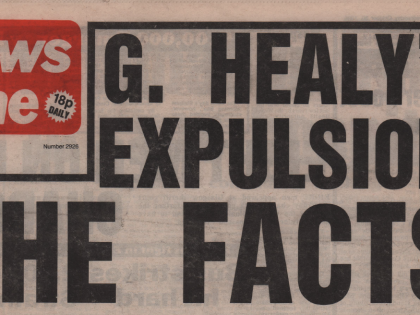
Head of one of the biggest far-left groups in 1970s Britain, Gerry Healy was accused of rape and sexual abuse. A new biography reflects on the swamp from which he emerged — and how his group’s authoritarian model facilitated his crimes.

National divides are so key to Spain’s politics that far-right party Vox even proposes to ban pro-independence parties. For the Catalan left, today’s election is about resisting Spanish nationalist forces who want to crush their autonomy.
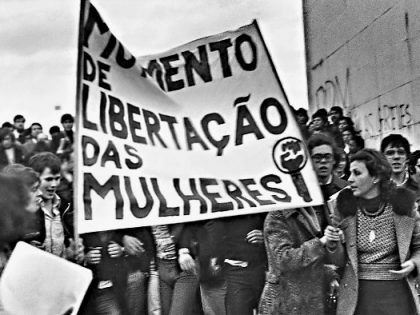
After the overthrow of Portugal’s fascist regime in 1974, a radical movement arose to challenge the near-total lack of rights accorded to women. The violent breakup of the movement’s first protest showed how difficult their struggle would be — yet their activism helped bring about a lasting transformation.

Chile’s Constitutional Convention promises to shift the balance of power in a society long prey to neoliberal dogmas. But as Communist MP Camila Vallejo tells Jacobin, the Chilean right will stop at nothing to defend ruling-class interests.

The Bolshevik diplomat and Marxist feminist thinker Alexandra Kollontai, whose pioneering writings explored the prospects for women’s emancipation under socialism, was born 150 years ago today.

Marxists have a powerful critique of exploitation in the capitalist workplace, but our analysis can’t stop there. A comprehensive analysis of capitalism, Nancy Fraser argues, must also account for the social relations that make the official economy possible.

Spain’s footballers are on strike after soccer chief Luis Rubiales kissed player Jenni Hermoso without her consent. Rubiales claims he’s the victim of “fake” feminist outrage — but the players’ action is a show of unity against a boss abusing his power.
Global elites have appropriated feminist language to justify brutal exploitation and neoliberal development.
The battles over whether communities on Twitter are good or bad, toxic or supportive, obscure the labor that sustains all social networks.

Legendary activist Angela Davis and filmmaker Astra Taylor talk about economic democracy, criminal justice, and why we need a socialist internationalism.

Right-wing governments around Europe are funneling state funds to reactionary lobbies in the name of resisting “gender ideology.” Their supposed anti-elitism is a fraud.

On the 40th anniversary of Spain's post-dictatorship constitution, the center is wracked by crisis, the far right is on the rise, and tensions over Catalonia continue to rise.
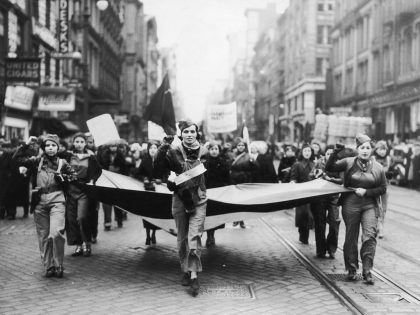
Vivian Gornick’s recently reissued The Romance of American Communism is in high demand these days by young socialists grappling with the meaning of their activism. In an interview, Gornick is slightly skeptical of the reborn socialist movement — and even the book itself. But although she says “I wouldn't have written that book today, I'm not sorry I did write it.”
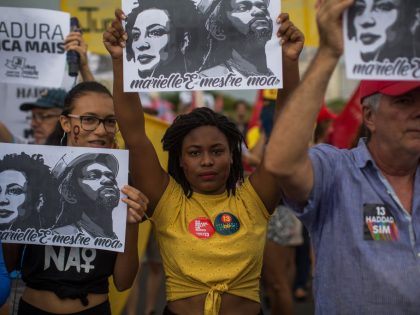
With Bolsonaro in office, Brazil’s left needs more than ever to build mass resistance to the Right. We spoke to two socialist congresswomen about how they’re using their positions in the state to rebuild the country’s socialist movement.
We hear throughout mainstream culture that we are permanently doomed to a squalid future. Artists should insist otherwise.
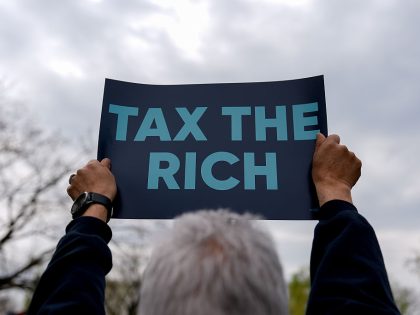
Capitalism is only too happy to accommodate and absorb cultural challenges that don’t alter its foundations. Without economic transformations, the gains of identity-based politics are narrow — and reversible.
Mad Men brilliantly shows the everyday cruelties of the old order, but insists that those who challenged them were fools.
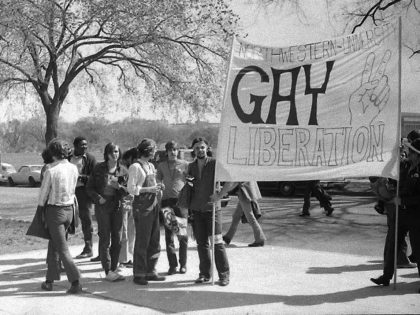
Gay identity became possible thanks to capitalism’s emancipatory side: its liberation of the individual from material dependence on the family. But that sexual freedom wasn’t automatic — it required decades of militant struggle. Today, we need more such struggles to combat the oppressive aspects of capitalism, which keep gay and straight people alike from living fully free lives.

In the ’80s and ’90s, the Democrats took a jackhammer to education, housing, and social welfare. This isn’t the story of a weak party unable to defend its earlier gains, but a transformed party demolishing them in service of a new neoliberal ideology.