From the Underground to the Mainstream
- Nicolas Allen
Feminists in Argentina have achieved an unprecedented breakthrough on abortion rights.
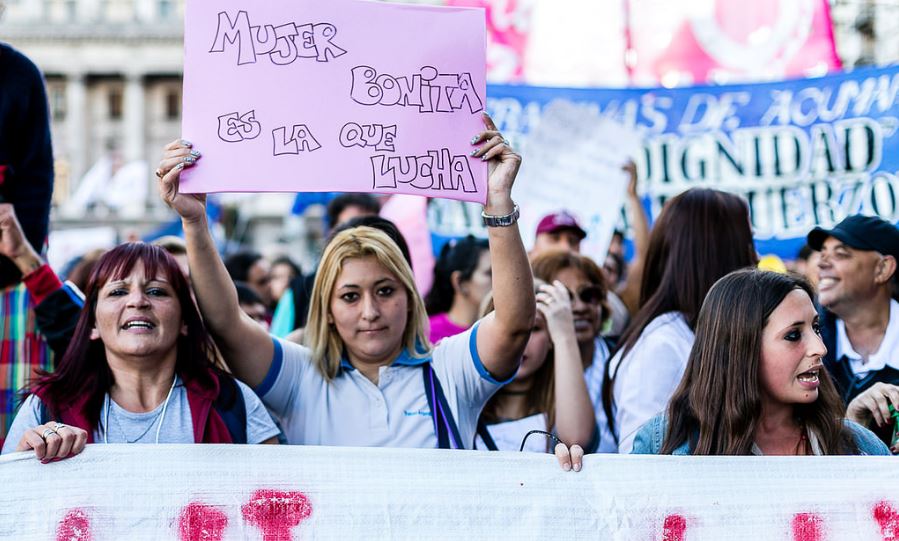
Colectivo La Luz / Flickr
April 10 marked a crucial date in the lives of Argentine women. That day, the National Congress began to review a set of competing bill proposals with potentially far-reaching consequences for access to abortion and reproductive rights. Even if the bills don’t pass, the legislative sessions themselves represent a real advance in the decades-long struggle for the legalization of abortion. They also lay bare a set of socio-political fault lines that rarely, if ever, align with institutional party politics.
The first bill is proposed by National Campaign for Abortion Rights and symbolizes the resurgence of Argentinian feminism through the #NiUnaMenos women’s movement. Were the bill to be passed, Argentine women and transgender men would enjoy some of the most progressive reproductive rights in the Western Hemisphere. The other bill, titled “Human Rights for the Pregnant Mother and Unborn Child,” is sponsored by conservative lobbyists and would institute an economic incentive program encouraging women to carry unwanted pregnancies to term. A slew of bills sponsored by individual legislators covers the middle ground. All the majority parties have abstained from issuing an official position on the matter.
Today, as Argentina draws closer to the forty-year anniversary of the restoration of democratic rule, access to abortion is the last remaining civil right that no government has had the courage or political will to tackle. In other areas, the country had boasted a progressive track-record when compared to neighboring post-dictatorship Latin American countries: same-sex marriage, a widely-praised gender identity law, and an “open-door” immigration policy. Nevertheless, access to abortion is restricted to a few exceptional cases: if the pregnancy is the result of rape or poses a health risk to the pregnant individual.