Lifting the Burden
Last month's Supreme Court decision dealt a blow to the most zealous anti-abortion legislators.

A bill to legalize abortion narrowly failed in the Argentinian Senate. But feminist movements have already effected a social revolution in South America.

The reproductive rights movement is in crisis, and it’s looking for new tactics to break out of the impasse. That’s why there’s renewed interest in clinic defense — but the tactic deserves scrutiny.

The news broke this week that Jane Roe, the plaintiff in Roe v. Wade, was paid by the anti-abortion right to publicly switch sides later in life. But while the news is shocking, we shouldn’t lose sight of the fact that no single person was responsible for the partial victory of Roe — it takes collective action to win social change.

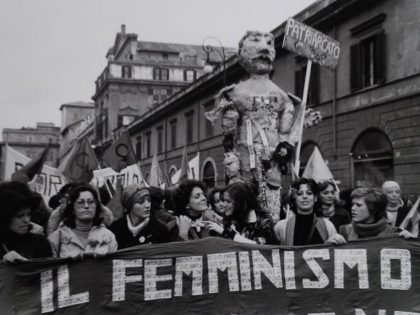
Today marks 40 years since Italy legalized abortion. But the promises of the law remain unfulfilled.

Before Roe v. Wade, women set up referral networks to help each other access abortions. One referral coordinator was Carol Giardina, who connected her college classmates to safe abortion providers even though it was illegal. The time for such bravery has come again.

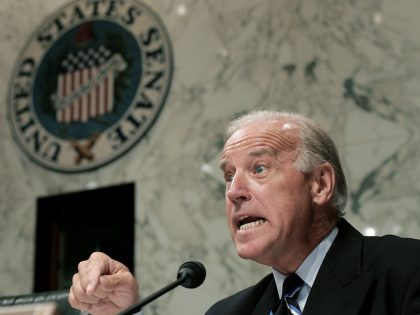
Joe Biden's political career is one of constantly waffling on women's right to choose. He is an unreliable ally in the fight for abortion rights.

Texas and Ohio have ordered a stop to abortions, saying they’re not essential medical services. Other states will follow. Right-wing forces are using the pandemic as a pretext to crack down dramatically on abortion rights. We can’t let them.

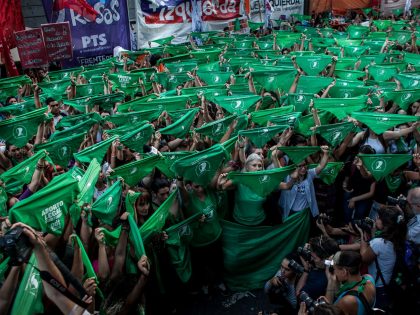
Argentina's anti-abortion forces won this battle. But the feminist "green wave" will have the war.
Ignoring the anti-abortion right has not made it go away.

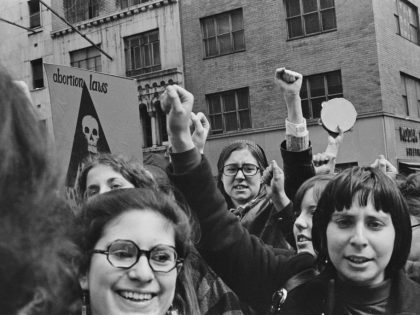
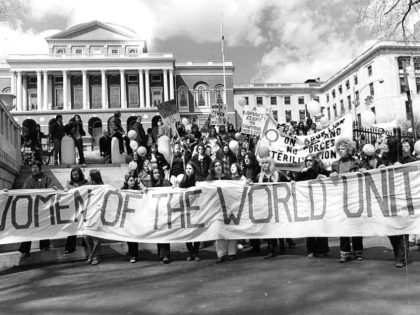
Abortion rights in the US were won in the 1970s thanks to militant feminist groups that built campaigns from the ground up. As those rights are repealed, the fight against conservative reaction must return to the streets.

The end of Roe v. Wade is a disaster that voting alone can’t solve. We need an abortion rights movement that organizes beyond individual elections and fights for reproductive freedom as part of a federal universal health plan.

In Ohio, where the state legislature is solidly Republican, people voted directly to protect abortion rights and legalize marijuana last week. Once again, ballot initiatives have shown voters to be far more progressive than their lawmakers.

GOP vice presidential nominee J. D. Vance has pressured lawmakers to kill a rule that blocks police from accessing the medical records of people seeking abortions — an indication of the threat a Trump-Vance administration would pose to reproductive health.

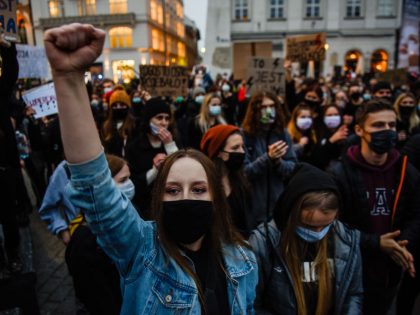
In recent days, Poland has seen its biggest protests in decades, with strikes and demonstrations against the harshened abortion ban. As MP Agnieszka Dziemianowicz-Bąk tells Jacobin, the movement is a lightning rod for frustrations at the country’s hard-right government — and can finally put women’s hardships at the center of the political agenda.
This International Women’s Day, women in Ireland are striking for abortion rights against a backdrop of horror stories caused by the country’s prohibition.

Democrats are hoping to win the midterms by touting the pared-down Inflation Reduction Act and their (modest) commitment to abortion rights. That might work in November — but it’s a poor strategy for reversing hemorrhaging support among working-class voters.

Poland's protests can be a rallying cry for a new feminist internationalism that demands and wins public services for care, social housing, universal health care, and wage justice.

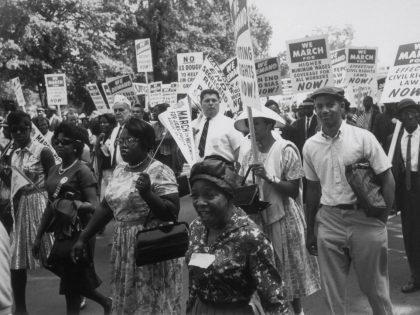
We can’t sit on our hands waiting for Joe Biden to protect abortion and the climate. Movements for the New Deal and civil rights showed us how to beat the Supreme Court and other reactionary, undemocratic institutions: mass action.

The Supreme Court’s leaked ruling overturning Roe v. Wade is an antidemocratic abomination. The Democrats’ response so far has been a bad joke.