I Helped My Classmates Get Illegal Abortions Before Roe. We Can’t Go Back.
Before Roe v. Wade, women set up referral networks to help each other access abortions. One referral coordinator was Carol Giardina, who connected her college classmates to safe abortion providers even though it was illegal. The time for such bravery has come again.
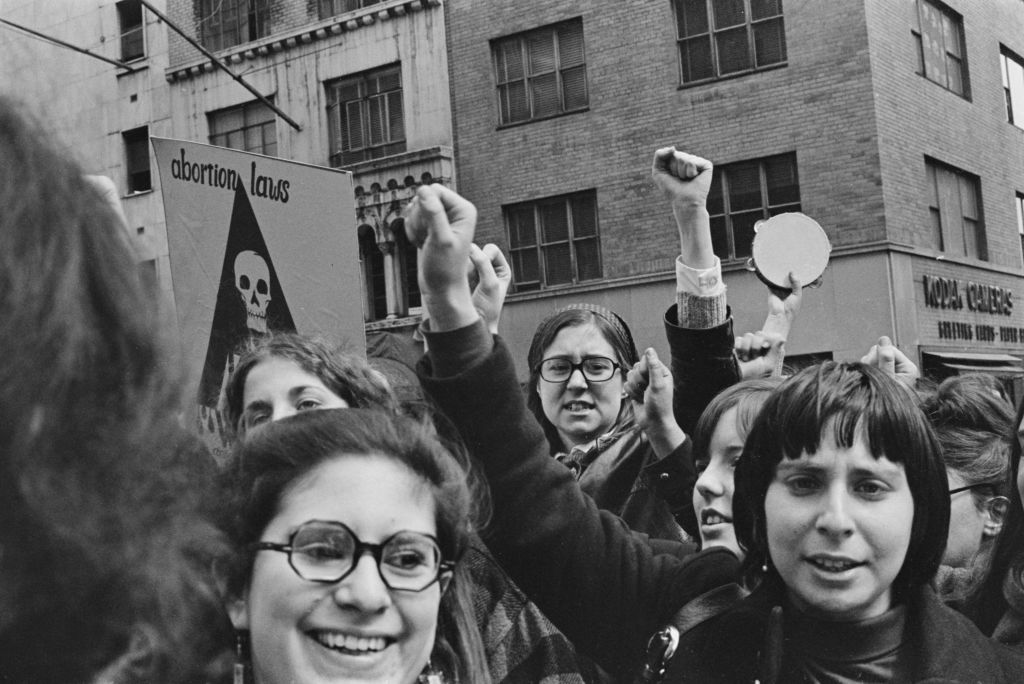
Protesters raise their fists during a mass demonstration against New York State abortion laws in Manhattan on March 28, 1970. (Graphic House / Hulton Archive / Getty Images)
The recent leak of a Supreme Court opinion draft suggests that Roe v. Wade will soon be overturned — and that for millions of people across the country, abortions will become illegal.
For those who came of age before Roe was decided in 1973, the stakes of this rollback are clear. They’ve already lived through a time when getting an abortion meant breaking the law, seeking medical care in secrecy, and risking your life to maintain control over your body and your future. Those who were active in the movements for abortion rights and women’s liberation know the fundamental threats to personal freedom and safety that the pre-Roe era posed — and why we can’t go back.
One such activist is Carol Giardina, cofounder of Gainesville Women’s Liberation and advocate for abortion rights. As a college student in the early 1960s, she created and ran a referral network to help fellow students and community members obtain safe illegal abortions. Jacobin sat down with Giardina to discuss the state of reproductive health care before Roe: how she built the referral network, what options were available to abortion patients, and what a new generation of organizers needs to know as abortion bans take hold across the country.