Fuccbois Need Love, Too
Fuccboi is a novel about the lengths we go to avoid thinking about our own suffering — and the harm we do to others along the way.
PreviousPage 5 of 5

Fuccboi is a novel about the lengths we go to avoid thinking about our own suffering — and the harm we do to others along the way.

Critics of Marx have accused him of imposing a European model of historical development on the rest of the world. But the real Marx rejected Eurocentric thinking and developed a sophisticated view of world history in all its diversity and complexity.

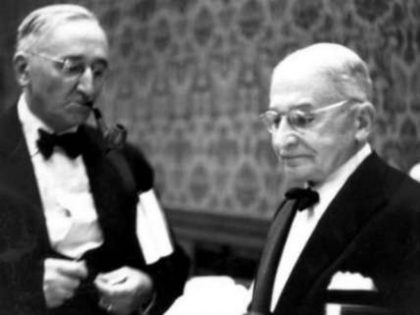
Ludwig von Mises, the influential right-wing economist, thought of himself as a sober, scientific critic of socialism. In reality, he was a free-market ideologue, using dressed-up dogma to prove why workers should bow before their capitalist masters.
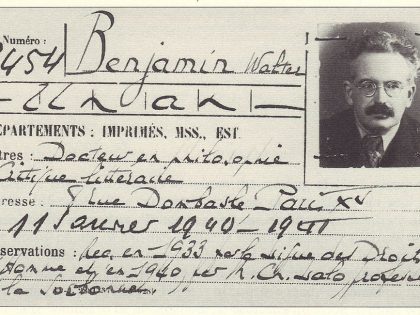
Walter Benjamin was one of the most influential cultural theorists of the last century. There have been many attempts to defang and deradicalize Benjamin’s work, but his Marxist commitments run right through his dazzling intellectual legacy.

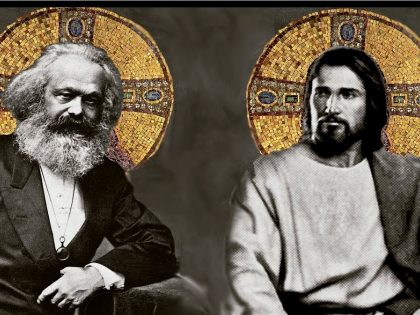
The conventional understanding of Marxism as doggedly anti-religious is wrong. In fact, as the philosopher Alasdair MacIntyre argued, Christianity and Marxism have at times inspired in humanity a radical sense of hope to build a more just world.

While many radicals of the 1968 generation shifted to the right, French philosopher Alain Badiou maintained fidelity to the revolutionary communist project.

Despite his towering academic reputation, John Rawls’s ideas have had little impact outside the university. That’s a shame: as the failures of neoliberalism have become increasingly stark, Rawls’s egalitarian theory of justice has much to recommend it.

The political right is a diverse intellectual tradition and world-making project. But there’s one thing that unites every variant of right-wing ideology: the belief that society will improve if we give up on the dream of a world where people are equal.