Martin Heidegger’s Nazism Is Inextricable From His Philosophy
Despite the mass of evidence proving Martin Heidegger’s Nazi commitment, academics often dismiss concerns about his politics as nonphilosophical. Two new books make a compelling case for rejecting this line of argument.
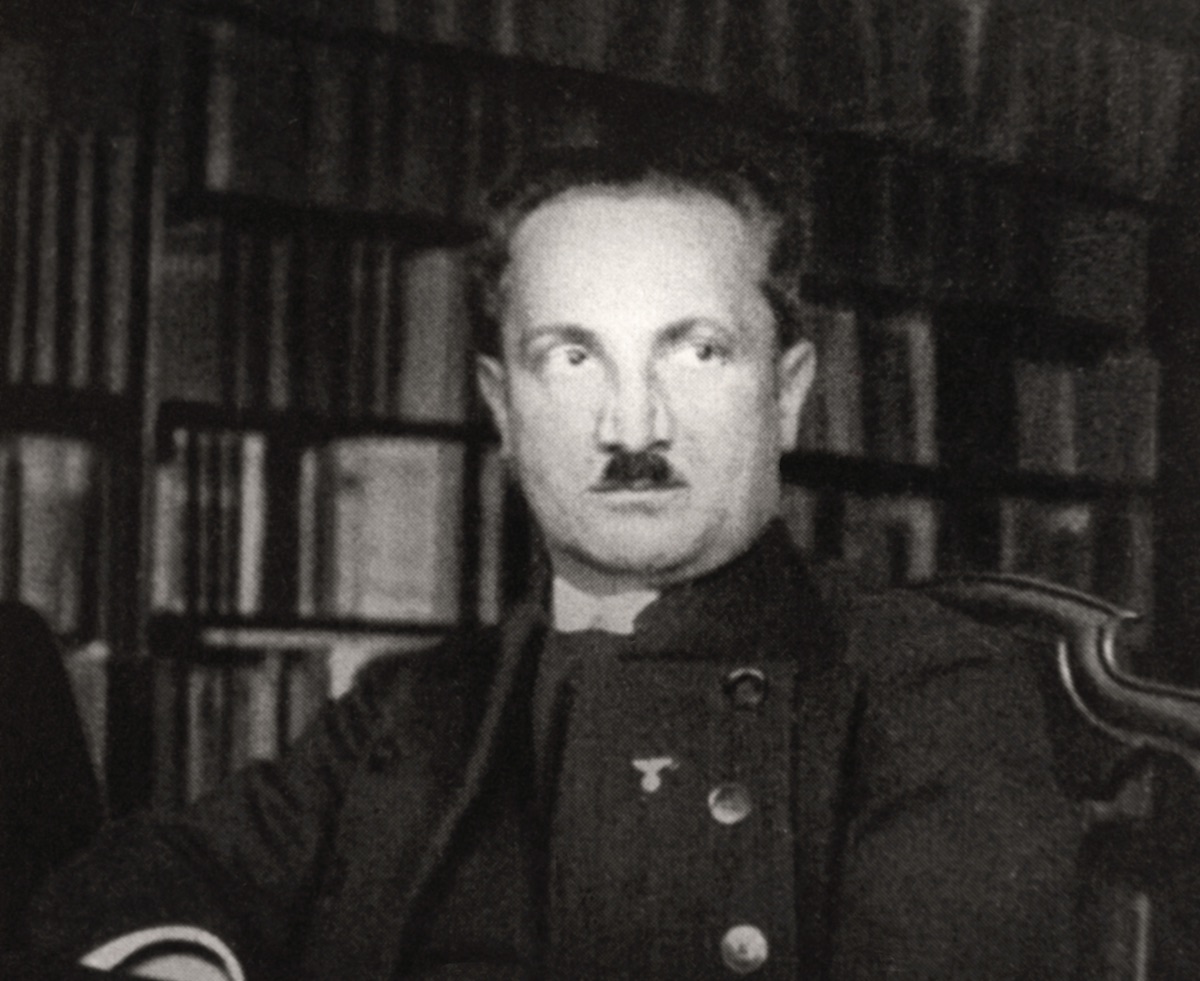
German philosopher Martin Heidegger (1889–1976) c. 1933 (Corbis via Getty Images)
“Back from Syracuse?” That was how Heidegger’s colleague greeted him when he returned to teach after the postwar government barred him from the profession for collaborating with the Nazi regime. Heidegger had, like Plato to the tyrant Dionysius of Syracuse, sought to “lead the leader.” He had set himself up to be Nazism’s philosophical preceptor. Shortly after the Nazis seized power, he maneuvered to become rector of the University of Freiburg. He carefully stage-managed his inaugural address. Flanked by SA and SS members, he outlined his view of nazified university life; then the whole room sang the Horst-Wessel-Lied, the anthem of National Socialism.
Later, Heidegger claimed that he had only been loyal to Nazism for a few months, having stumbled innocently into “error,” before he turned into a regime critic. His followers have uncritically repeated that line even in the face of mounting evidence, but the historical record cannot be dismissed.
The start of the publication of the Black Notebooks, a series of volumes that Heidegger compiled between 1930 and 1970, in 2014 made it impossible for his defenders to ignore his more unsavory opinions. Two recent books, Richard Wolin’s Heidegger in Ruins and Guillaume Payen’s Martin Heidegger’s Changing Destinies, draw on the discoveries of the notebooks to examine the extent of Heidegger’s reactionary views. Together, they make an incontrovertible case that there was nothing naive in his support for Adolf Hitler — his outlook reflects a clear and deep-seated commitment to the worldview of Nazism.