Walter Benjamin Warned Us Against the Illusions of Capitalist Progress
Walter Benjamin was one of the most influential cultural theorists of the last century. There have been many attempts to defang and deradicalize Benjamin’s work, but his Marxist commitments run right through his dazzling intellectual legacy.
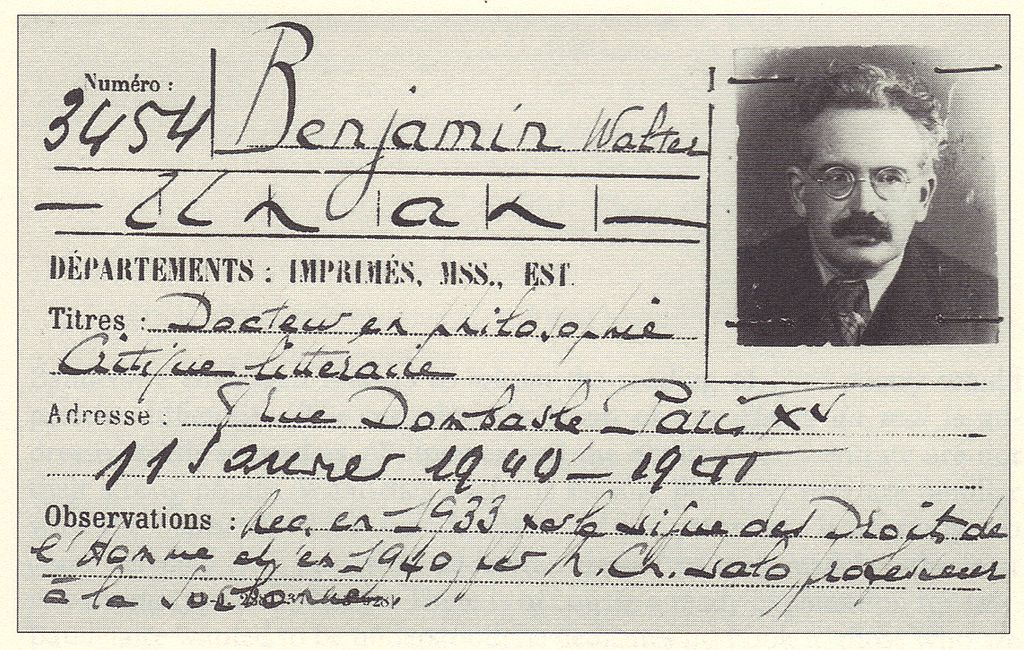
Walter Benjamin’s membership card for the Bibliothèque nationale de France. (Bibliothèque nationale de France / Wikimedia Commons)
The German writer Walter Benjamin has become one of the most influential cultural theorists of the last century. Benjamin took his own life in September 1940 to avoid falling into the hands of the Gestapo, but the Nazi regime could not snuff out his extraordinary intellectual legacy.
Benjamin’s unorthodox Marxism and ideas about culture and history have inspired several generations of critical thought about the world made by capitalism. His relationships with figures such as Bertolt Brecht and Theodor Adorno have also inspired a range of scholarly work, while his description of revolution as an “emergency brake” saving humanity from the disasters of capitalism resonates more than ever in a time of ecological crisis.
Esther Leslie is the author of several books about Benjamin’s life. She teaches at Birkbeck University in London. This is an edited transcript from Jacobin Radio’s Long Reads podcast. You can listen to the episode here.