The Dangers of Anti-Trumpism
Silvio Berlusconi's tenure as Italian prime minister shows how not to resist an authoritarian demagogue.
Silvio Berlusconi's tenure as Italian prime minister shows how not to resist an authoritarian demagogue.
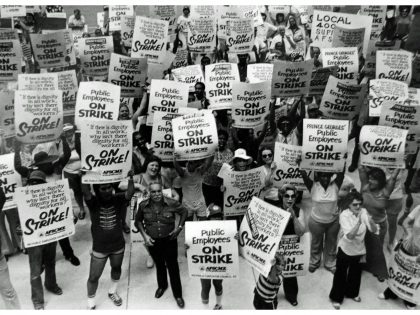
The Supreme Court Janus decision is a devastating defeat for labor. Public-sector unions now have two choices: continued decline, or a reversion to the kind of militant collective action of the movement’s early years.

Economic data doesn’t suggest that the US economy is in a recession, but Americans’ on-the-ground experiences tell a different story. Extreme income inequality can explain the discrepancy between the economic data and the real-world belt tightening.

For decades, American Jews were assumed to be uncritical supporters of Israel. But Israel’s war in Gaza transformed Jewish politics in the US and irrevocably undermined the legitimacy of institutions that sustain Zionism.

They say that under capitalism, the only thing worse than being exploited by a boss is not being exploited by a boss. But I recently realized that reeducating and retooling yourself to be exploited by a new boss in a new industry is terrible, too — not to mention risky and expensive.

They say, “Bernie is too old.” We say, “Better to be old and right than young and a shithead.”

Homelessness is often thought of either as an issue of individual moral failings or merely of bad policy. It should instead be seen as a moral crisis for our democracy, one that demands transformative economic reforms.

Governments want us to respect World War I veterans in an apolitical way. But we should not forget the thousands of veterans who returned home to fight for their rights.

The power of organized labor won the Occupational Safety and Health Administration 49 years ago today. That victory has saved thousands of lives in workplaces across the country — but we need to think even bigger than regulatory reforms now.
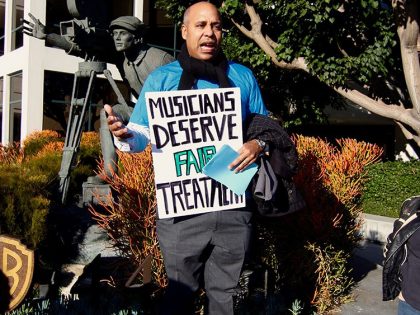
The music industry is making money hand over fist, but life for average musicians remains incredibly precarious. But musicians aren’t temporarily embarrassed millionaires — they’re workers. And like any other worker, the solution to their problem is collective organizing.

Steven Knight’s new adaptation of Charles Dickens’s Great Expectations adds drug addiction, the slave trade and even sadomasochistic sex. But lurid flourishes alone can’t save this adaptation.

With its loss of the presidency in El Salvador’s recent elections, the gains of the revolutionary project launched by the FMLN in 1980 are in serious jeopardy.

Of the 32 US states that forcibly sterilized people in the 20th century under the influence of eugenics, only three have taken accountability by compensating survivors. A group of researchers is trying to make Utah the next.

Shawn Fain used his speech at the DNC to escalate pressure on Stellantis, which the UAW says is reneging on wins secured after last year’s auto strike. The union is preparing to strike the company once again if it doesn’t reverse course.

Ireland’s conservative parties are weaker than ever, but the forces of the Irish left haven’t been able to cohere around an alternative. A campaign for Irish unity based on radical change in both parts of Ireland could help break the logjam.

Almost a century ago, Canadian socialists advanced a vision for cities built in the interest of people, not profit, that included gorgeous public housing. We should look to their ideas to learn how we can revitalize public life.

Work in the twenty-first century sucks. But it’s not because of a new “gig economy” — it’s because work under capitalism always sucks.

Beyond his marquee campaign promises on affordability, Mayor Zohran Mamdani and the movement behind him have the opportunity to expand popular participation in politics and push for reforms that democratize economic life.

With the help of liberals and centrists, Brazil’s Jair Bolsonaro has politicized the military and the courts to hold onto power. For Brazil’s establishment, authoritarianism is preferable to socialism.
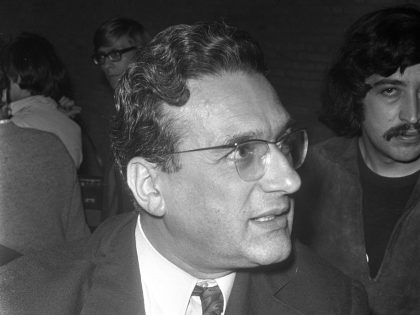
Belgian Marxist Ernest Mandel popularized the term “late capitalism” to describe the way the system had changed in the postwar decades. Mandel’s work was a landmark in the study of capitalism, and we can still learn a lot from his analysis today.