The End of the “End of History”
In China and beyond, liberalized markets aren't fostering democracy — they're undermining it.
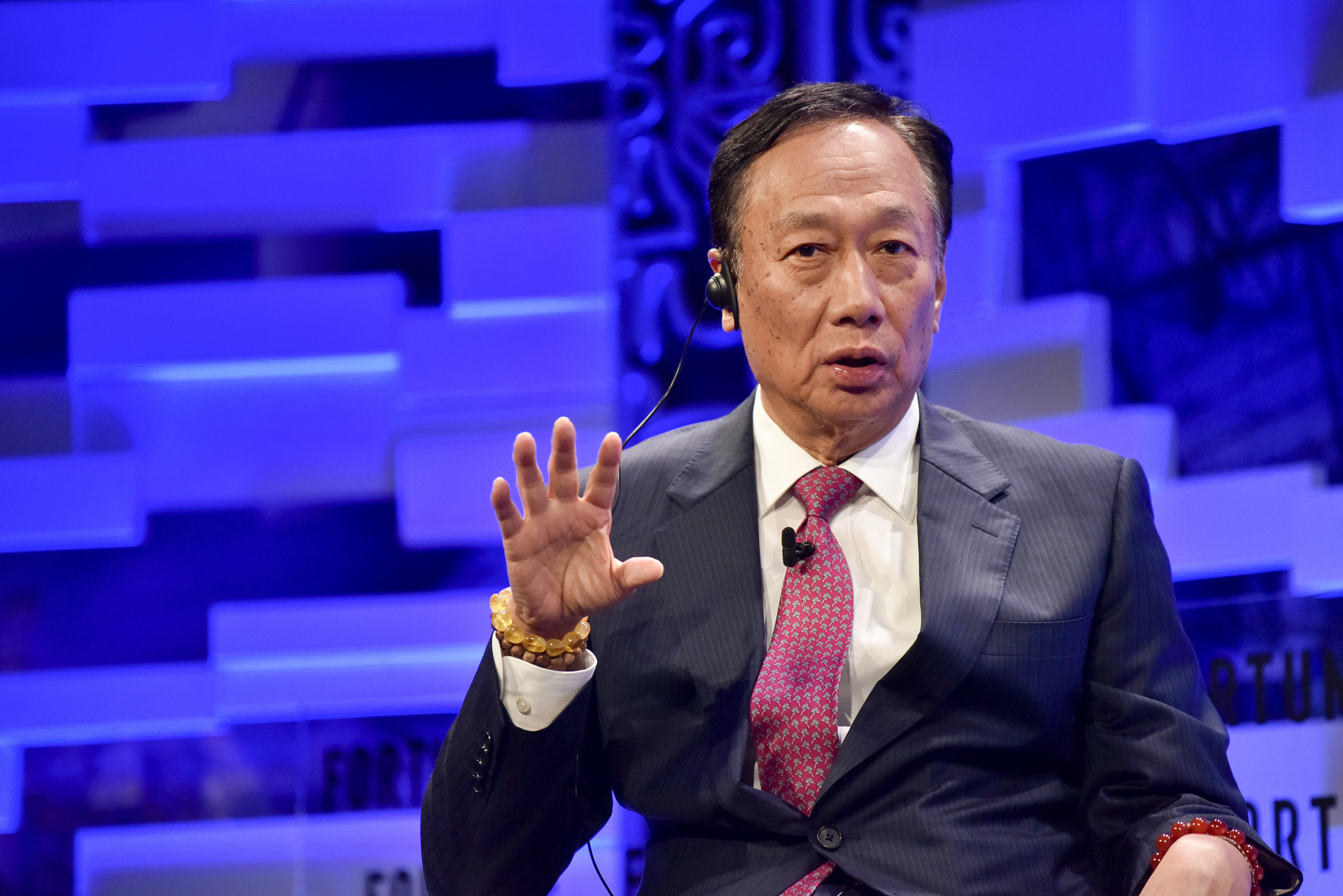
Terry Gou, founder and CEO of Foxconn Technology Group, speaks at the Fortune Global Forum in Guangzhou, China in December 2017. FORTUNE Global Forum / Flickr
In the late 1990s, with the fall of the Soviet Union, the explosion of pro-capitalist euphoria, and the post–Cold War hubris of American empire, Bill Clinton promised that China would become democratic once its citizens had tasted the freedom of the market. He used that pitch to press Congress to pass Permanent Normal Trade Relations with the country in 2000.
Nearly two decades later, as Chinese leader Xi Jinping installs himself president for life, even the most starry-eyed neoliberal optimists have to acknowledge that China has shown capitalism and authoritarianism are perfectly compatible, even complementary. Forget substantive democratic arrangements meant to foster popular participation. In China and countless other countries around the world, modest demands for electoral democracy and basic civil liberties are beyond the pale.
If anything, the Chinese state is significantly less democratic — and certainly more powerful and confident — than it was twenty years ago. Through a variety of means, the ruling Communist Party (CCP) has fractured, suppressed, and co-opted social resistance from workers, farmers, liberal and radical dissidents, and ethnic minorities. The promising wave of worker actions a few years ago now seems like a dream. Chinese capitalism, meanwhile, has continued along its impressive ascent. And with ambitious projects like the multi-country “One Belt One Road” infrastructure initiative racing full steam ahead, the Chinese state is projecting greater economic and political power abroad.