Will Neoliberalism Finally End in Chile?
Chile voted for sweeping structural reform and an end to neoliberalism. It’s a repudiation of Augusto Pinochet and the economic regime he cemented in the country.

Chile voted for sweeping structural reform and an end to neoliberalism. It’s a repudiation of Augusto Pinochet and the economic regime he cemented in the country.

Algorithms are not apolitical tools that simply improve efficiency in online transactions or workplace coordination. They are instruments of control and should be regulated like other tools of control.

For America’s VC-dominated tech industry, AI hype isn’t just a crazy by-product — it’s a structural part of the US economy in which capital tries to write our destinies. We shouldn’t let it.
The dismantling of autoworker gains was a class project, not the inevitable result of globalization.

Workers’ retirement savings aren’t usually thought of as a stimulating topic. But we should pay closer attention, because public pensions are a key way for Wall Street to steal wealth from workers and hoard it for themselves.

The Facebook founder intends to usher in a new era of the internet where there’s no distinction between the virtual and the real — and no logging off.

Failing to unionize Amazon would hasten the US labor movement’s decline. But that doesn’t have to happen. We have a fleeting opportunity to organize Amazon — if labor and the Left make it an urgent priority.

For decades, military repression and oligarchic control have kept the Left on the margins of Turkish public life. But the recently created Workers’ Party of Turkey has brought the far left back into parliament for the first time in half a century.

In 1992, Bill Clinton ran for president promising to “end welfare as we know it.” This rightward turn was part of a broader attempt by the Democrats to craft a “progressive neoliberalism” — whose “progressivism” included abandoning its working-class base.

The “labor question” was once the principal question confronting American society, the axis upon which other maladies turned. We don’t think about social problems according to the labor question today — but perhaps we should.

Since the 1970s, many colleges and universities have become predatory financial giants, while mountains of student debt pile up and academic work becomes ever more precarious. An ascendant academic labor movement may be key to reversing these trends.

Under Jeremy Corbyn, the Labour Party's goal is to create nothing less than a twenty-first century democratic socialism.

At Sunday’s debate, Bernie Sanders can make clear that the policies he has long fought for, and Joe Biden has long opposed, are the ones we need to fight the coronavirus pandemic. Sanders has a chance to hit Biden hard — he shouldn't hold back.

We can’t talk about the rise of right-wing populists like Donald Trump, reactionary and bizarre conspiracy theories like QAnon, and the increasingly pervasive sense of nihilism across global politics without talking about neoliberalism.

Sectoral bargaining allows unions in countries around the world to improve the lives of enormous numbers of workers, including many who aren’t union members themselves. The sectoral model could be a huge boon to labor power in the United States.

The establishment of the first Amazon union in the US is a historic breakthrough for organized labor. The successful union drive shows how the Left can best build real grassroots power: by organizing in the workplace.

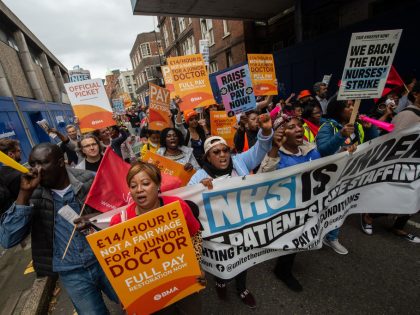
From autoworkers in the US to railworkers in the UK, organized labor is enjoying a new lease on life. In an interview, former Labour leader Jeremy Corbyn explains why he thinks militant organizing represents the trade unions’ future.

Though Bill Clinton ran for president on promises of empowering workers, in office he gutted welfare and passed NAFTA, undermining organized labor and driving working-class voters away from the Democratic Party. We’re still living with the consequences.

At the heart of the current uptick in union organizing at companies like Starbucks has been “worker-to-worker unionism.” That model could be key to scaling up organizing and revitalizing the labor movement.

The evidence is overwhelming: workers are abandoning the Democrats and center-left parties around the world. Class dealignment is radically changing politics, and the Left needs a program to win the working class.