Worker-to-Worker Unionism: A Model for Labor to Scale Up
At the heart of the current uptick in union organizing at companies like Starbucks has been “worker-to-worker unionism.” That model could be key to scaling up organizing and revitalizing the labor movement.
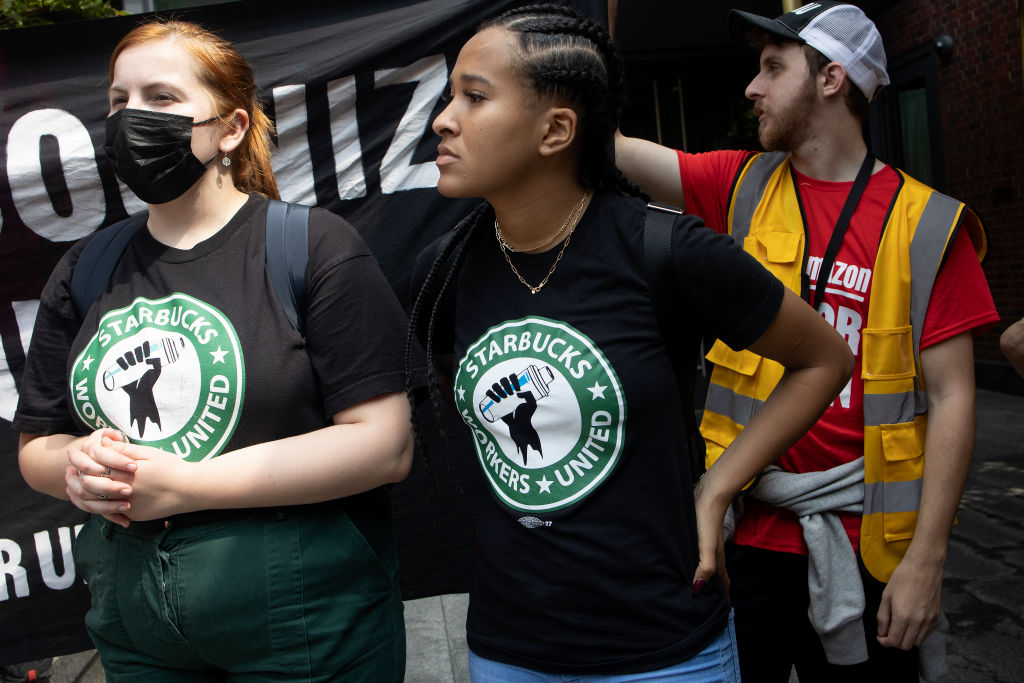
Starbucks union organizers protest outside of the private home of Howard Schultz on September 5, 2022, in New York City. (Andrew Lichtenstein / Corbis via Getty Images)
Young, radicalized, digitally coordinated workers have initiated and driven forward many of the highest profile strikes and union drives of recent years. From the red state teachers’ walkouts to union wins at Starbucks and Amazon, rank-and-file organizers have begun challenging business as usual not only within corporate America, but also within organized labor.
The model of “worker-to-worker unionism” has spread contagiously, as workers have attempted to replicate inspiring successes seen elsewhere. In early 2018, West Virginia’s strike — initiated over the internet via a viral Facebook group — motivated teachers to organize similar statewide actions that spring in Arizona, Oklahoma, and Kentucky. Similarly, recent unionization efforts of baristas in Buffalo prompted workers elsewhere to say, “If they did it there, we can do it here too.”
An increase in worker-initiated organizing has been clearly identified by labor’s opponents. In a 2022 report, the notorious union-busting law firm Littler Mendelson sounded the alarm: