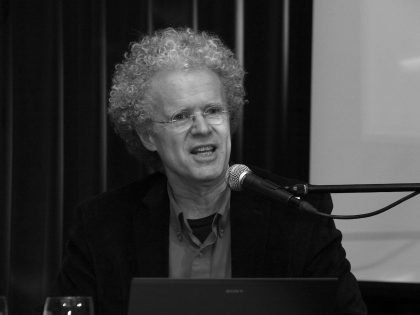
Erik Olin Wright (1947–2019)
Erik Olin Wright was radicalized in the 1960s and remained a Marxist because his moral compass simply wouldn't allow him to drift away. With his death, the Left has lost one of its most brilliant intellectuals.
Erik Olin Wright was radicalized in the 1960s and remained a Marxist because his moral compass simply wouldn't allow him to drift away. With his death, the Left has lost one of its most brilliant intellectuals.

Erik Olin Wright on class, socialism, and the meaning of Marxism.
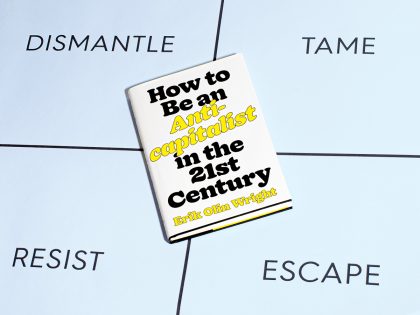
Erik Olin Wright devoted his life to figuring out ways the world could finally leave capitalism behind. His final book holds crucial lessons about which strategies belong to the past and which ones can build the bridge to a socialist future.
Erik Olin Wright understood the necessity of clearly articulating what’s wrong with society, what a better society could look like, and how we could get there.
When it was unfashionable to talk about capitalism, Erik Olin Wright taught generations of students to think about how class actually works — and was curious, enthusiastic, and endlessly generous while doing it.

The characteristics of the middle class, sociology as a discipline, the uses of "utopia," strategies for ending capitalism, the lives of students and colleagues — Erik Olin Wright transformed all of them and more.
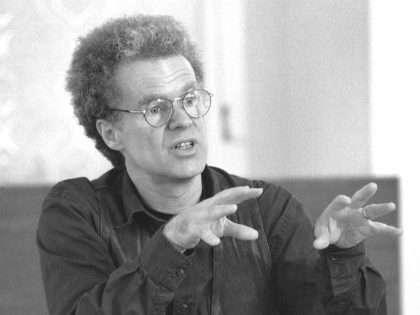
The eminent Marxist sociologist Erik Olin Wright was serious about understanding and changing the world — and was generous, curious, and kind while doing it.
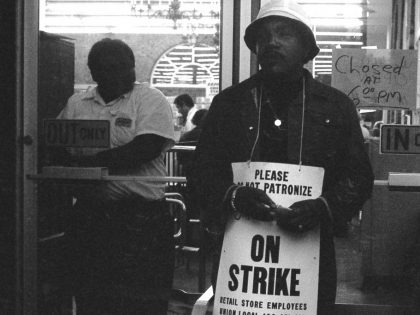
A revolutionary rupture is not on the horizon, but capitalism can still be overcome.
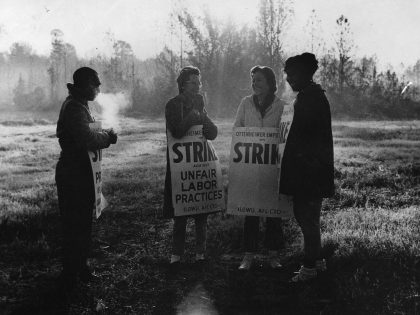
It might seem that way, but genuine freedom and democracy aren't compatible with capitalism.
Anticapitalism isn't simply a moral stance against injustice — it's about building an alternative.

Critics often say the working class doesn't fight back against exploitation because it's confused about its real interests. But this ignores how capitalism itself leads workers to resign themselves to their situation — and how we can overcome that resignation.

Tech workers occupy a contradictory location in the American class structure. On the one hand, many are well paid and identify both as professionals and with management. On the other, the proletarianized aspects of their work can offer opportunities to seize for organizing as workers.

Worker ownership and cooperatives will not succeed by competing on capitalism's terms.

Historian Sven Beckert on where the capitalist system came from, what keeps it alive, and what it would take to bring it down.

Some argue that the continued existence of the middle class refutes Karl Marx’s analysis of capitalism. In an interview with Jacobin, Vivek Chibber explains why this is wrong.

Solving the ecological crisis requires a mass movement to take on hugely powerful industries. Yet environmentalism’s base in the professional-managerial class and focus on consumption has little chance of attracting working-class support.

The middle class isn’t going away — and we’re not sure they’ll help us.

In defiance of predictions, American Marxism has survived and even flourished, notably in universities. This institutional base has produced plenty of good scholarship, but it’s also encouraged hyper-specialization and the use of impenetrable jargon.


The recent questioning of Bernie Sanders by the New York Times editorial board revealed that they see no difference between right-wing populism and democratic socialism. But Bernie wants to mobilize people to discipline the power of big business, not scapegoat the oppressed.