A Real Utopian in Practice and Theory
The characteristics of the middle class, sociology as a discipline, the uses of "utopia," strategies for ending capitalism, the lives of students and colleagues — Erik Olin Wright transformed all of them and more.
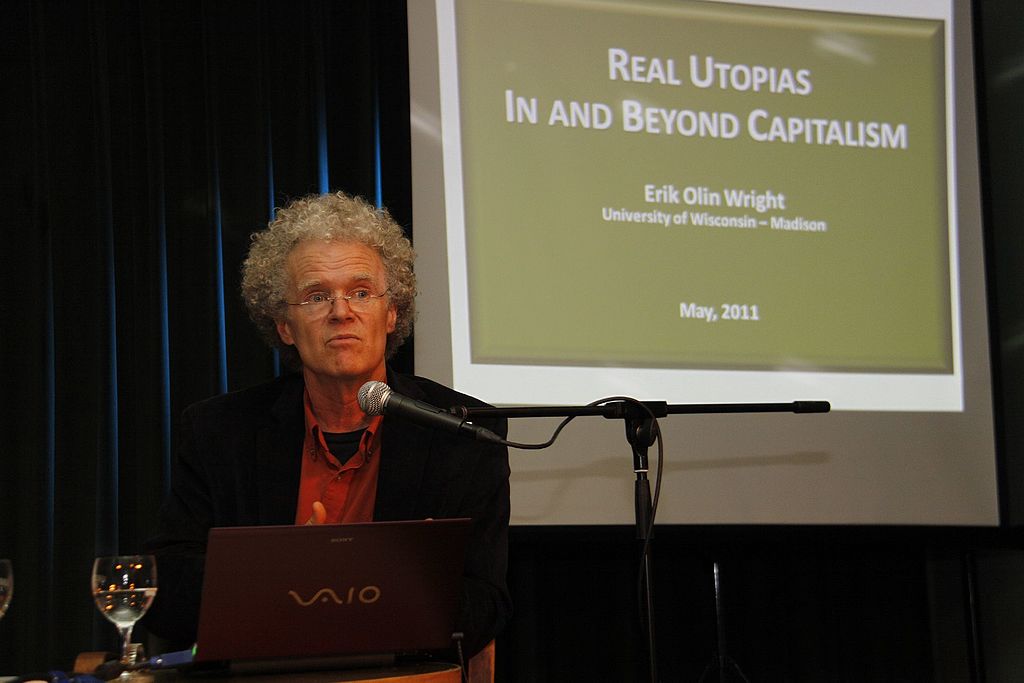
Rosa Luxemburg Foundation seminar with sociologist Erik Olin Wright, in Berlin, May 17, 2011.Rosa Luxemburg-Stiftung / Wikimedia
Erik Olin Wright died just after midnight on January 23, in Milwaukee’s Froedtert Hospital. He was seventy-one years old. The world lost one of its great social scientists, practitioner as well as thinker. He died as he lived — to the fullest. Diagnosed with acute myeloid leukemia the previous April, throughout the subsequent ten months, he exuded optimism about the world that he was devastatingly sad to leave.
Not knowing if and when the end would come, but knowing his life was in grave danger, he created a real utopia around him, beautifully described in the book-length blog that enchanted multitudes of followers, often leaving them in tears. Always an inveterate recorder of his life, whether through photography or writing, this time he took his life public.
Every day or two he recounted his thoughts on living and dying, memorably referring to himself as among “the most privileged, advantaged, call it what you will, stardust in this immensely enormous universe.” He was of that special stardust, miraculously “turned into conscious living matter aware of its own existence.” And then, “this complex organization ends and the stardust that is me will dissipate back to the more ordinary state of matter.”