
The Coming Pandemic-Induced Eviction Crisis
If federal unemployment benefits are not extended when they expire next month, millions of households will be facing both steep rent and unemployment with no assistance. And that means mass evictions.
Meagan Day is a senior editor at Jacobin.
If federal unemployment benefits are not extended when they expire next month, millions of households will be facing both steep rent and unemployment with no assistance. And that means mass evictions.

Incoming LA teachers' union president Cecily Myart-Cruz was a leader of the city’s landmark 2019 strike. Now she explains why it’s important to get police out of schools and what the labor movement can do about it.

A new paper finds that for white Americans, socioeconomic status is a major determining factor in susceptibility to fatal police violence, while for black Americans, class is critical but not decisive. The findings underscore the need to build a movement that stands against both racist police brutality and brutal class stratification.

Capitalism runs on economic coercion, presenting most people with the choice to work or starve. But many workers, from prisoners to college athletes, face other types of coercion that exact a heavy cost for anyone who dares to tell the boss "no."
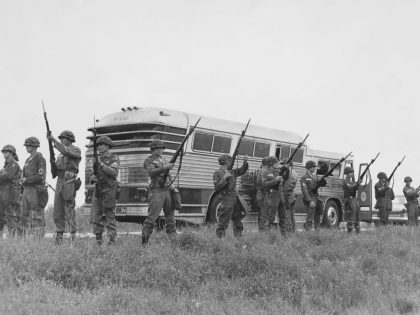
Today’s protests for racial justice are strikingly multiracial. Civil rights organizers have historically considered this an asset and often used it creatively and strategically to their advantage, as they did during the Freedom Rides through the American South in 1961.

A major lesson from the recent teachers’ strike wave was the necessity for unions to bargain for the common good of the entire working class. By joining the nationwide protests against police brutality and demanding police-free schools, teachers’ unions have taken that lesson to heart.

A coronavirus-era partnership between the United Electrical Workers and Democratic Socialists of America has given birth to what may be the most innovative labor organizing campaign since the '30s: the Emergency Workplace Organizing Committee.

Defunding the police means cutting bloated local police budgets and diverting the resources to social programs. Politically, it’s right up Bernie’s alley. He should embrace it.

Credit for the unprecedented wave of mass protests should go to anti-police brutality activists, movement journalists, and politicized young people. But let’s not forget the boys in blue themselves: cops' vicious treatment of protesters proved to millions around the world that the protesters were right.

Workers caught in the grip of the criminal justice system aren’t just denied their human rights by oppressive police and judges — they’re held under the thumb of their bosses. Mass incarceration is devastating for the labor movement.
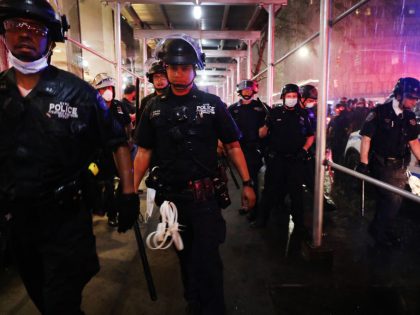
We're witnessing a national police riot that hasn't showed any signs of slowing. The instances of brutal police violence against protesters are so numerous that it's hard to keep track of them all — but here are some of the worst abuses we've seen.

For years we’ve heard about body cameras and bias training to reform the racism and brutality of the police. That won’t cut it. The only way to get better policing is to get less of it — by defunding the police.

In cities throughout the United States this weekend, we witnessed a terrifying spectacle: a brutal police riot, waged with frightening savagery, against average citizens whose unforgivable crime was daring to criticize police violence.
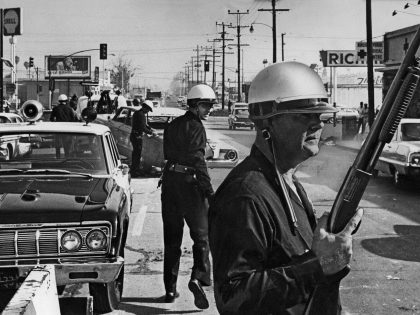
From the Black Panthers to the Communist Party, radical Los Angeles in the ’60s was a seething cauldron of unrest, united by the brutal, lawless repression of the LAPD. In a rollicking new book, Mike Davis and Jon Wiener tell the story of a decade of explosions.

The Blowback podcast reaches deep into the memory hole and pulls the Iraq War back up into the sunlight. It’s vital listening for anyone who is hazy on the specifics of how the US ended up invading Iraq, killing at least half a million people, and sparking bloody, never-ending conflicts throughout the Middle East.

Domestic workers have always been among the hardest hit by recessions. Fear of contagion may make the coronavirus crisis the worst yet — a catastrophe for millions of the most economically vulnerable workers.

Hurricanes, pandemics, and droughts are acts of God. Private markets in housing, health care, and food — and the resulting deaths — are not.

The 1980s saw the spread of a nationwide panic about “stranger danger,” a supposed epidemic of child kidnappings and murders. Under the guise of protecting children, the media-driven hysteria helped spur mass incarceration.

In New York City, the Democratic Socialists of America are running a six-candidate socialist slate aiming for state and national office. It will serve as a test run for socialist organizing in the age of coronavirus.

Decades after Upton Sinclair exposed the horrors of meatpacking, radical labor organizing transformed the industry into a bastion of worker power. Now, a century later, after decades of union-busting and the coronavirus decimating workers throughout the industry, the meatpacking industry is back to The Jungle.