Ending Mass Incarceration Can Help Build the Labor Movement
Workers caught in the grip of the criminal justice system aren’t just denied their human rights by oppressive police and judges — they’re held under the thumb of their bosses. Mass incarceration is devastating for the labor movement.
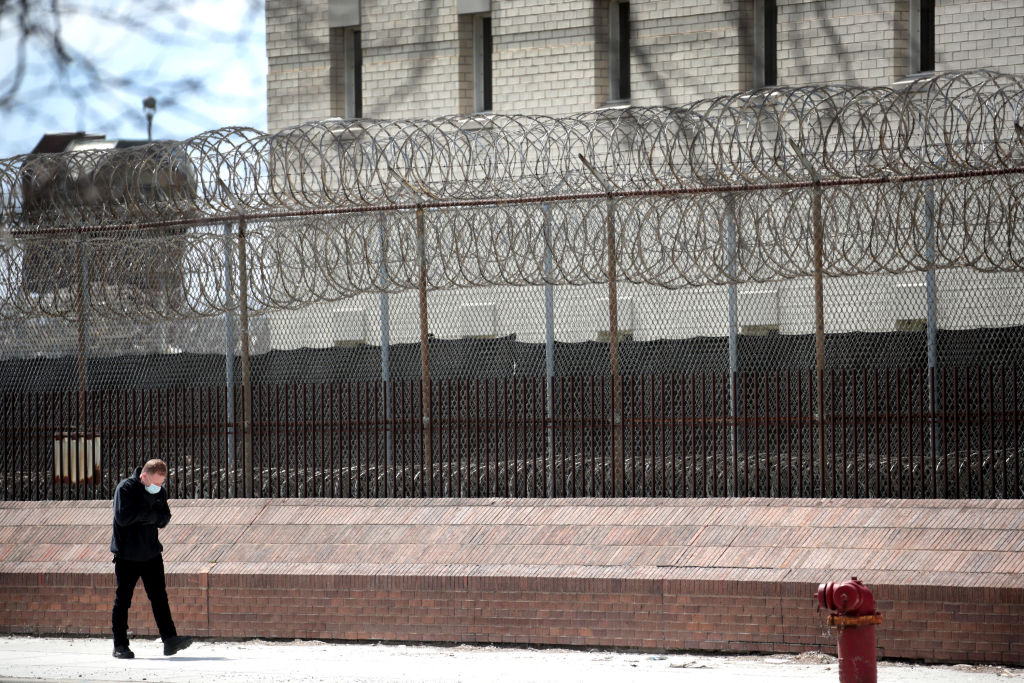
A fence surrounds the Cook County jail complex on April 9, 2020 in Chicago, Illinois. (Scott Olson / Getty Images)
Nearly everybody understands that having a criminal record hurts an individual’s ability to find work. Those on the Right justify this by saying employers have a right to refuse employment to criminals. Those on the Left disagree, arguing for immediate reforms like “banning the box” as well as overall decarceration. But while the responses may differ, the reality that incarceration has negative economic consequences for individuals is recognized across the spectrum.
A lesser-understood aspect of incarceration is its aggregate effect on workers’ collective ability to secure higher wages, along with better benefits and working conditions. A new paper in the American Journal of Sociology, “The Disciplining Effect of Mass Incarceration on Labor Organization” by Adam D. Reich and Seth J. Prins, takes up the question. The authors find that mass incarceration has a significant chilling effect on the labor movement, making decarceration a critical undertaking for a renewed socialist movement that recognizes the necessity of workplace organization.
Reich and Prins acknowledge that broad shifts in the economy are fundamental to the decline of the labor movement in the United States. But at the end of the day, unions are formed by people who must personally take initiative to organize and join them. Therefore, alongside an evaluation of the changing economic terrain, it’s necessary to ask what disposes people to workplace organizing as a means of solving their individual problems — and in turn what makes them disinclined to organize. This is the level at which mass incarceration comes into play.