Canadian Workers Are in Revolt. Now Is the Time for Unions to Punch the Gas.
Just like American workers, Canadian workers have carried out a recent labor upsurge of their own. As the economy slows, unions might be tempted to make concessions. They shouldn't.
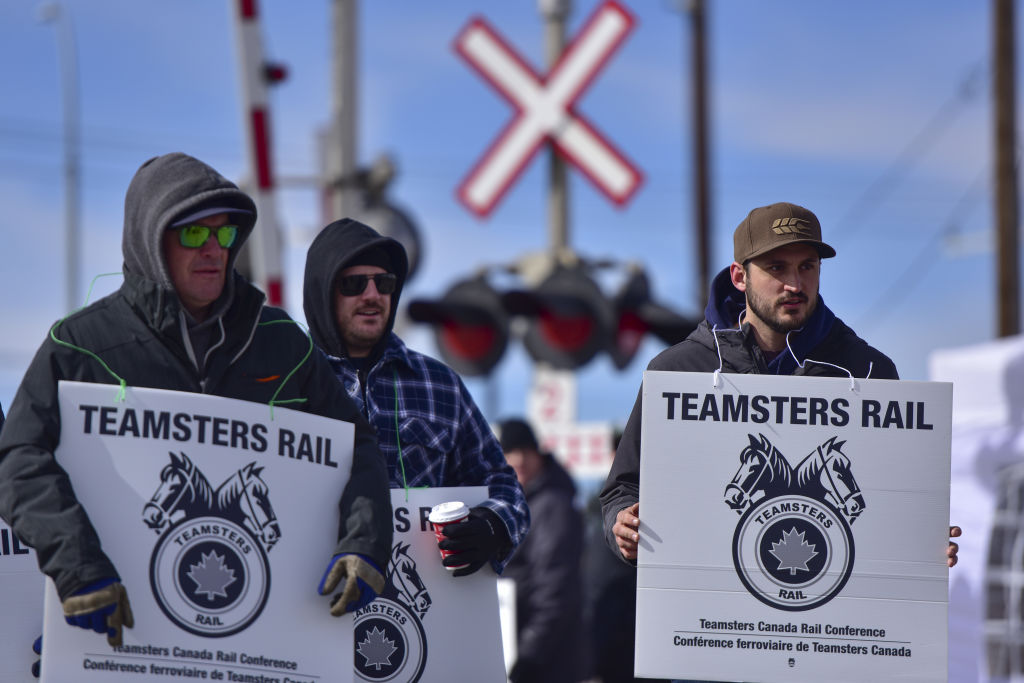
Workers demonstrate during the Canadian Pacific Railway strike in Calgary, Alberta, March 20, 2022. (Gavin John / Bloomberg via Getty Images)
Workers in Canada are on the march for the first time in ages. In March and April, average pay increases secured in new collective bargaining agreements averaged 3.1 percent, the highest in nearly fifteen years. That is not enough to keep up with inflation in Canada, which is now sitting at 7.7 percent — the highest it has been since 1983 — but it is a sign that the labor movement is reviving.
Another promising development has been organizing victories in retail, a sector of the Canadian economy which has been traditionally unorganized. This is especially important because it is largely thanks to high public-sector unionization that Canada’s union density is any higher than that of the United States. As in the states, private-sector union coverage has been declining for decades. These recent successes in retail unionization may well augur a reversal of fortune for private-sector organizing.
However, there are troubles ahead. Worker confidence to fight for higher pay or organize is bolstered by a tight labor market. March’s 5.3 percent unemployment rate is the lowest on record since Statistics Canada began tracking it in 1976. But with inflation at its highest level in nearly forty years, there are calls for the Bank of Canada to raise interest rates above 3 percent from the current 1.5 percent. Not only will this threaten workers with unemployment but it will also put more pressure on those who are heavily indebted to not rock the boat in their workplaces.