The Crisis Is Only Going to Get Worse for Workers
Labour MP Navendu Mishra spoke to Jacobin about the UK government’s feeble response to coronavirus — and why workers with precarious income and housing need help now
David Broder is Jacobin’s Europe editor and a historian of French and Italian communism.

Labour MP Navendu Mishra spoke to Jacobin about the UK government’s feeble response to coronavirus — and why workers with precarious income and housing need help now

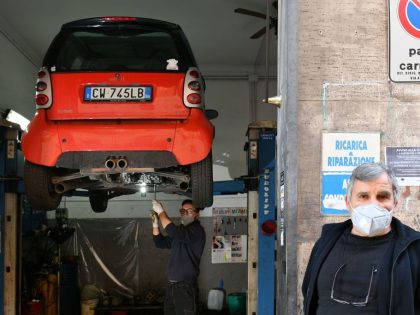
Last night Italy’s prime minister declared that all nonessential workplaces will be shut down to stem the spread of COVID-19. For two weeks, social distancing has been undermined by employer pressure to keep production going. As contagion soars, other countries would be foolish not to learn Italy’s lesson.

Cleaners at London’s Lewisham Hospital went on strike on Thursday after their outsourced employer ISS repeatedly failed to pay them. The dogma of cuts and privatization has subjected them to poverty conditions — even as they work on the front line of stopping the coronavirus infection.

The European country hit hardest by coronavirus, Italy has announced a near-total shutdown of shops and public venues, but many nonessential workplaces are still running. Refusing to let bosses risk their safety, workers are now going on strike.

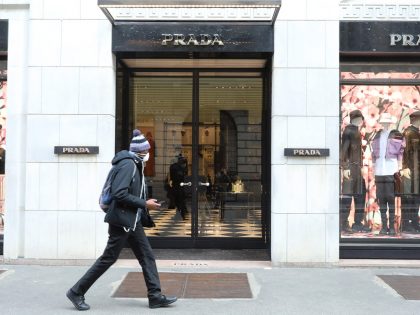
Empty supermarket shelves and the spread of designer-brand face masks show that Italians are panicking about coronavirus. The spread of the virus demands a planned and coherent response — but the politics of fear are instead turning Italians against each other.

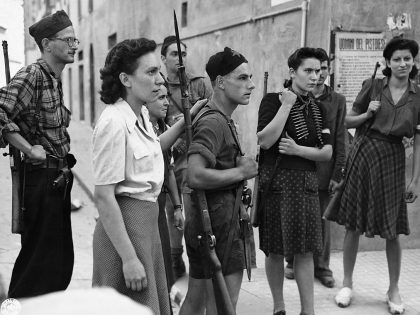
Eugenio Curiel was a leader of the Italian Resistance against Nazism, before he was murdered by fascists on February 24, 1945. He insisted that the Resistance wasn’t just about deposing Benito Mussolini — it was about putting the masses at the center of a new democracy.

The 2010s were meant to herald a new generation of party activism, as Europe’s austerity generation built new structures to the left of social democracy. Instead, we got short-lived surges of electoral enthusiasm — without the deeper rebuilding we so sorely needed.

Boris Johnson’s promise to “get Brexit done” allowed him to frame his whole agenda as a matter of implementing the popular will. Die-hard calls to rejoin the European Union are hopelessly out of touch — and risk dividing Labour over a futile culture war.

Giampaolo Pansa topped Italy’s bestsellers’ lists by retelling the Resistance from the “side of the losers.” His works promised to shine a light on anti-fascist crimes — and handed the resurgent far right a narrative of victimhood.

In 2017, Jeremy Corbyn’s Labour Party transcended the divides of the Brexit referendum to spread a message of economic change and democratic renewal. But a fringe within Labour insisted that overturning the referendum was the only issue that mattered — and succeeded in undermining Corbynism’s promise of uniting working people.

The exit polls from the British election are a devastating blow. Allowing the Tories to pose as the defenders of Brexit ensured defeat — and has handed historic Labour areas over to the party of bosses and landlords. But with resolute socialist organizing, we will have another shot at power.

But we’re nothing without our universal subject — the international working class.

Bolivia’s ousted vice president Álvaro García Linera told Jacobin about last Sunday’s coup d’état and the murderous violence now being unleashed against Evo Morales’s supporters.

Egon Krenz told Jacobin about his time as East Germany’s last Communist leader.

Victory for the Socialists in last month’s Portuguese election rewarded its successes in easing austerity. But for the Left, the fight isn’t over — especially as the European Union tightens the screws on the country’s public spending.

As Portugal heads to the polls this Sunday, the Socialist government boasts of its success in breaking the country out of austerity. Yet as the Left Bloc’s Francisco Louçã tells Jacobin, the current low-investment growth model is unsustainable — and fundamental questions around debt restructuring and the Eurozone architecture remain to be answered.

When pollsters asked the British public what share of Labour members faced complaints of antisemitism, the average guess was 34 percent — over three hundred times the real total. With media insistent that Labour is “riddled with antisemitism,” Jeremy Corbyn’s efforts to fight it have done nothing to placate his critics.

The events of 1989 are usually remembered as an unprecedented extension of the “free market” to formerly socialist countries. But as the history of 1970s Hungary shows, neoliberal restructuring had never been limited to the West — and spread East long before the fall of the Berlin Wall.

The European Parliament has condemned communism as equivalent to Nazism. Based on a fantasy reading of history, the motion smears all “radicalism” as “totalitarian” — and dismisses the moral superiority of those who fought fascism.

On September 11, 1973, Chile’s socialist president Salvador Allende was overthrown in a CIA-backed military coup. In this 1971 interview, published in English for the first time, Allende expressed his fears of internal destabilization and US interference.