Breaking the Chains of Command
For centuries, working-class people have been sent to die in wars for empire. The rich history of soldier revolt isn’t just about foreign policy — it’s about breaking the power of the mighty in society as a whole.
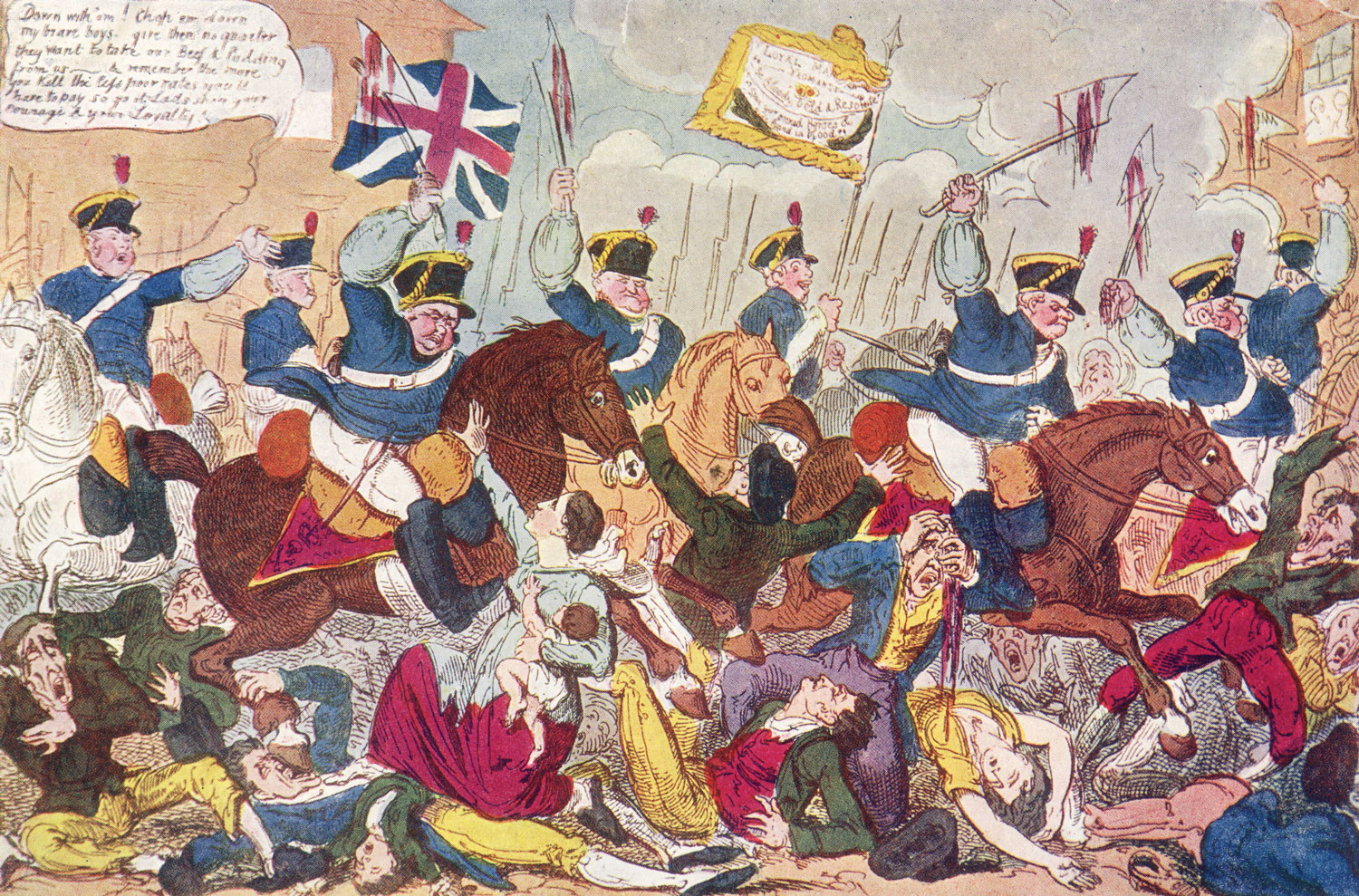
On August 16, 1819, British soldiers charged a crowd at St Peter’s Fields, Manchester, during a meeting called in support of political reform. (Spencer Arnold Collection/Hulton Archive/Getty Images)
One of the protagonists of Mike Leigh’s 2018 film Peterloo is Joseph, a discharged soldier who joins the fight for the vote in early nineteenth-century England. Returning from the Battle of Waterloo, Joseph, son to a family of cotton mill workers, continues to wear his bright red uniform on the streets of his native Manchester.
The movement for democracy takes him to St Peter’s Field and the famous rally for parliamentary reform of August 16, 1819. Faced with a crowd numbering more than 60,000 people, the authorities treated their own subjects much as they had Napoleon’s forces at Waterloo, sending in the King’s Royal Hussars, a professional cavalry regiment, as well as the volunteer Manchester and Salford Yeomanry to impose order. The mounted troops charged the unarmed crowd and slaughtered eighteen peaceful demonstrators.
The army deployment at “Peterloo” fed a deep-rooted popular suspicion of the military. State practices such as “impressment” — forcing vagrants, then seamen, into the Navy — had long faced resistance, and the late 1750s saw large-scale riots in opposition to the Militia Acts, which established a lottery selecting working-age men for five-year terms as reservists (unless they could pay to avoid it). For its part, the regular army consisted of long-service recruits, cut off from the rest of the population and directed at colonial expansion rather than national defense, heightening the perception that they were but an alien force.