Hugo Lives
Hugo Rafael Chávez Frías (1954–2013)

Hugo Rafael Chávez Frías (1954–2013)

Ecuador's minister of culture defends the social and political record of the Correa government.
As pressure for economic liberalization grows, what would it take to turn Cuba into a socialist democracy?

With its loss of the presidency in El Salvador’s recent elections, the gains of the revolutionary project launched by the FMLN in 1980 are in serious jeopardy.

The Mexican and international right are united in their efforts to delegitimatize the AMLO presidency.

US sanctions are killing ordinary Iranians by the thousands. Through its control over the world banking system, America’s sanctioning power flouts international human rights law and poses a threat to the world.

Kamala Harris doesn't say much about foreign policy on the campaign trail. But a look at her record shows that when it comes to militarism, she’s squarely in line with — and sometimes to the right of — a hawkish, war-happy Democratic establishment.

Apologists for US empire like Max Boot insist that American victory was possible in the Vietnam War. It wasn’t. But as long as the war machine needs justification for new interventions — today, in countries like Venezuela and Iran — writers like Boot will have an audience for their imperialist fantasies.

Ousted Bolivian president Evo Morales tells Jacobin about his experience of last November’s military coup — and why his MAS party is poised to win this month’s presidential elections.

As far-right rioters rampaged through Congress, Britain's centrist commentariat absurdly insisted that Jeremy Corbyn's supporters are equally dangerous. Such allegations of left-wing extremism evoke the crudest Red Scare tactics — and whitewash the conservatives who have been enabling Trump for years.

Almost every assassin involved in the murder of Haitian president Jovenel Moïse was Colombian. That’s no coincidence: if you want mercenaries for hire on the cheap, often trained by the US military, you can find them in spades in Colombia.

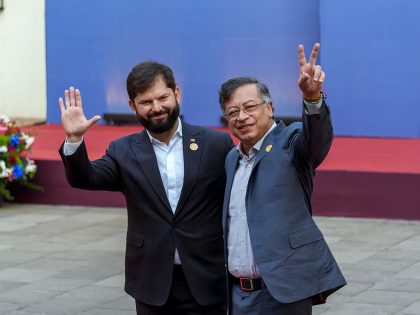
With Gustavo Petro and Francia Márquez’s win in its presidential election, Colombia finally has a chance to roll back its decades of violence and inequality stoked by the country’s status as one of the US’s principal allies in the western hemisphere.

Donald Trump’s push to acquire Greenland has alienated many longtime allies. But it has tantalized a cohort of tech billionaires who see the island as a potential laboratory for “freedom cities,” or privately governed zones without regulation or democracy.

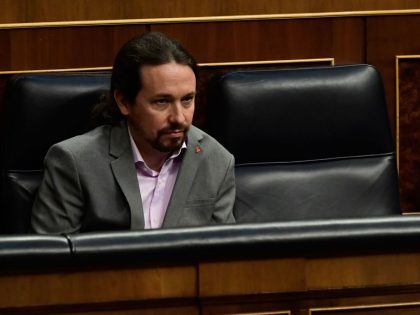
Podemos has gained traction by drawing on lessons from the Latin American left.
Former Philippine congressman Walden Bello on what Duterte's election means for the Left.

Argentina's looming economic crisis is the result of extreme neoliberal policy: as implemented by the military dictatorship, the IMF, and current president Mauricio Macri.

Pink Tide populism was built in the context of two decades of deindustrialization and industrial fragmentation. But we need a socialist left that can reverse those very trends.

Latin America has always been vulnerable to shocks from the global economy. But there’s no precedent for the COVID-19-induced slump that’s about to engulf the continent.

The United States has repeatedly intervened in Latin America to overthrow democratically elected governments and install right-wing dictatorships. But homegrown far-right forces in Latin America itself have often proved just as important as US meddling.

Rather than ushering in a new era of Latin American unity, Donald Trump’s tariffs, anti-immigrant policies, and withdrawal of humanitarian aid have mostly highlighted its divisions.