Will Latin America Unite Against Trump?
Rather than ushering in a new era of Latin American unity, Donald Trump’s tariffs, anti-immigrant policies, and withdrawal of humanitarian aid have mostly highlighted its divisions.
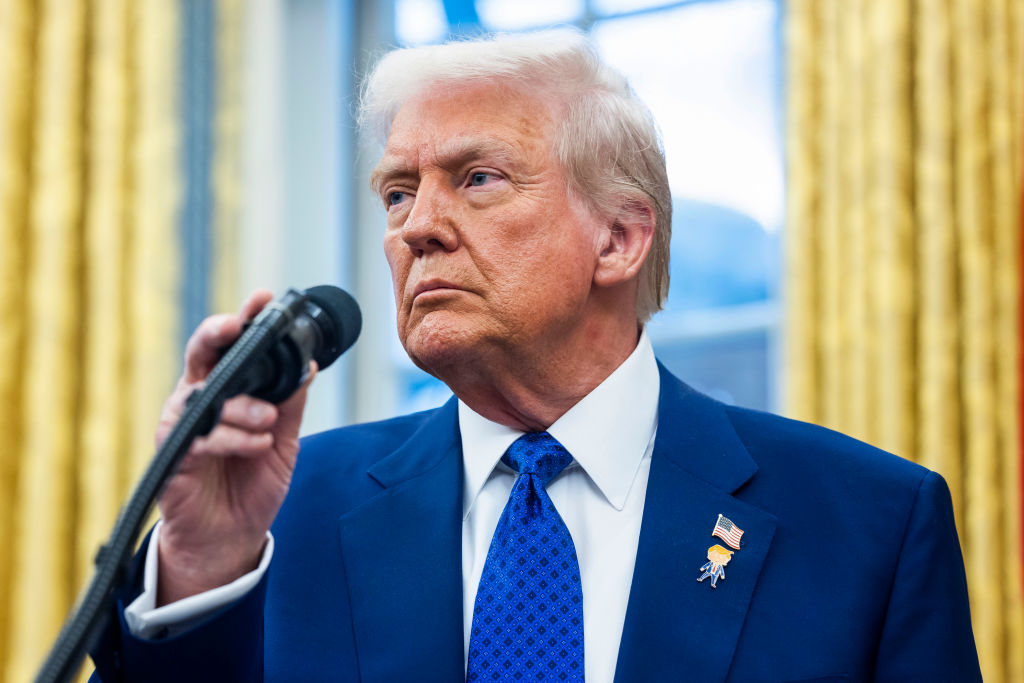
US President Donald Trump in the Oval Office of the White House in Washington, DC, on February 12, 2025. (Jim Lo Scalzo / EPA / Bloomberg via Getty Images)
On December 2, 1823, US president James Monroe declared that the American continent “was no longer to be considered as subjects for future colonization by any European powers.” With these apparently well-intended words, the “Monroe Doctrine” was born, which eventually became synonymous with US imperialism in Latin America.
Donald Trump’s return to the White House for a second term marks a new stage in Washington’s long history of domination over its “backyard,” with changes including a protectionist shift and the withdrawal of the US Agency for International Development (USAID), all delivered with a barefaced imperial style that no longer bothers to hide power politics behind a veil of democratic good intentions. So far, the response from Latin American governments has been scattered and relatively weak, reflecting their deep dependence on their northern neighbor, ideological divisions, and the lack of strong regional organizations.
Trump has taken three major actions in relation to Latin America during his first one hundred days in the White House: the imposition of tariffs on its exports, the tightening of anti-immigrant policies from Joe Biden’s administration, and the withdrawal of US humanitarian aid.