Hardhats and Hippies: An Interview with Penny Lewis
In the popular imagination, opposition to the Vietnam War was driven largely by the privileged, while supposedly reactionary blue-collar workers supported the war effort. That memory is wrong.
In the popular imagination, opposition to the Vietnam War was driven largely by the privileged, while supposedly reactionary blue-collar workers supported the war effort. That memory is wrong.
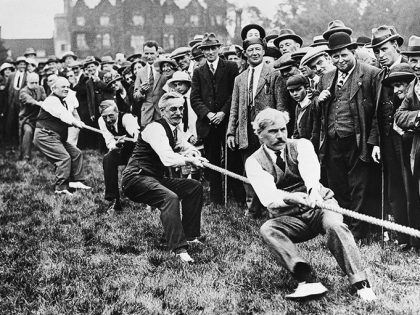
American leftists are constantly wrestling with the question of how to relate to the Democratic Party. The history of the UK Labour Party’s formation through a break with the Liberals a century ago is full of lessons for socialists today.

Socialists today should learn from Herbert Marcuse’s One-Dimensional Man: in particular, its spirit of protest, its materialist social theory, and its warnings about commodified liberation. But they should leave behind its moralism and despair about change.

Rightward Republican Party radicalization is well-positioned for continuing political success, even as it promises to bring political and economic instability for the country and the world with it.

Class dealignment perspectives tend to overstate the extent to which center-left parties can boost their fortunes today through a strict focus on pocketbook issues.

The task for socialist parties is to actively build the class power of working people.

In a capitalist society, state managers rely on business confidence to generate the economic growth on which they depend, so capitalists don’t have to mobilize politically to block radical reform. It requires exceptional circumstances to loosen these constraints.

Runaway inequality, regressive taxes, rampant labor exploitation. It’s often said the US economy “isn’t working,” but the truth is that capitalism is a class system that’s working exactly as intended.
Many white workers aren't voting for Democrats this November. And we can't just blame racism.
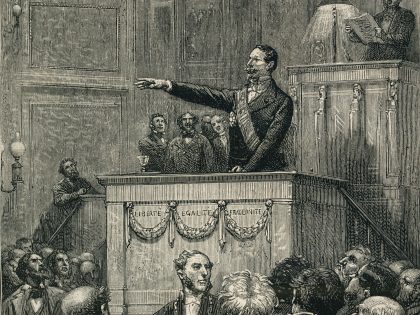
In The Eighteenth Brumaire, Karl Marx analyzes revolution and reaction in mid-19th-century France to blistering effect. His appraisals offer enduring lessons on revolution, class dynamics, and the perpetual tussle with the bonds of history.
The once mighty French Communist Party is a shell of its former self. What happened to its mass base?

During the Cold War, the CIA and State Department understood that there is power in a union. After the successful purges of leftists from unions, US labor leaders were enlisted by government officials to join in their imperialist operations across the world.
"Salting" built the early American labor movement — and it can revive it today.
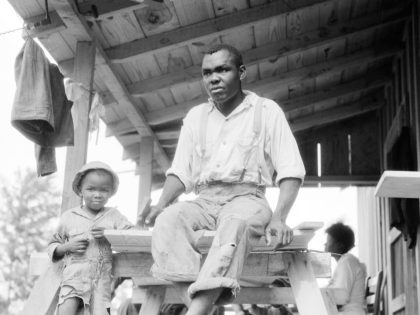
In 1930s Alabama, Communist Party members fought brutal repression to organize black and white workers in the Jim Crow South. Their efforts remain a source of inspiration for those fighting racism and exploitation today.

After Bernie Sanders, democratic socialists in America face a vital strategic dilemma. Do we go the Justice Democrats route of winning gains as the junior partner in a progressive coalition, or do we take a gamble on more independent class organization and struggle?
Debates during the rise of Margaret Thatcher can tell us much about how to respond to our political moment.

The great achievements of Salvador Allende’s socialist government in Chile have often been overshadowed by its brutal defeat. But the fall of his government wasn’t inevitable.

Historian Nelson Lichtenstein on the life, influences, and “sophisticated yet lucid brand of Marxism” of the late, great writer Mike Davis.

Bernie Sanders is running for president again. His message is simple: there's a class war raging and working people need to win it.
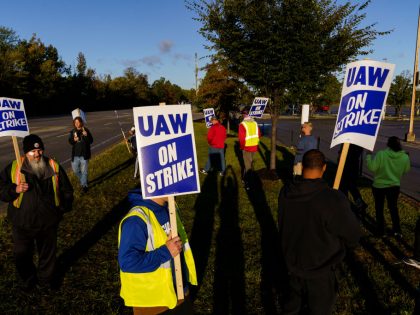
The uptick in high-profile strikes in recent years has been heartening. But sustaining and expanding the gains won by that militancy will require careful strategizing and deep political engagement that starts with but goes beyond the shop floor.