Weekly Sisyphus #1
Unpredictable transformations are taking place within the Chinese labor movement. How will US workers respond?
Unpredictable transformations are taking place within the Chinese labor movement. How will US workers respond?
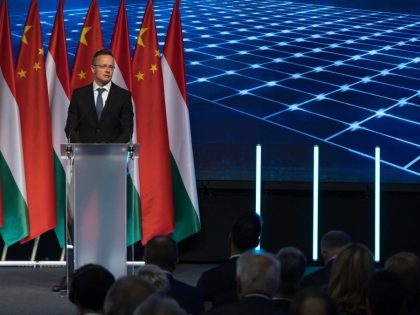
Faced with the return of great power rivalry between the US and China and its own economic stagnation, the European Union seems as divided as ever.

Workers must play a decisive role in Hong Kong’s Umbrella Revolution if movement demands are to go beyond political rights.

Lai Ching-te has been elected Taiwan's next president in a vote widely presented as a rebuke to China. But millions of Taiwanese were more concerned by economic issues than geopolitics, with low-wage young voters swinging behind a third-party insurgent.

The Chinese Communist Party turns 100 as a party of power in one of the world’s most important states. It’s been a long road from the CCP’s early years as a band of revolutionary outlaws that narrowly escaped obliteration by its enemies.

What caused Donald Trump to walk back on many of his tariffs last week was not domestic pressure but a run on the market for US Treasuries led by large institutional savers. If US debt is no longer a safe asset, then American hegemony is also at risk.

Donald Trump came to Washington vowing to take on the foreign policy establishment. But Beltway elites have mostly gotten their way.

Trump’s tariffs are about boosting profits in some corporate sectors at the expense of others. Socialists have no dog in this fight.

The Left in Bangladesh has struggled for generations against Islamism and authoritarianism.

The US government and media instigate international fearmongering and saber-rattling on a regular basis. But the recent Chinese spy balloon incident belongs in the Hall of Fame as one of the most idiotic panics by a jittery, trigger-happy warfare state.

Protesters in Hong Kong are still clogging the streets en masse. Their task: to face down not just the authoritarianism of the Chinese Communist Party but the self-dealing of Hong Kong capitalists.

The era of neoliberal globalization is drawing to a close. Yet for socialists, there might not be a light at the end of the tunnel.

The editors of a new collection of essays argue that we can’t ignore the Chinese Revolution and its impact on the world.

American intelligence agencies have concluded that Havana syndrome isn’t real. No surprise. But that determination comes long after mainstream media credulously and repeatedly reported on and repeated intelligence officers’ absurd claims.

It should be a matter of course that self-identified leftist and progressive members of Congress should vote down the annual bloated, dangerous, war-profiteer bonanza that is the military budget.

The United States claims it benevolently promotes democracy over authoritarianism through its international technology policies. In reality, America forces poor countries to let US-based Big Tech companies steal their data.

Despite its massive length, Julia Lovell’s Maoism: A Global History doesn’t offer us a clear way to understand Maoism and its legacy.

The economist Alice Amsden’s work unmasked the dirty secret underlying capitalist development: it relied on states breaking all the rules of the free market. But her work also showed that industrialization required corporate discipline, not welfare.