Unearthing the Fraught History of Chinese Communism
The editors of a new collection of essays argue that we can’t ignore the Chinese Revolution and its impact on the world.
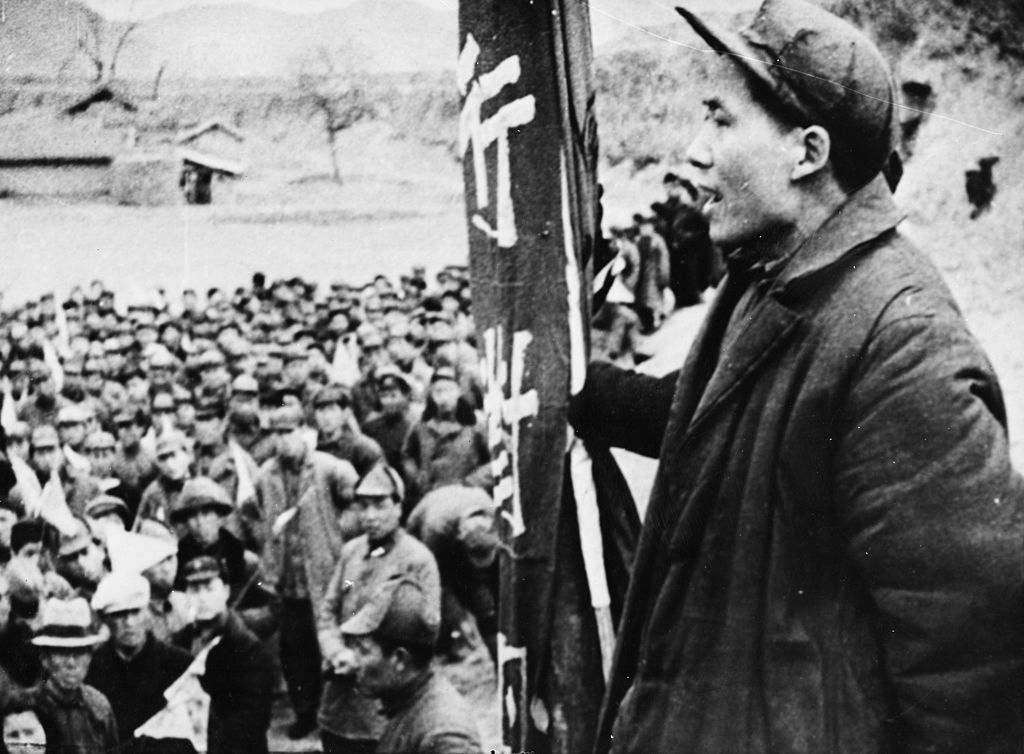
Mao Zedong addressing a meeting.Fox Photos / Getty
Is Mao Zedong a comrade? What about his fellow revolutionaries Lin Biao, Ding Ling, Liu Shaoqi, Yu Luoke, or Zhang Chunqiao?
In his 1971 essay, Blood In My Eye, the revolutionary and Black Panther member, George Jackson, described himself as a “Marxist-Leninist-Maoist-Fanonist.” For Jackson this series of names did not provide an identity or demand rigid adherence to a set of ideas. It designated a sequence of struggles against capitalism, colonialism, and racism fought by those who were on the same side and whose comradeship cut across time and space.
Jackson could think of himself and his comrades as participating in this history of struggle and he could see how the lessons learned by Russian, Chinese, and Algerian revolutionaries applied to the fight for black liberation in the United States. Jackson could call Mao a comrade.