Trump Is a Protectionist — But Who Is He Protecting?
Trump’s tariffs are about boosting profits in some corporate sectors at the expense of others. Socialists have no dog in this fight.
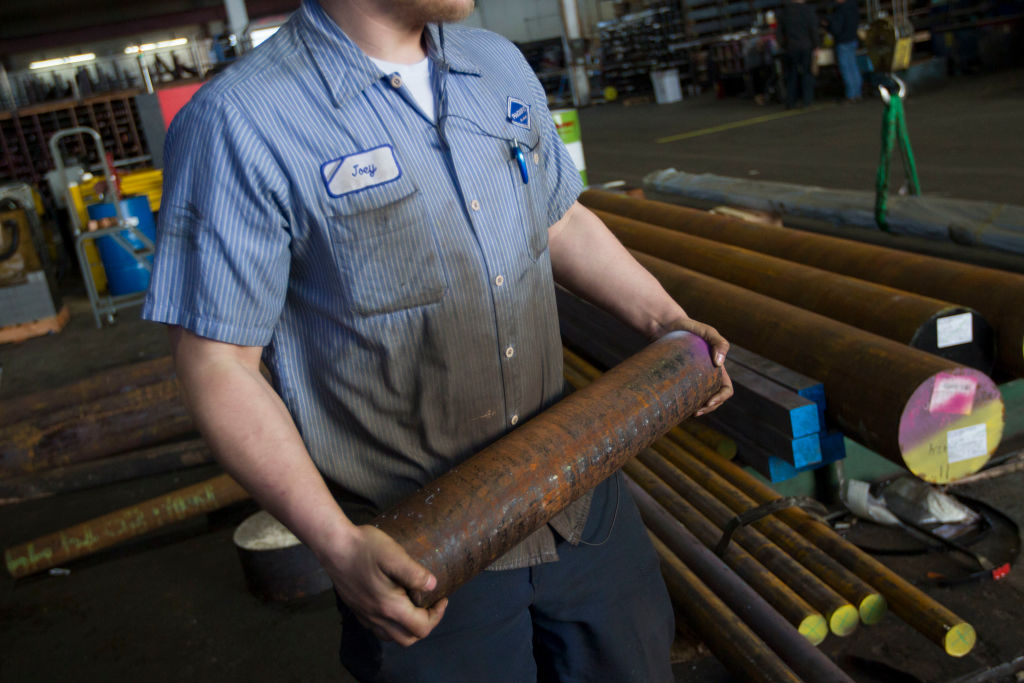
A sawyer carries a cut of machine-grade steel to be shipped throughout the Pacific Northwest at the Pacific Machinery & Tool Steel Company on March 6, 2018 in Portland, Oregon.Natalie Behring / Getty
Donald Trump’s nationalist trade policies, including his recent decision to impose tariffs on imported steel and aluminum, have stirred debate on the Left. For years, progressives have argued that neoliberal globalization destroys jobs and worsens inequality in the US and around the world. If that’s true, why wouldn’t it make sense to protect domestic industries like steel and aluminum, where jobs have been lost? Notwithstanding their many other objections to Trump, shouldn’t progressives endorse his nationalistic policies on the grounds that they could help US industrial workers recoup lost jobs and wages?
The progressive critique of globalization and trade deals has, in fact, received extensive validation in a number of recent studies by top economists. David Autor and Daron Acemoglu of MIT, along with a series of co-authors, have found strong statistical evidence confirming that the “shock” of increased imports from China caused massive job losses (up to 2.4 million) and significantly depressed wages for US workers, especially those with less education. Chinese imports, they found, have affected workers not only in the manufacturing industries that directly compete with imports, but also in local service sectors that serve communities impacted by the imports, as well as “upstream” industries that supply inputs to the import-competing firms. Estimates from Robert E. Scott of the Economic Policy Institute show even larger job displacement due to higher US trade deficits with Mexico and China. Whichever estimates one believes, free-trade advocates who ignore or deny these huge social costs have clearly brought the current wave of anti-trade backlash on themselves.
But the economy has changed so much since the heyday of US “smokestack” industries that raising tariff barriers today won’t bring back most of the manufacturing jobs that disappeared in recent decades. To start with, trade agreements are only one of the factors driving globalization; sharp reductions in the cost of transport (containerized cargo) and communications (information technology), as well as other nations’ economic development (China, etc.) are also important causes, and are unlikely to be rolled back.