Capitalist Disorganization Has Enabled Trump’s Dominance
The GOP is now a hegemonic force in US politics. But much of that dominance is predicated on Donald Trump’s personal rule, itself made possible by internal GOP weakness and business elites’ political disorganization.
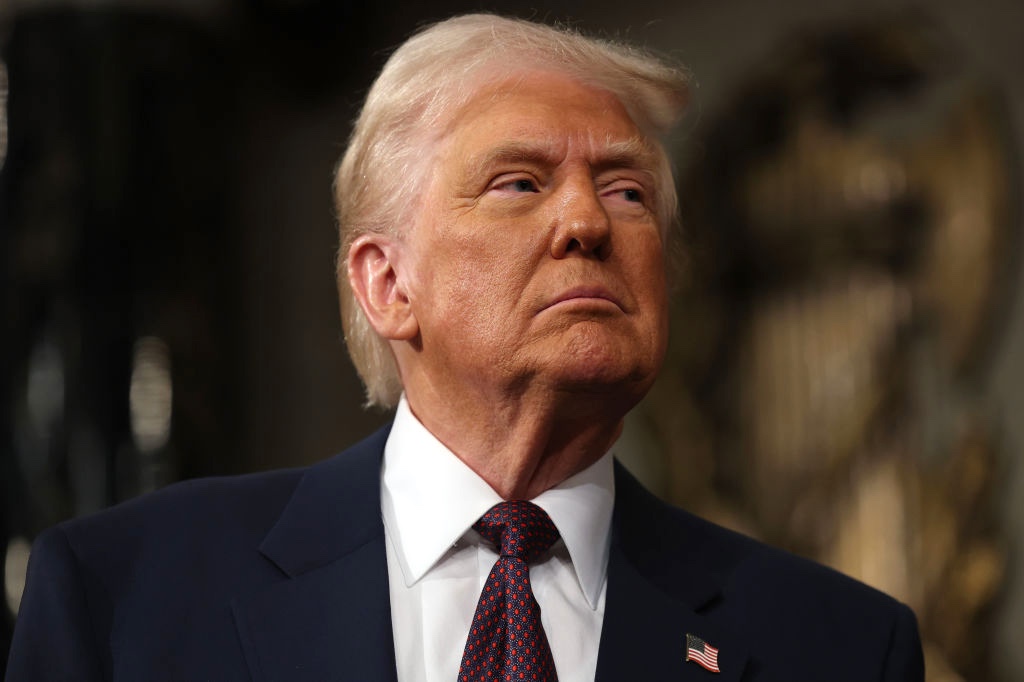
President Donald Trump addresses a joint session of Congress at the US Capitol on March 4, 2025, in Washington, DC. (Win McNamee / Getty Images)
When Donald Trump entered the fray of the 2016 Republican Party primary, he was not a candidate that most of the business class wanted. Yet despite this opposition, Trump was able to defeat the GOP establishment and ultimately capture the presidency. He soon established a level of personal dominance over the party unseen in US political history. Now he is back in the White House, attempting to implement a wildly ambitious trade agenda that — if financial markets are any indication — capital has no truck with.
For a recent episode of the Jacobin Radio podcast Confronting Capitalism, Catalyst editor Vivek Chibber discussed the historic evolution of the Republican Party with Jacobin contributor Paul Heideman. Heideman is the author of “Trump’s Takeover of the Republicans” in the latest edition of Catalyst as well as a forthcoming book on the history of the contemporary GOP. Chibber and Heideman talked about how business disorganization and Republican Party weakness made possible Trump’s unprecedented takeover of the party and what that might mean for his presidency and for the GOP’s future.
Confronting Capitalism with Vivek Chibber is produced by Catalyst: A Journal of Theory and Strategy and published by Jacobin. Subscribe to Jacobin Radio to listen to all of our podcasts here.