Know Your Enemy
G. William Domhoff’s work is a vital reminder that the task of changing society begins with understanding who holds power in it, and how.
Paul Heideman holds a PhD in American studies from Rutgers University–Newark.

G. William Domhoff’s work is a vital reminder that the task of changing society begins with understanding who holds power in it, and how.

Was the New Deal bad for black people? Rep. Jim Clyburn says it was. He’s wrong — and it’s time we set the record straight about both the New Deal’s real flaws and its overall hugely egalitarian impact on workers of all races, including black workers.

Joe Biden will likely govern to the left of Barack Obama. But his willingness to spend has everything to do with capital’s relaxation of deficit worries — and where capital says “no,” no one should expect Biden to say “yes.”

By providing workers an extra $600 every week in unemployment insurance, the CARES Act delivered the most significant expansion of the welfare state since the 1960s — and delivered the Left its most impressive policy victory in years. We should demand that the government do it again.

Joe Biden’s empty campaign may well have won over some suburban Republican voters. But the fragile majority he has likely eked out this time should have been many times larger, and without a more serious reorientation, it won’t hold for long.

Republicans captured the South through racist “dog-whistle” appeals and by exploiting the deindustrialization that ravaged the region after NAFTA. But we can’t write off the South as hopelessly reactionary — there’s a base for progressive politics that speaks to workers of all races.

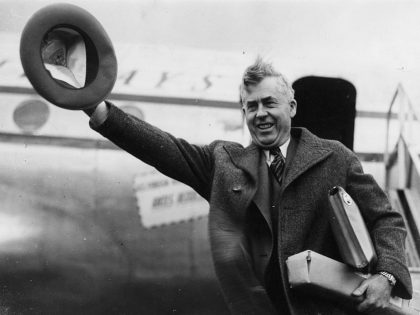
Henry Wallace was an ambitious left-winger in Roosevelt’s Democratic Party who, as secretary of agriculture and then as vice president, helped make radical the New Deal of the 1930s. His ultimate defeat by the right of his own party shows the obstacles the insurgent left has always faced within the Democratic Party.

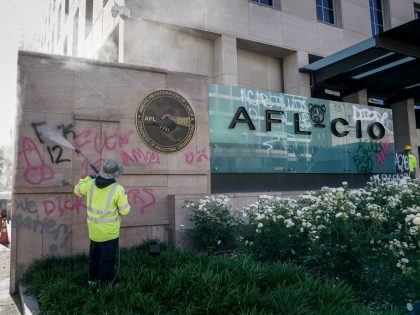
Corporations are a central driver of racial inequality in American society. But it’s not because they haven’t thought enough about racial injustice — it’s because their basic goal is to maximize profits, even when it decimates the lives of black people.

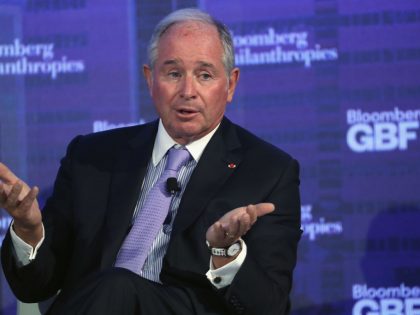
Big business has long held an outsize role in US politics. In a plague year, and as politicians prematurely push to reopen the economy, political scientist Thomas Ferguson argues that its place at the center of American life is more grotesque than ever.

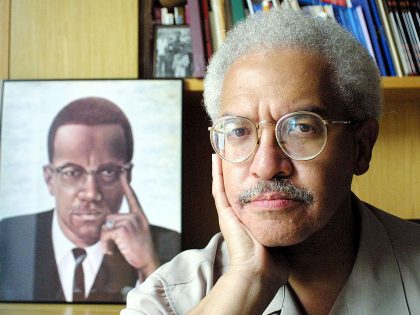
Manning Marable was a leading radical thinker whose brilliant writings showed how the struggle for black liberation is bound up with the struggle against capitalism. Though he didn’t live to see the rise of Black Lives Matter, his work has a tremendous amount to offer the movement today.

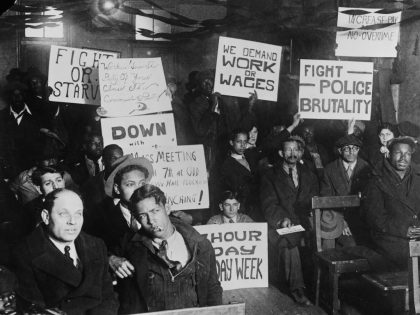
In the past, radical-led unions have been at the forefront of the struggle against police brutality. Unions must step up and do the same today — because racial justice movements can’t win radical reforms without the institutional power of organized workers.

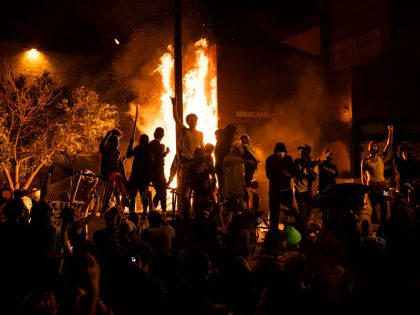
Rioting is a rational response to grinding poverty and oppression. And though it’s not always the case, research shows that it can be effective in winning social change.

In the years immediately following World War II, the movement for black equality, rooted in the militancy of black workers, was making massive strides. The McCarthyist anticommunist campaign of the late 1940s dealt a hammer blow to that project, attacking its unions and scattering its activists, ultimately narrowing the ambitions of the black freedom movement.

The New York Times attack yesterday on socialists who won’t endorse Joe Biden isn’t actually about convincing socialists to vote for him — it’s about performatively denouncing leftists as irresponsible, for the edification of the liberals who are watching.

How do commentators like David Brooks account for the undeniable rise in inequality? Not by analyzing the dynamics of wealth distribution and power that would help us address the problem, but by pointing the finger at the rest of us.

With Bernie Sanders now out of the race, commentators from left and right are finding fault with the campaign itself, arguing that there was too much class politics or not enough. But the problem wasn’t Bernie’s campaign strategy — it was the full force of the Democratic establishment that so effectively consolidated against him.

Having never recovered from the last recession, America’s states are now being dealt another dose of austerity from the federal government, forcing more budget cuts across welfare, education, and even health care. It’s the opposite approach of what’s needed. Unless we can fund these services, the crises will only deepen.

Bernie Sanders is out of the race, but we can’t retreat to the subcultural politics that were hegemonic on the Left before his campaigns began. Mass politics is still our way forward.

In the last two weeks, nearly ten million American workers lost their jobs. This is a crisis unfolding at a speed and magnitude unprecedented in the US and what’s left of our welfare state is uniquely ill-equipped to deal with the fallout.

During World War II, UAW leader Walter Reuther had a plan to reorient the economy toward needed production, centering the interests of labor rather than markets. As the global health system faces massive shortages in vital medical equipment, Reuther’s blueprints can help us generate our own mass-scale response to the crisis.