Manning Marable Was a Pioneering Black Marxist. His Work Speaks Directly to Our Moment
Manning Marable was a leading radical thinker whose brilliant writings showed how the struggle for black liberation is bound up with the struggle against capitalism. Though he didn’t live to see the rise of Black Lives Matter, his work has a tremendous amount to offer the movement today.
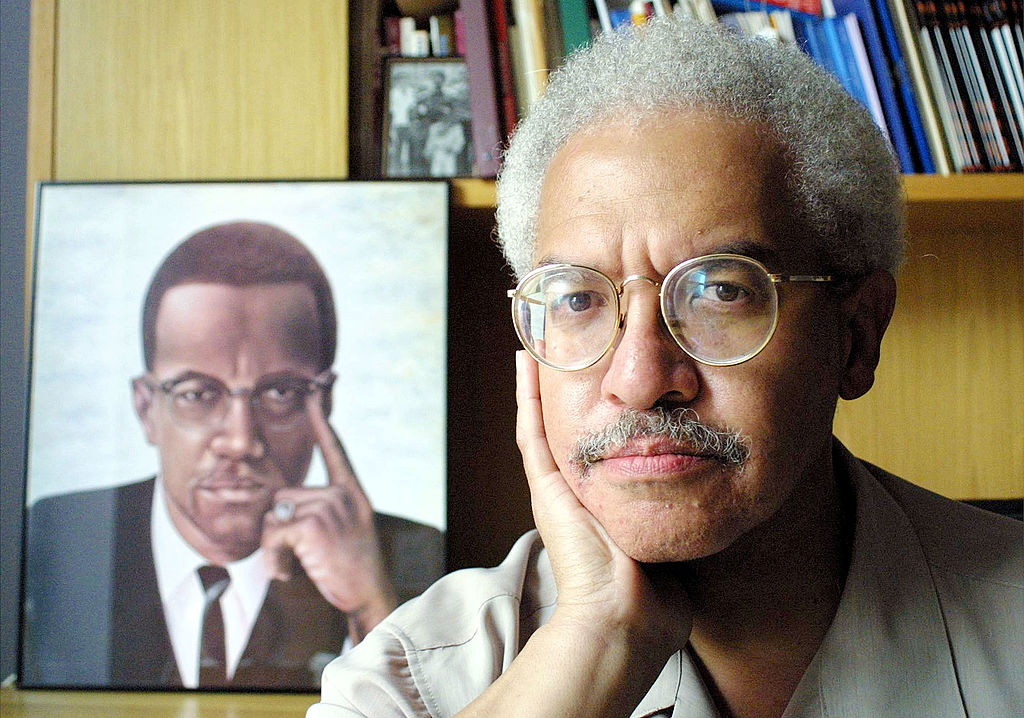
Manning Marable poses for a photograph in his office at Columbia University in New York City. (Photo by Mario Tama / Getty Images)
Manning Marable was one of the most accomplished radical intellectuals in the United States when he died in 2011. Part of the founding generation of black studies scholars in the United States, Marable entered the academy in the wake of the struggles of the 1960s and became a towering historian of movements for racial justice. Throughout his life, he dedicated himself to disseminating radical ideas as widely as possible, writing regularly for black newspapers across the country. In many ways, he was a model socialist intellectual. Though he passed away before the Black Lives Matter movement sprung up, his work has a tremendous amount to offer today, providing a rigorous account of how the struggle for black liberation is bound up with the struggle against capitalism.
Marable was born into the black middle class in Dayton, Ohio in 1950. He grew up watching and reading about the Southern civil rights struggle, and cut his teeth as a student journalist in high school writing about race and politics. When Martin Luther King Jr was assassinated in 1968, the paper sent him to Atlanta to cover the funeral. As Marable later recounted, “my innocent faith in American democracy and freedom was forever shattered; my understanding of political change began a trajectory from reform to radicalism.”
Like many other black Americans coming into adulthood in the aftermath of the Civil Rights Movement, Marable felt the pull of black nationalism, convinced that black advancement in American society would come through black unity. In 1972, he attended the National Black Political Convention (NBPC) in Gary, Indiana. Though little remembered today, the NBPC was a pivotal moment in the evolution of civil rights and Black Power struggle. It was an attempt to translate the movement — by then on the decline — into an electoral vehicle for black Americans. But while the convention gave birth to an organization, the National Black Political Assembly, internal schisms developed between moderates and radicals, and the group quickly waned in relevance.