When Rioting Works
Rioting is a rational response to grinding poverty and oppression. And though it’s not always the case, research shows that it can be effective in winning social change.
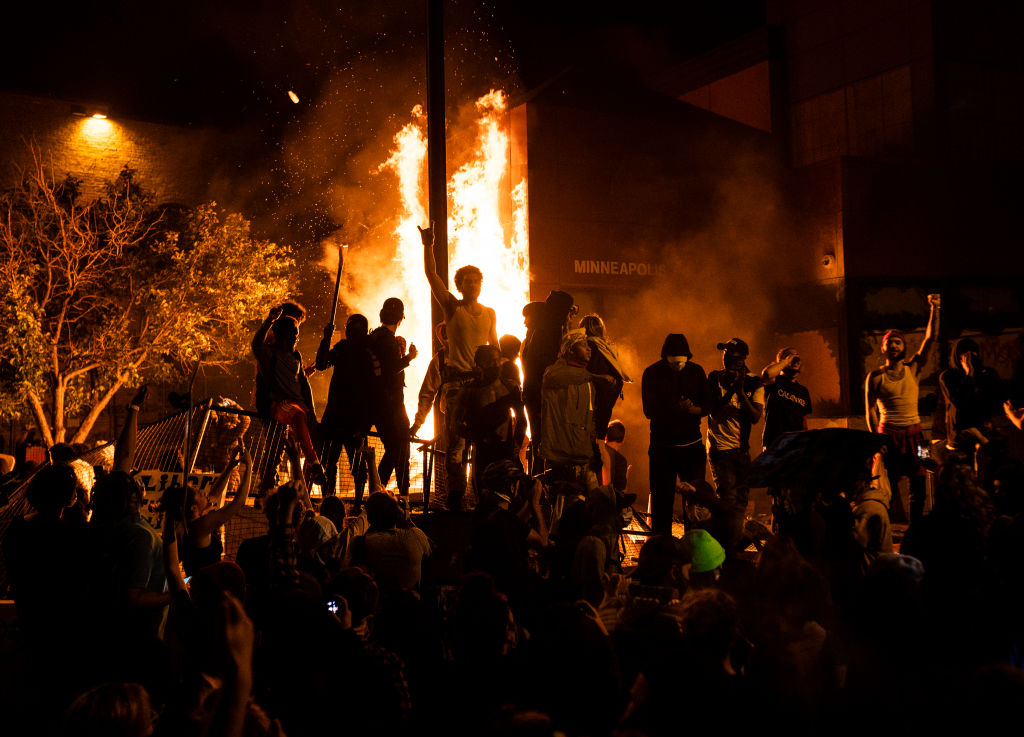
Protesters cheer as the 3 Precinct police building burns behind them on May 28, 2020 in Minneapolis, Minnesota. (Stephen Maturen / Getty Images)
American liberalism has a distinctly contradictory relationship with black protest. On the one hand, liberals imagine themselves the best friends (in contemporary parlance, “allies”) of the cause of black equality. On the other, since at least the 1930s, liberals have recoiled from black militancy, convinced it served little purpose but to strengthen the hand of reactionaries.
With uprisings now shaking cities across the country, American liberalism’s divided mind has been revealed once again. Some of the attempts to maintain the balance of supporting the cause while condemning the uprisings have been laughable, like the ridiculously paternalistic idea that the property destruction is all the doing of “white anarchists.” Aside from being a regurgitation of police rationalizations for repression, this kind of argument effectively erases the many forms of black protest that don’t fit the model for liberal approval.
More sophisticated thinkers have found subtler means to express their discomfort with the uprisings, arguing that riots, no matter how justified, only empower reactionaries. These types are in luck, as a new paper, from political scientist Omar Wasow, was published just the other week arguing that the riots in the 1960s scared white voters and swung them toward Nixon.