Pro-Market Third Way Policies Caused Electoral Disaster
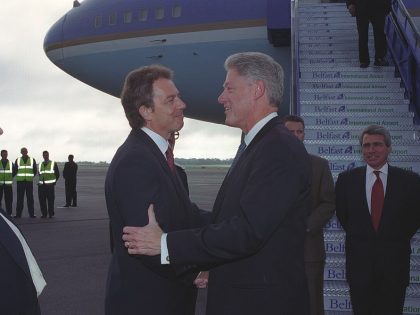
Sociologist Stephanie L. Mudge examines how and why center-left parties across the world swallowed the neoliberal gospel — only to demolish their own social base.
Daniel Denvir is the author of All-American Nativism and the host of The Dig on Jacobin Radio.

Sociologist Stephanie L. Mudge examines how and why center-left parties across the world swallowed the neoliberal gospel — only to demolish their own social base.

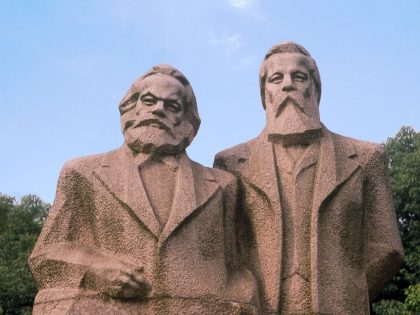
In an interview, author China Miéville explains why Marx and Engels’s Communist Manifesto is such a remarkable work, defending the book against its detractors and arguing that it remains urgently inspiring and deeply relevant.

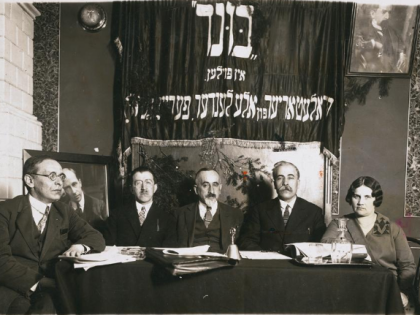
Defenders of Israel’s brutal war on Gaza have attempted to conflate anti-Zionism with antisemitism. But since its beginning, different forms of Zionist ideology have competed with varied anti-Zionisms for Jewish allegiance.

Between 2010 and 2020, a wave of protests erupted around the world. In some cases, these movements strengthened socialist forces. In others, they opened the door to the Right. Vincent Bevins spoke to Jacobin to explain the causes of this divergence.

Palestinian writer Mohammed el-Kurd spoke to Jacobin about Israel’s vicious war on Gaza and the daily humiliations and frequent killing that Israel has long inflicted on Palestinians. “We are told time and time again that our death is business as usual.”

Hamas has been all over the news since its brutal October 7 attack, but there’s much less understanding of how the group emerged. Only by studying Hamas’s history can we chart a better way forward.

Alexandria Ocasio-Cortez spoke with Jacobin following her recent trip to Latin America and on the eve of the 50th anniversary of the coup in Chile. She discussed the crimes of US intervention and the struggles for justice and democracy across the Americas.

As oil became a key energy source in the 20th century, Western companies backed by the US and UK monopolized production in the Global South. But in the age of decolonization, newly independent nations fought for a different global energy order.

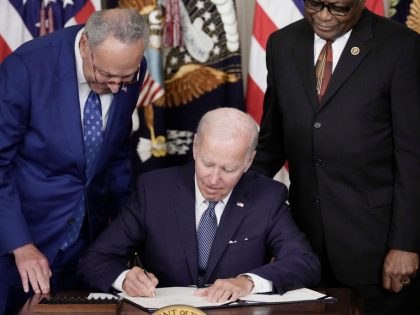
President Joe Biden has proclaimed a break with the economic orthodoxy of recent decades in favor of what he calls “Bidenomics.” But how real is Biden’s break with neoliberalism?

Since the 1970s, many colleges and universities have become predatory financial giants, while mountains of student debt pile up and academic work becomes ever more precarious. An ascendant academic labor movement may be key to reversing these trends.

Historian Robin D. G. Kelley has uncovered a tradition of African American radicalism that was — and is — a crucial part of the American left’s history. He talks to Jacobin about the need to connect struggles against racism and class oppression.

In colonial regimes, dominant conceptions of private property developed alongside racial hierarchies.

Before tragically dying at age 32, Chris Chitty, a brilliant historian of gay life and capitalism, produced an illuminating unfinished book, Sexual Hegemony. In it, he provided a longue durée account of the development of homophobia and homosexuality.

The Italian communist Antonio Gramsci left behind a rich and complicated legacy of thought on socialist strategy for transforming the world. Historian Michael Denning guides us through the great — and misunderstood — thinker.

Some thinkers are arguing that capitalism as Marx defined it is over, and we’re entering something like digital neo-feudalism instead. Not true, argues Evgeny Morozov. To understand how capitalism operates today, Marxists have to drop the factory bias.

The US housing system is organized around subsidized private homeownership and underfunded public housing. But during the New Deal, leftists had a different vision: beautiful social housing for all but the rich.

Over the past two centuries, US imperial interventions have had a devastating impact on the peoples of Latin America. Those interventions have also played a crucial role in US domestic politics, enabling new power blocs to cohere and develop their strategies.

The Bush administration’s war on terror meted out unthinkable violence in the Middle East while imposing an atmosphere of repression and nativism at home. It was the perfectly malignant petri dish for helping produce Donald Trump.

Health care workplaces have replaced steel mills and auto plants as the nation’s big employers. But while industrial workers once had mighty unions, hospital workers have struggled by comparison to win representation and good contracts.

The great labor historian Michael Denning reflects on what Antonio Gramsci’s work has to tell us today.