Property, Race, Colonialism, and Capitalism
In colonial regimes, dominant conceptions of private property developed alongside racial hierarchies.
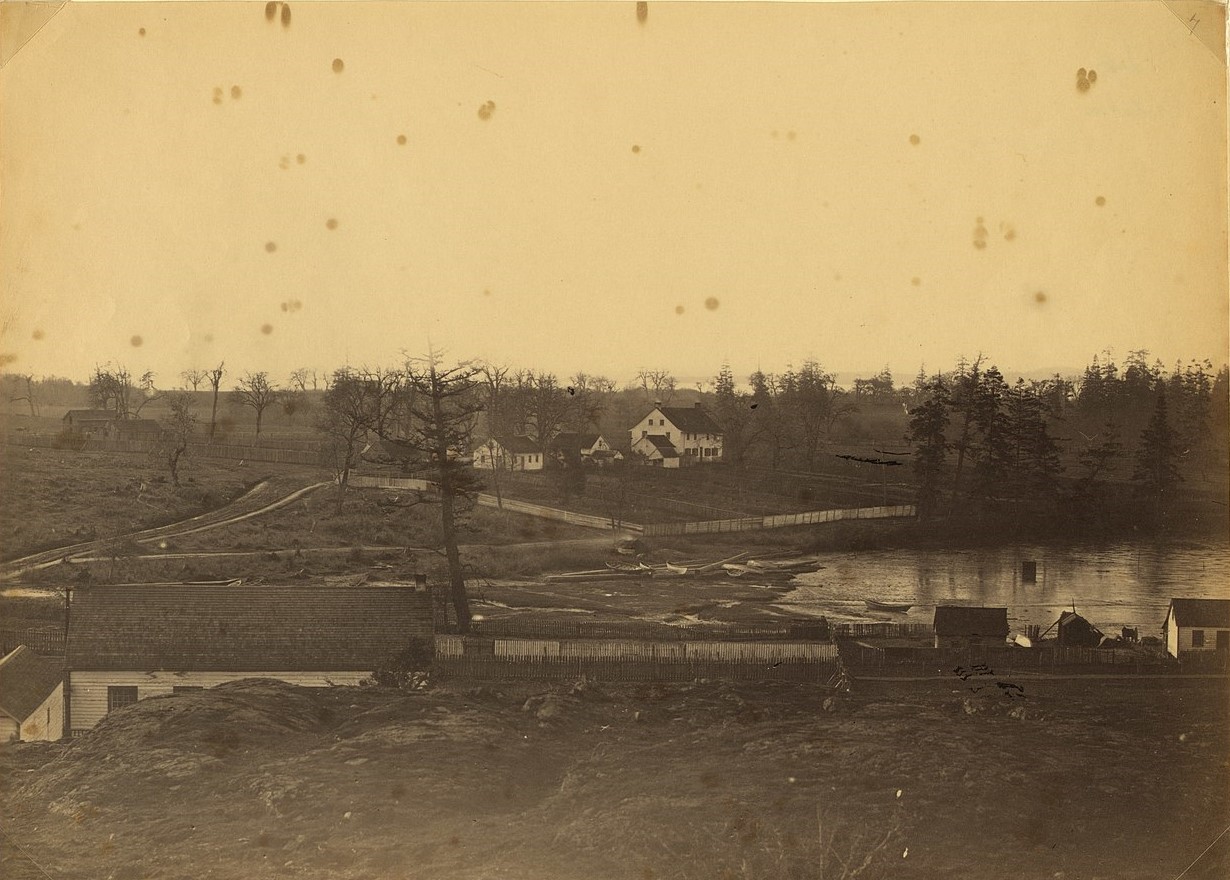
Community adjacent to the fur-trading post at Fort Victoria on Vancouver Island, British Columbia with farm and buildings, 1859. (Library of Congress via Wikimedia Commons)
Who can claim ownership of territory? Who is fit to steward land? Who is and isn’t a rational subject capable of entering modern market society? And how do these questions fit into bigger systems of colonialism and capitalism? These are questions taken up by scholar Brenna Bhandar in her book Colonial Lives of Property: Law, Land, and Racial Regimes of Ownership.
Daniel Denvir interviewed Bhandar for the Jacobin Radio podcast The Dig. You can listen to the conversation here. The transcript has been edited for length and clarity.
Daniel Denvir
You write, “Property law was a crucial mechanism for the colonial accumulation of capital, and by the late nineteenth century, had unfolded in conjunction with racial schemas that steadfastly held colonized subjects within their grip. Property laws and racial subjectivity developed in relation to one another, an articulation I capture with the concept of racial regimes of ownership.” To start off, what are “racial regimes of ownership”? And how does that concept capture this interplay between property law and racial orders that are all fundamentally tied together in the colonial context?
Brenna Bhandar