OPEC Was First Formed as a Challenge to Western Energy Dominance
As oil became a key energy source in the 20th century, Western companies backed by the US and UK monopolized production in the Global South. But in the age of decolonization, newly independent nations fought for a different global energy order.
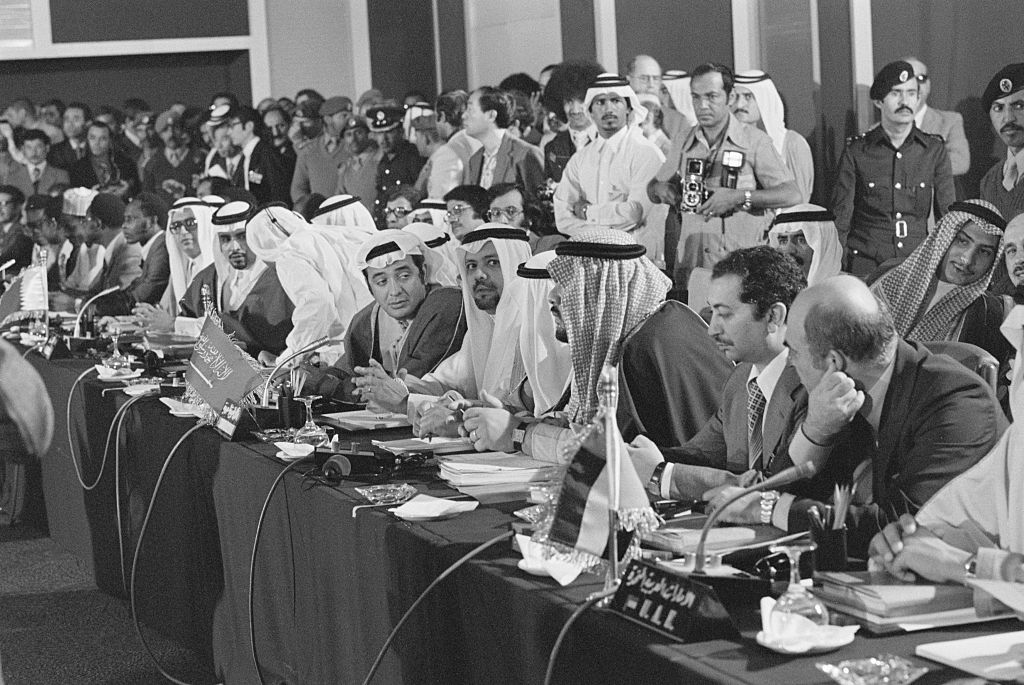
At the opening of the OPEC oil ministers meeting on December 15, 1976, Saudi Arabian oil minister Sheikh Yamani (C) peers at the other delegates arriving in the conference room. At right is the United Arab Emirates delegation. (Bettmann / Getty Images)
In the decades immediately after oil became a major source of energy for industry around the world, Western governments, primarily the UK and United States, used their military and economic power to seize control over the resource across the globe. However, in 1960, petrostates fought back against the West’s dominance over the sector, banding together to form the Organization of the Petroleum Exporting Countries (OPEC).
In an interview with Jacobin Radio’s The Dig podcast, the historian Giuliano Garavini, author of The Rise and Fall of OPEC in the Twentieth Century, spoke to Daniel Denvir about how oil has helped to transform the fortunes of organized labor and the governments of former colonies throughout the twentieth century. You can listen to the conversation here. This interview has been edited for length and clarity.
The Twentieth Century Through a Lens of Oil
Daniel Denvir
Your book is first and foremost about petrostates, the sovereign landlords of the world’s petroleum reserves, and about OPEC, the organization they founded to advance their interests within an industry dominated by major oil companies and their imperial patrons. But simply producing oil, you argue, does not make a state into a petrostate. So neither the United States nor Russia, nor Great Britain, Norway, Mexico — none of them qualify.
Giuliano Garavini