Why a Decade of Protests Didn’t Lead to Revolution
Between 2010 and 2020, a wave of protests erupted around the world. In some cases, these movements strengthened socialist forces. In others, they opened the door to the Right. Vincent Bevins spoke to Jacobin to explain the causes of this divergence.
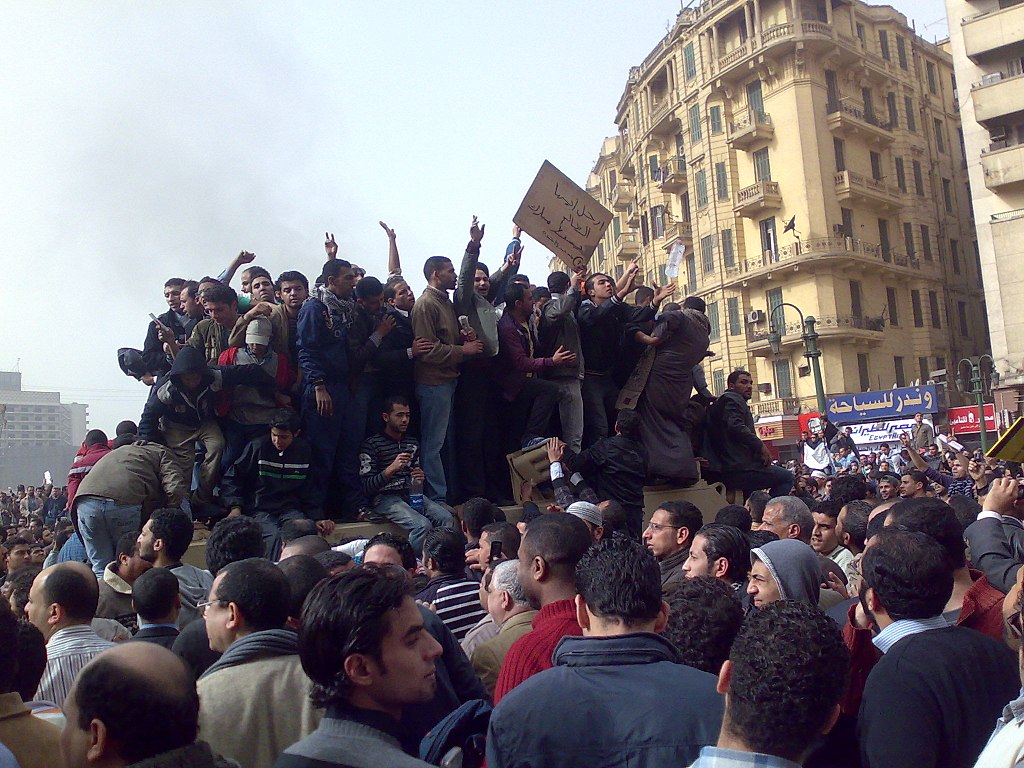
Demonstrators on an army truck in Tahrir Square, Cairo, January 29, 2011. (Ramy Raoof / Wikimedia Commons)
The last decade was marked by a series of explosive protest movements from the Middle East to Latin America, Asia, and Europe. After two decades in which liberals insisted that we were living through the “end of history,” these events showed that the demands of the popular classes could not be silenced. However, the legacy of these uprisings has been deeply ambiguous.
In some nations, they projected leftist governments to power or built strong institutions. In others, this wave of protests not only crested but opened up space for the far right. What explains this difference, and what lessons does a decade of success and failure offer to the Left in the Anglophone world and beyond?
For the Jacobin Radio podcast The Dig, Vincent Bevins spoke with Daniel Denvir about these issues, which he discusses at length in his new book, If We Burn: The Mass Protest Decade and the Missing Revolution.