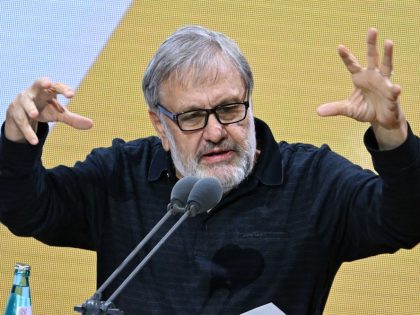
Žižek’s Left-Wing Case for Christian Atheism
In his new book, Slavoj Žižek advances a provocative understanding of Christianity as a progressive, secularizing force. It’s classic Žižek — by turns brilliant and infuriating.
In his new book, Slavoj Žižek advances a provocative understanding of Christianity as a progressive, secularizing force. It’s classic Žižek — by turns brilliant and infuriating.
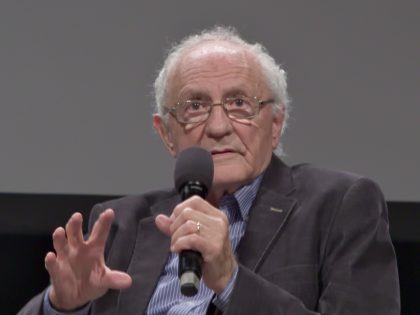
Zeev Sternhell was a historian of nationalism who demolished the myth of French “immunity” to fascism. His focus on the history of ideas allowed him to trace the genealogy of France’s home-grown far right — yet proved less able to understand the social forces that powered fascist movements across the continent.

Movies about class and inequality are back in the mainstream. Ramin Bahrani’s The White Tiger is a powerful interrogation of the injustices of class and caste society.
When the great radical thinker Sheldon Wolin died this week, he left behind a singular approach to political theory.
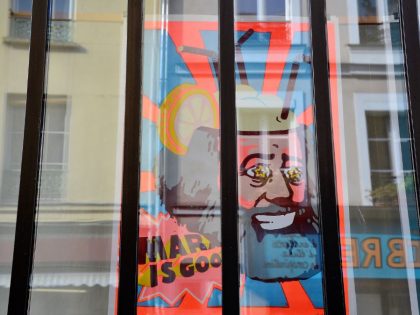
The best of Marx is full of life, full of joy — and above all, deeply human.

For decades, liberals have hoped for the de-Christianization of the American Right. It’s not all it’s cracked up to be.

The death of Jürgen Habermas has left philosophy and the Left poorer. Central to his work was a profound critique of irrationality in all its forms. Taken seriously, his philosophy provides an indispensable guide in the struggle against oppression.

Hegel claimed that wisdom about a historical period often comes only after it has ended. As wokeness loses sway, we can better see its effects on socialist politics.
Alt-right conspiracy theorists have embraced postmodern philosophy. The Left should return to the Enlightenment to oppose their irrational and hateful politics.

In the last century, liberals claimed that Hegel had inspired fascism, and socialists accused him of having held back Marxist theory. Today the German idealist has drifted into obscurity. A new book makes the case for his contemporary relevance.
The defenders of slavery rightly identified the ideological links between abolitionism and socialism.
The eminent philosopher Raymond Geuss wants us to think about ways of being that exist entirely outside of liberalism. But the most feasible egalitarian project is not one that rejects liberalism, but one that goes beyond it — through democratic socialism.
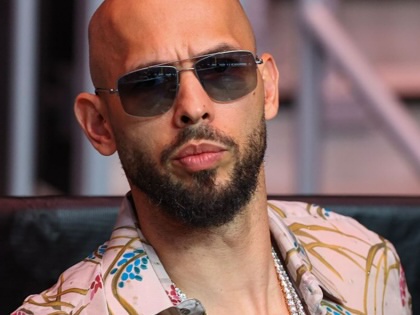
The Right’s con men promise liberation for those who feel themselves superior but are held back by the leveling institutions of mass mediocrity. Their rhetoric intoxicatingly combines feelings of superiority with a sense of dispossessed victimization.
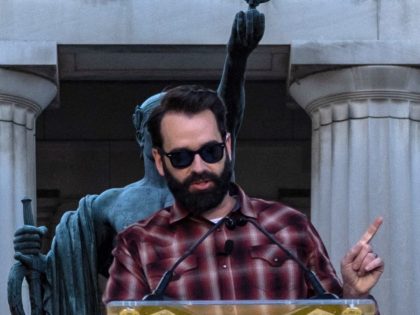
Right-wing commentator Matt Walsh has made a name for himself with his relentless, religious-inflected trans-bashing. He’s a bad thinker and a bad Christian.
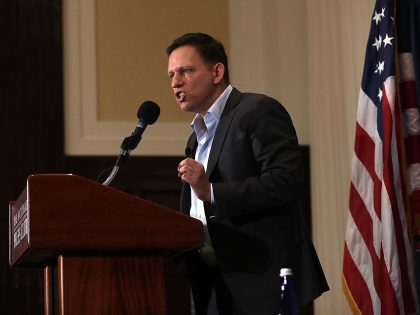
Billionaire Peter Thiel insists that freedom and democracy are incompatible, and his portfolio of data mining and political bets puts that belief into practice. His is a program of authoritarian control disguised as innovation.

Hegel was no reactionary, and he had a special sympathy for the French Revolution.
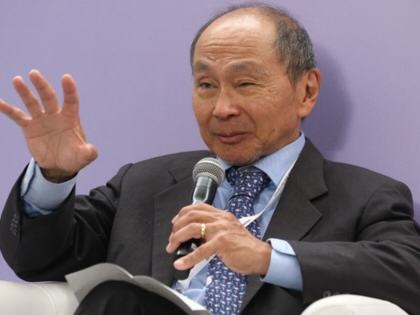
Francis Fukuyama tells Jacobin that decades of suspicion of the state, from both the Left and the Right, helped produce America’s current crisis.
Work in a capitalist society is a conflicted and contradictory phenomenon.
Communal celebration has deep roots in human culture. Why shouldn’t the Left embrace it?