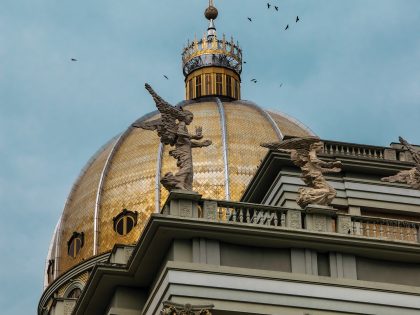
The Churches of the Polish People’s Republic
Postwar Poland saw a huge wave of church-building, within and against the professedly socialist system.
Postwar Poland saw a huge wave of church-building, within and against the professedly socialist system.
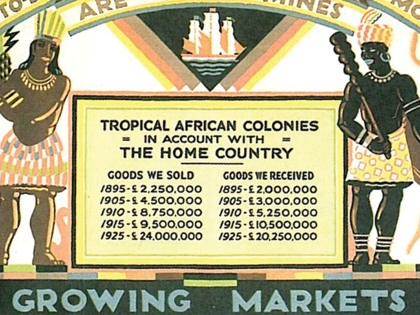
Before Hollywood made American empire look irresistible, Britain built a state propaganda machine to market imperial rule through posters, films, and modern advertising.
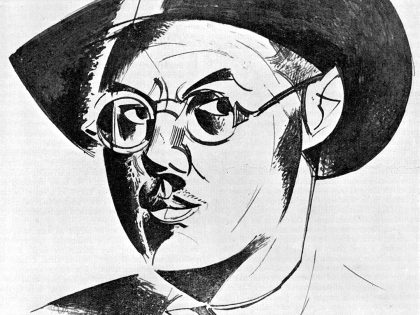
Wyndham Lewis was perhaps the most talented English painter and novelist of the first half of the twentieth century. How did he become best known as a fascist?

The 1980s BBC series The History Man was a venomous takedown of academic pseudo-radicals. How does it stand up today?
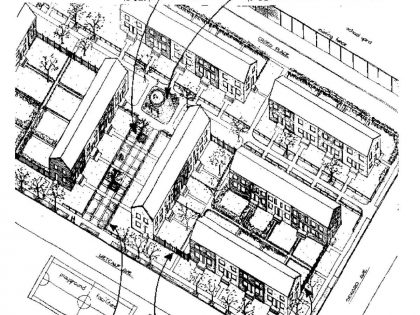
There’s a reason why urban housing developments and suburban subdivisions can seem threatening and unwelcoming to outsiders: they’re planned that way, in order to “design out crime.”

In Poland, postwar Communist rule has few defenders. But state-subsidized eateries known as milk bars, designed under state socialism to free people from “kitchen slavery,” continue to thrive today.

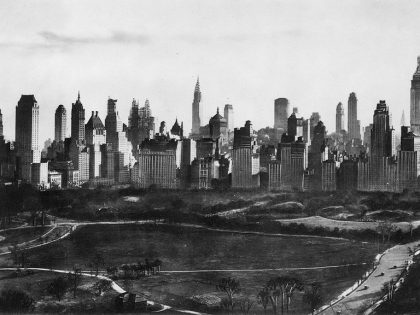
In a moment of climate fatalism, ecomodernists are imagining a green urbanism that doesn’t come at the cost of abundance or beauty.

When eco-socialism in one city becomes a gated community.
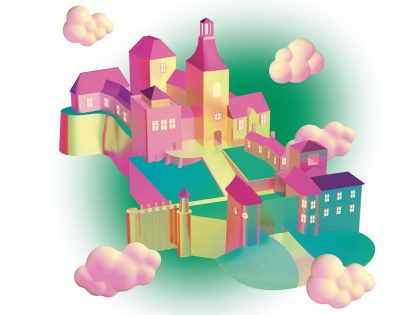
The architect, planner, and landowner Clough Williams-Ellis dedicated his estate to an experiment in “propaganda for architecture.” How did it become best known as the cutest of all the fictional dystopias?
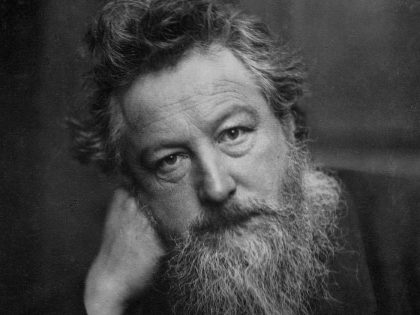
The critique of capitalism was central to William Morris’s vision of an arts and crafts movement in the Victorian era. Against the alienation and exploitation of a rapacious industrialism, he advocated for a conception of art capable of restoring creativity to everyday life.
Mark Fisher gave a moribund left the imaginative jolt it needed to wake from the nightmare of neoliberal complacency.
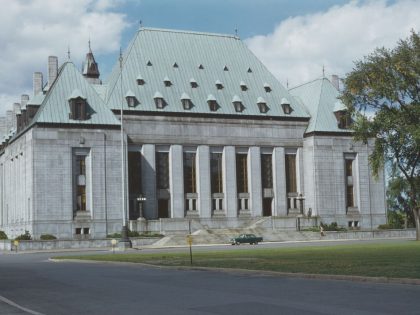
Cities in Canada, Australia, and New Zealand are indelibly marked by the British Empire. Imperial outposts, structured in accord with the schemes of long-dead aristocrats, form the foundation for the uncanny architecture of today’s commonwealth capitals.
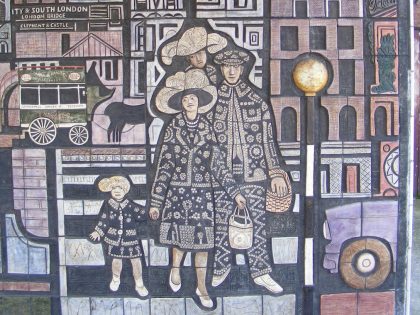
Central European designers and architects who fled fascism brought modernist ideals to Britain, reshaping its urban fabric. Today their work is being demolished, abandoned, or privatized.
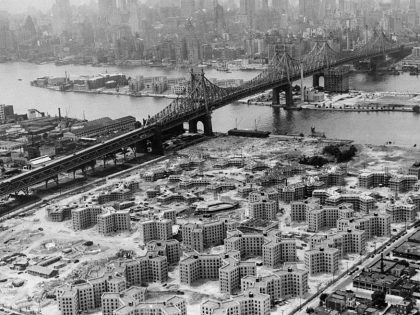
In 1960s New York, a new urbanist philosophy emerged that argued cities were best developed organically, without municipal planning. But cities like NYC today need a good dose of planned, large-scale public housing to address their housing crises.
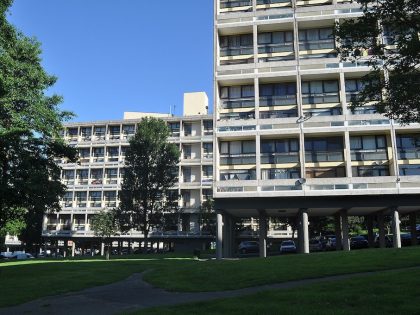
Few major cities have welcomed the world’s oligarchs and kleptocrats like London has. Yet nestled within the neoliberal dystopia, London’s neighborhoods reflect the long and ongoing struggle to transform Britain’s capital into a self-managed, social-democratic municipality for its residents.
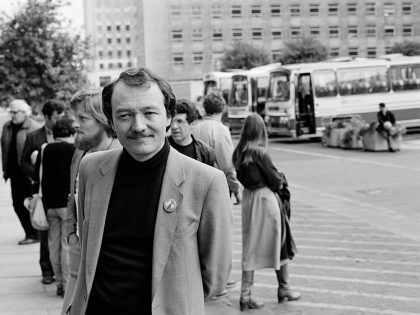
Ken Livingstone’s legacy in London reminds us just how much democratic socialist leadership can do for a single city.

Jeremy Corbyn and Bernie Sanders transformed their respective countries’ policy agendas. That’s exactly why they can’t step aside for other candidates.
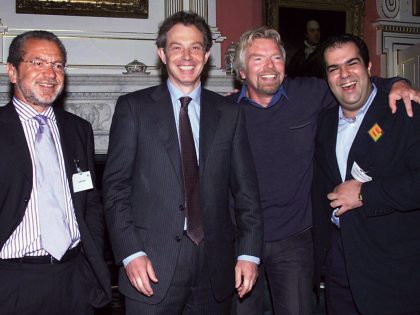
Ten years after the financial crisis Blairism is finally dead and buried.

The European Parliament has condemned communism as equivalent to Nazism. Based on a fantasy reading of history, the motion smears all “radicalism” as “totalitarian” — and dismisses the moral superiority of those who fought fascism.