Designing the Soviet Union
Soviet architecture had diverse and ambitious ideas for transforming the spaces people live, work, and travel in.
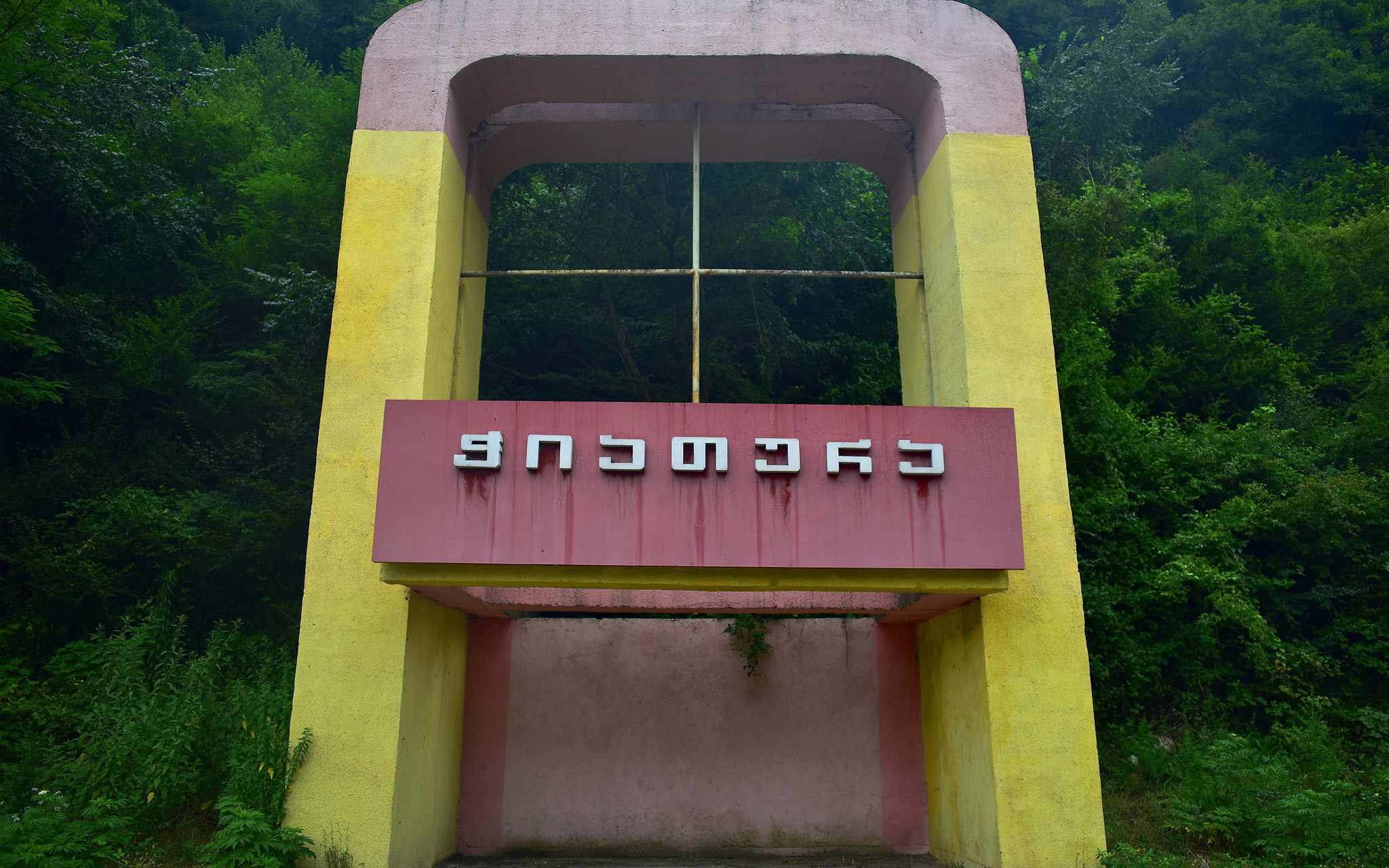
An abandoned Soviet-era bus stop in Chiatura, Georgia. orientalizing / Flickr
For the last few years, the best-selling architectural coffee-table books have all shared the same subject: Soviet buildings. They are part of a strange but popular cult, where the ruins of the Soviet Union are contemplated and documented as an alien landscape.
Agata Pyzik, in her 2014 diatribe Poor But Sexy, describes this trend as a form of intra-European Orientalism. Books like this year’s success story — Christopher Herwig’s Soviet Bus Stops — explore what she calls an “obsolete ecology,” an irradiated yet magical wasteland, an Urbex paradise littered with wonderfully futuristic ruins. It is a seductive approach, and many Western writers (like me) have joined in.
Herwig’s contribution is a gorgeous example: page after page of bus stops, in an elegant, almost pocket-sized hardback volume, with a terrific design by the Anglo Sovietophile publisher FUEL.