Adolph Reed: We Must Avoid Race Reductionism
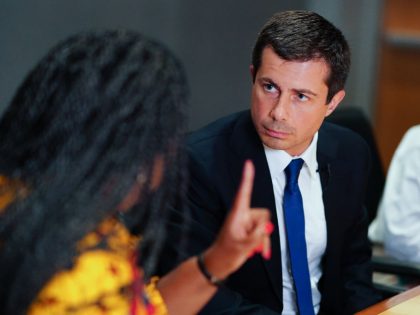
The black population in the United States is roughly the size of the population of Spain. Yet too many ignore class differences and political complexities among millions of African Americans.

The black population in the United States is roughly the size of the population of Spain. Yet too many ignore class differences and political complexities among millions of African Americans.

With an activist background and a left-wing perspective, Sacramento mayoral candidate Flo Cofer bears the markers of an outsider candidate. But backed by big unions, sitting councilmembers, and the city paper, she’s giving the Sac elite a run for their money.

The question is never if resistance will appear, but when. For this generation, Ferguson answered that question.

Cornel West talks to Jacobin about what the Bernie Sanders campaign represented, what its failure means, and why Democrats think they can win over black and brown voters with just “symbolic decorative changes.”
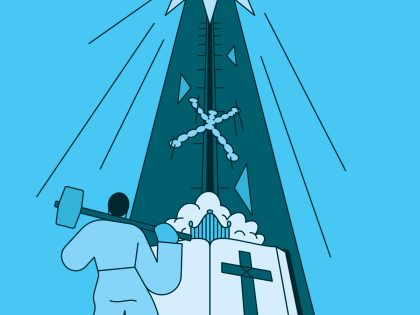
Can literature be a force in the fight for economic justice?

For decades, the American Medical Association has fought single-payer tooth and nail. But the US’s corporatized health system hurts doctors too — and cracks are forming in the AMA’s opposition to Medicare for All.

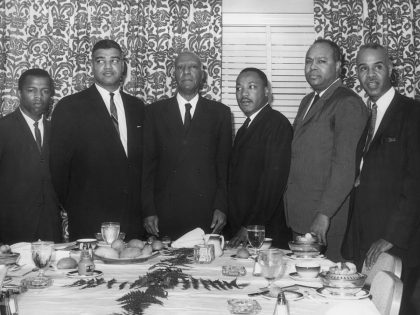
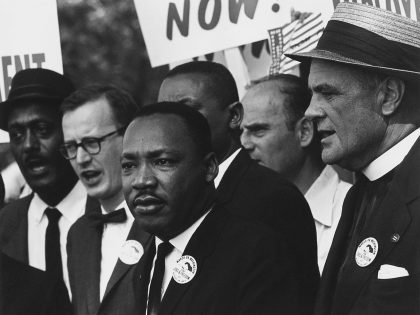
The great black freedom struggles of the past have been joined by many white people — not just out of a sense of moral obligation or sympathy for the oppressed, but out of a sense of shared interest and a desire for collective liberation. That spirit of solidarity should be central to anti-racist struggle today.

Online misogynist Andrew Tate doesn’t pretend that life under capitalism isn’t a scam. He readily acknowledges that it is, with success coming through coercion, exploitation, and predation — and he wants you to get in on the hustle with him.

In The Bill of Obligations, Council on Foreign Relations president and MSNBC stalwart Richard Haass offers solutions to America’s democratic crisis. The book, littered with vacuous bromides, is proof that liberals are all out of ideas.

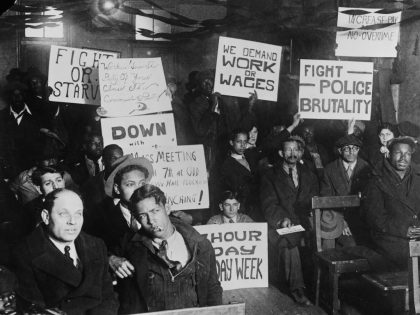
Movements targeting racial disparities aren't distracting attention from class inequality — they’re part of a broader radicalization against American capitalism.

Robert Putnam’s Bowling Alone chronicled the growing loneliness and isolation of wealthy societies. Twenty years later, the problem is far worse than he could have imagined.

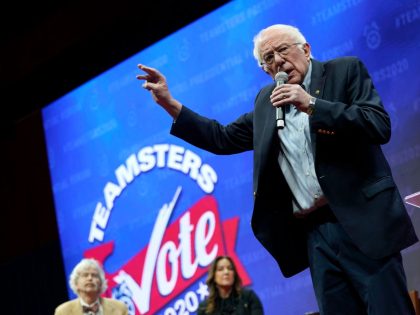
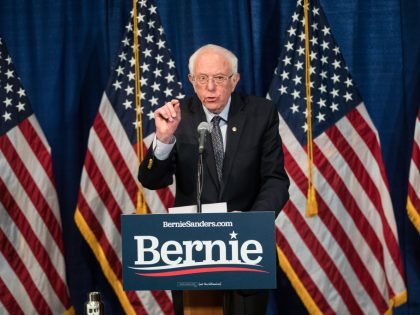
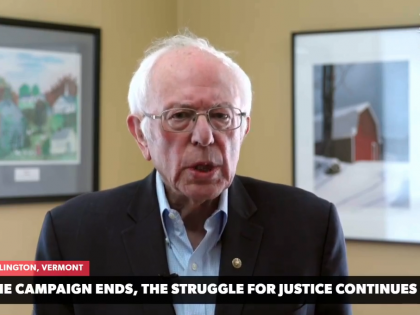
Jacobin contributors on Bernie Sanders' democratic socialism speech and what his candidacy means for the Left.

Busing wasn't an experiment imposed by elites; it was part of a grassroots movement demanding quality education for all.

Our movement will exhaust itself if it's only fueled by outrage. We need to win people to a positive vision of a better world.

The history of the Black Power movement offers a cautionary tale about the warping effects of liberal philanthropy’s soft power.

Mike Davis and Jon Wiener's chronicle of Los Angeles in the 1960s, Set the Night on Fire, isn't just a stunning portrait of a city in upheaval half a century ago. It's a history of uprisings for civil rights, against poverty, and for a better world that speaks directly to our current moment of mass protest.

The Trinidadian historians C. L. R. James, a Marxist revolutionary, and Eric Williams, his former student and the prime minister who placed him under house arrest, forever reshaped how we view the end of slavery in the Caribbean and around the world.

The United Packinghouse Workers of America was a beacon of “civil rights unionism.” And in the aftermath of Emmett Till’s grotesque lynching in 1955, the union spearheaded a mass campaign on Till’s behalf in the North and South.

For too long, the Left has organized based on caricatures of black political life. If it wants to win, it needs to start recognizing the role of class in black America.

On June 19, 1865, slavery ended in Texas. Juneteenth should be a national holiday.