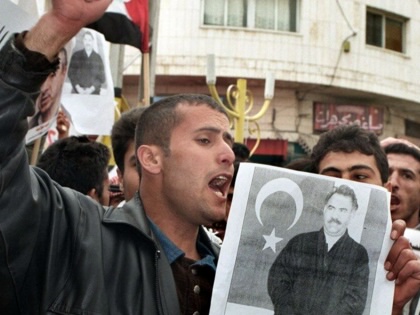
The Politics of Kurdish-Palestinian Solidarity
The Kurdish and Palestinian movements were forged in a common anti-colonial tradition. Their different political trajectories now reveal two competing models of liberation in the 21st century.
Kerem Schamberger is a research associate at the Institute for Communication Science and Media Research of the Ludwig Maximilian University of Munich and a member of the Marxist Left.
The Kurdish and Palestinian movements were forged in a common anti-colonial tradition. Their different political trajectories now reveal two competing models of liberation in the 21st century.
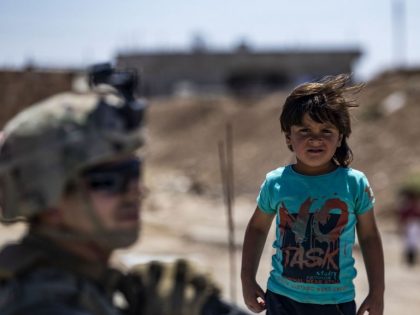
With all eyes on the war in Ukraine, Turkish president Recep Tayyip Erdoğan is planning a fresh invasion of northern Syria. For 70 years, Turkey has been a key NATO member — and NATO's backing for its aggression shows the alliance is no mere defense pact.
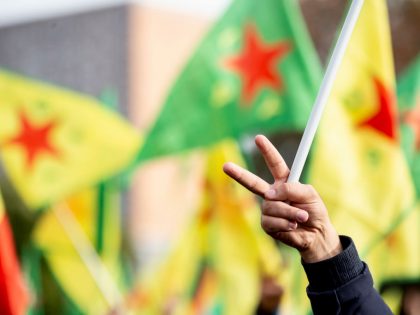
In Germany, that supposed bastion of liberal democracy, the state treats standing up for Kurdish rights as tantamount to terrorism — and hits activists with house searches, imprisonment, and even deportation.
Turkey’s invasion of northern Syria is its latest effort to destroy the nascent democracy in Rojava. Where Kurdish-led forces crushed the Islamic State, its fighters are now coming back into the open.
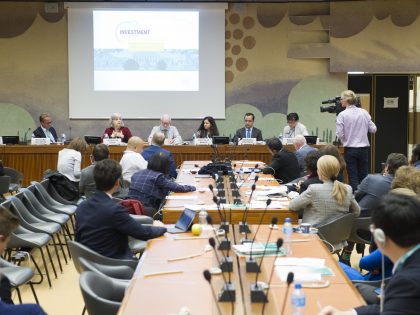
The United States is home to some of the world’s leading universities, research institutes, and academic conferences. But non-US researchers are increasingly excluded from the centers of scholarly exchange — all because they can’t get a visa.
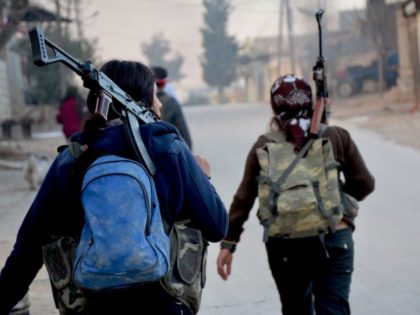
Turkey's war on Afrin is an attack not only on Kurdish self-determination, but on democracy and women's liberation in the Middle East.