Comrades at War
Governments want us to respect World War I veterans in an apolitical way. But we should not forget the thousands of veterans who returned home to fight for their rights.
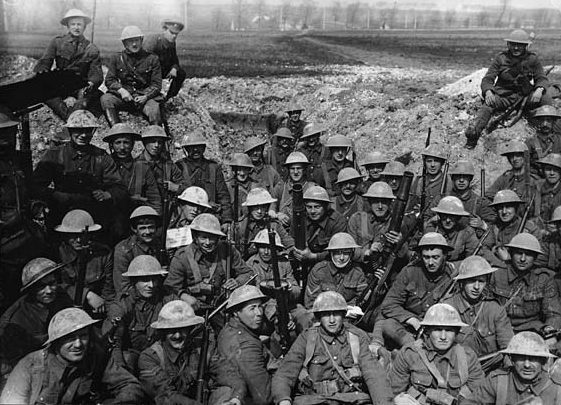
Soldiers in a trench in France during World War I. National Library of Scotland / Wikimedia Commons
In British society, biting representations of the Great War such as the seminal Blackadder Goes Forth and Joan Littlewood’s Oh, What a Lovely War! have successfully popularized the idea of the war as a bloodbath in which millions of men were led into pointless carnage by foolish officers.
But the political call to honor the dead in a way that goes “beyond politics” has an effective — and wholly understandable — emotional resonance. The Royal British Legion, which organizes the Poppy Appeal every year, has earned the respect of the vast majority of the population for its charity work on behalf of veterans.
But the broader question of why the Legion was created is rarely discussed. In reality, when it was formed in 1921, it was out of General Earl Haig’s fear that “revolutionary ideas” were widespread among ex-servicemen, and saw that “the only solution was to get those men back to their old leaders, the officers.”