Dating in the Age of the Algorithm

Dating apps have transformed intimacy into a marketplace of frustration. They fuel gender conflict while ruthlessly extracting value from our most intimate desires.
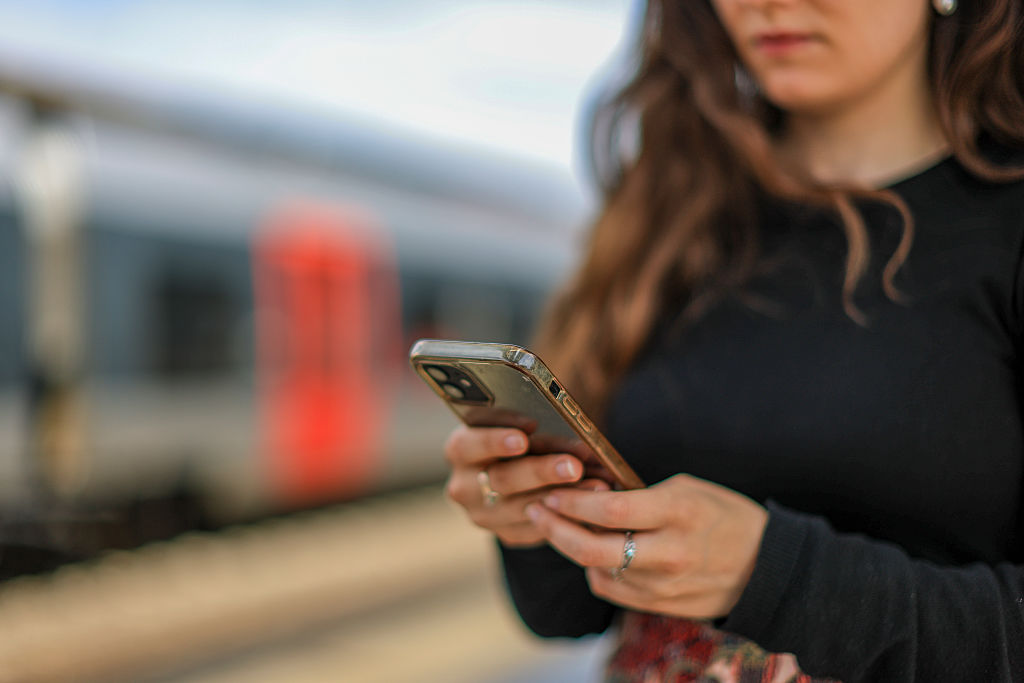
Love is increasingly shaped by platforms that monetize desire and disappointment alike. The result is growing gender tension and love lives mediated by apps that thrive on keeping us searching. (Jan Woitas / Picture Alliance via Getty Images)

Who controls love: Men, women, or capital? At first, the question sounds absurd. Love in the modern era is supposed to be the most personal of experiences, untouched by politics or economics. Yet in the age of dating apps, it has become one of the central battlegrounds of contemporary life.

Across the world, an increasing share of people find their sexual and romantic partners online. In Sweden, where we reside, the numbers are striking: one-third of those aged fifteen to thirty-four now date through apps, and nearly half say they have used the internet to look for a partner. Encounters that once took place in workplaces, friendship circles, or local bars are now displaced into digital arenas. However, what might seem like a widening of romance’s possibilities has coincided with a rise in singledom, both in absolute terms and as a share of the population. While some embrace singlehood as a positive choice, others experience it as unwanted loneliness, unable to find the intimacy they desire.

These frustrations have not stayed private. They have become politicized, fueling a new polarization between the sexes. On one pole are “incels” — men who define themselves as involuntarily celibate, convinced they are the losers in a sexual marketplace where women supposedly hold the power. Incels are part of the larger “manosphere,” marked by anti-feminism and misogyny, sometimes spilling over into deadly violence. On the other pole are women who have lost faith in heterosexual relationships altogether, echoing radical feminist claims that intimacy with men is inevitably structured by domination and objectification. In 2019, writer Asa Seresin described this turn toward disillusionment as “heteropessimism,” a concept that has since spread from academic blogs to lifestyle magazines.

Both positions remain minority ones, but many men and women express similar sentiments. This highlights the explosive political force of unmet needs for sex and intimacy. Singleness, in this light, is not just an individual condition but a reflection of deeper social tensions. The question is why these tensions take the form of destructive gender conflicts. Could they not be articulated differently — perhaps even in ways that hold progressive potential?

Love Under Capitalism

Feminist Marxists have long argued that capitalism shapes the conditions of love. The forms of intimacy, the expectations we attach to it, and the work it entails cannot be understood apart from capitalism’s development. Social reproduction theory in particular has emphasized how dominant ideals of love have served to conceal the domestic labor, mostly performed by women, that sustains society. When care work is presented as the pure expression of love outside of any political context, it is privatized, depoliticized, and removed from collective struggle.

But it is not only the meaning of love or the dynamics within relationships that are reshaped. The difficulty many experience in meeting partners today must be understood in relation to the expansion of capitalism into ever more dimensions of life. Our very search for love has become colonized. As the Italian philosopher Sandro Mezzadra and the Australian social theorist Brett Neilson argue, contemporary capitalism increasingly extracts value from social commons and communities. Digital capitalism profits from our social interactions on platforms. Likes, comments, and shares are monetized, sold as data or leveraged for advertising revenue. Dating apps are one of the clearest examples of this dynamic.

Many people come to dating apps with a dream: to find love, often imagined as a stable, monogamous, long-term relationship. Apps like Tinder and Hinge sell precisely this dream. However, when people’s longing for love meets the platforms’ interest in maximizing profit, this seems bound to create frustration.

Although little hard data on the algorithmic design of dating platforms exists, the profitability of the companies that run them relies on keeping users engaged. There is a built-in interest in not fully fulfilling the promise of finding a match. The more desperately people look for love, the more profitable they become for the platforms. Some research suggests that lowering match quality or privileging certain “popular” users can prolong the search process. Features such as infinite swipe loops, addictive reward structures, and paywalls reinforce compulsive use rather than meaningful connection. If the apps were truly effective — if they consistently delivered lasting relationships — they would undermine their own revenue streams. Love becomes the most intimate of commodities: something promised but rarely delivered, endlessly deferred yet endlessly marketed.

The Displacement of Conflict

The contradictions between what people seek — love, intimacy, stability — and what the apps readily provide — endless options, immediate rewards, constant interruptions — seem ready-made for critique. And yet the central political and ideological conflict around dating today is not between capital and love, but between men and women.

In our research on involuntary celibacy and singlehood, we see how dating platforms have become stages where old gender conflicts are replayed in new forms. Men often interpret their struggles on apps as evidence of feminist hypocrisy, claiming that the story of male power and female powerlessness no longer holds. The narrative of male marginalization in the age of digital dating is not confined to incels; it recurs across wider sections of the male population. In interviews, many long-term single men describe themselves as powerless, with women holding the initiative. Survey data from our project show that some men — across age groups, both single and partnered — believe that men are the losers in contemporary society, especially in relation to love and sex.

Is this true? Yes and no.

It is a well-documented fact that men direct far more attention toward women on dating apps than the reverse. Partly this reflects demographics — there tend to be more men than women on the platforms. But it also reflects traditional heterosexual courting patterns, which the apps’ design tends to amplify. Men swipe more broadly, often indiscriminately. Women are more selective and thus end up in the role of gatekeepers. In this sense, women can appear to be the “winners” of online dating, with more choice and leverage.

But the picture is more complicated. Women themselves often reject this idea, pointing to the burdens and risks that come with being the targets of mass male attention. For many, it is practically impossible to sift through the sheer volume of messages and matches. Some women we interviewed described online dating as emotionally exhausting, even to the point of burnout. What men interpret as female privilege can just as easily be seen as men outsourcing the labor of selection to women. Women must do the work of sorting, filtering, and evaluating, something that carries not only emotional costs but also real risks. Because male attention is not simply flattering; it can also be threatening. A rejection often provokes hostility, insults, or even threats. Women navigating online dating expend enormous energy managing the risk of harassment and violence.

So while men’s experiences of rejection and invisibility are genuine, women’s experiences of overload, hostility, and danger are no less real. Neither side is truly “winning.” Both are caught in structures of frustration and asymmetry, shaped by patriarchal norms and intensified by digital capitalism.

Love as Commodity, Conflict as By-Product

While many find a partner through dating apps, the app’s algorithmic mechanisms also play an important role in keeping large portions of users in a persistent state of frustration. In doing so, they fuel not only capital accumulation but also the intensification of gender conflict.

Men and women alike turn to apps seeking connection. But instead of new sexual relations or even basic closeness, they often encounter distrust. Men perceive themselves as marginalized, while women feel burdened and endangered. The emotional labor of navigating this terrain falls disproportionately on women, who must both manage unwanted attention and confront male aggression. The more the apps fail to deliver on their promises, the more frustration mounts — and the more likely it is to be directed sideways, toward the other sex, rather than upward, toward capital.

This is one of the paradoxes of love under capitalism. Our most intimate desires — our longing for closeness, for recognition, for partnership — have been turned into fuel for a system that thrives on their frustration. Digital capitalism extracts value from our social interactions, and in the case of dating apps, the result is a vicious circle: the harder intimacy becomes, the more we depend on the apps; the more we depend on the apps, the more frustrated we become. Many of the people we interviewed said they wanted to leave the apps but saw no viable alternatives for finding a partner. Dating apps have not only transformed how we meet but also how we experience rejection, desire, and vulnerability. They have turned intimacy into a field where gender conflicts are amplified but where the true victor is capital.

And so, the question returns: Who controls love? Leaving it to capital, which promises to satisfy while thriving on the frustration of our longing for love, seems like a bad idea. But if we recognize love as something worth fighting for, we can begin to imagine alternatives — where intimacy is not mined for profit, and where our need for love and care is not weaponized against us.

Share this article

Contributors

Evelina Johansson Wilén is an associate professor of gender studies at Örebro University in Sweden. She serves on the editorial board of the Marxist theoretical journal Röda Rummet and is the author of a forthcoming book on family abolition, to be published by La Fabrique in 2026.

Maria Wemrell is an associate professor in public health and senior lecturer at the Department of Social Work at Linnaeus University, Sweden. She conducts research on intimate partner violence, primarily against women and in Sweden.

Lena Gunnarsson is an associate professor of gender studies and head of gender studies at Örebro University, Sweden.

Filed Under