The Kurdish Freedom Struggle Is Facing a Crucial Moment
Abdullah Öcalan’s Kurdistan Workers’ Party is engaged in high-stakes negotiations with the Turkish government over a peace settlement. The outcome will shape the future for Kurds throughout the region, including the PKK’s sister parties in Syria and Iran.
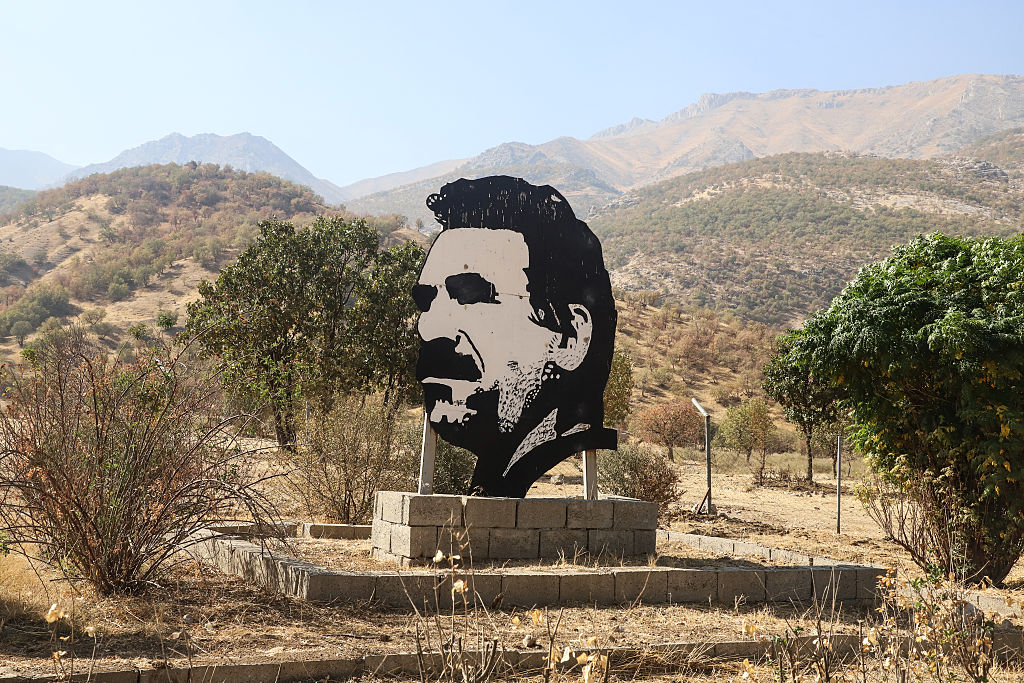
A cutout portrait of jailed leader of the Kurdistan Workers’ Party (PKK), Abdullah Öcalan, is seen during a ceremony in the Qandil area of northern Iraq, where the militant group announced its complete withdrawal of forces from Turkey, on October 26, 2025. (Shwan Mohammed / AFP via Getty Images)
“I encountered patriarchy and male dominance presiding over women and life, all in conjunction with the occupation of my homeland. We all knew that the state was the root cause,” says Peyman Viyan, the female coleader of PJAK, the most prominent Kurdish revolutionary group in Iran.
I am reading her responses, which have been sent to me and translated by intermediaries from a PJAK base in the mountainous border region of eastern Iraqi Kurdistan, on the border with Iran.
Kurdistan, divided and occupied by the regional powers of Turkey, Syria, Iraq, and Iran, is a nation without a state. But its various political groups have carved out a semblance of autonomy for themselves, especially in Iraq and Syria, where centralized government control has receded as both states crumbled into internal conflict.